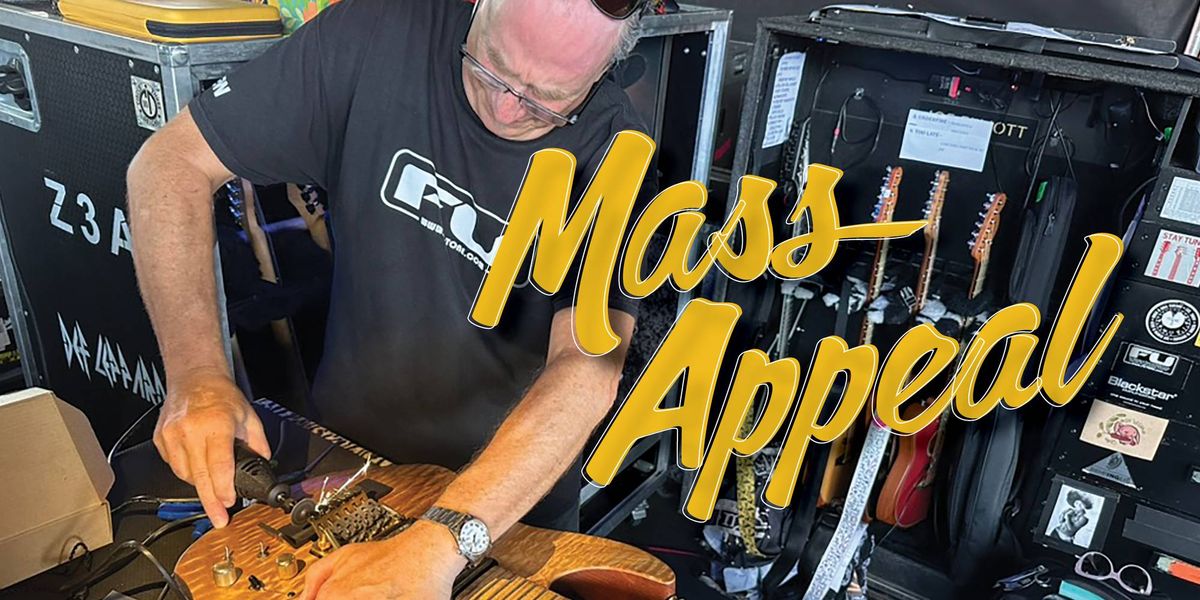
If you phone FU-Tone on a Sunday, there’s a decent chance company president Adam Reiver will be the one who picks up. Even after decades in the industry and building a global customer base, he hasn’t distanced himself from his clients—something that, in the age of AI chatbots, can still catch customers off guard.
“People will call, and they go, ‘Oh my god, is this the guy in the video? Is this Adam? I can’t believe I’m talking to you,’” he tells Premier Guitar. “And I go, ‘I can’t believe I’m talking to you!’”
That interaction captures something elemental about FU-Tone and Reiver: He’s one of us. “I'm just a guitar player like you, or some kid in Kansas, or the guy on the cover of Rolling Stone,” he says.
This connection isn’t just a customer service quirk. It reveals a philosophy at the heart of his brand. From the early days of designing the EVH D-Tuna to the present, this approach has shaped FU-Tone into a tight-knit community of dedicated musicians from all walks of life.
It also explains why so much of what Reiver builds and talks about centers on helping players take full control of their tone—not just upgrading their instruments, but understanding them.
Custom FU-Tone tremolo bridge with EVH D-Tuna and locking nut.
Photo by Nadine Joy
To fully grasp how deeply this mindset is embedded, it helps to look at Reiver’s own journey as a player. His story began at a moment when guitar culture ruled the world, during a shift from traditional sounds into more experimental territory.
“It was around ’81 when I first really found the guitar,” he says. “And if you roll the clock back two or three years from there, it was basically, ‘Do you want a Strat, a Tele, or a Les Paul?’ And then off you go. I didn’t think modding and hot-rodding guitars were a thing.”
Reiver was there at ground zero to witness the shift toward customized superstrats, the rise of early custom-shop brands like Jackson and Charvel, and brand-new horizons in playing technique. Not wasting any time, he jumped in headfirst, becoming fascinated with how he could change, improve, and completely reimagine his favorite instruments.
“My first guitar was like a cheap, $200 Hondo Flying V,” he says with a touch of pride. “But by the time I was done with it, it had a Kahler in there. It had an Invader pickup in the bridge. It had a Mighty Mite triple-coil pickup in the neck. It was like, do anything you could do to just tinker and play with the guitar.”
Just about everyone who’s played electric guitar for any amount of time is familiar with that unexplainable pull to hot-rod their favorite instrument. In Reiver’s case, however, it was more than curiosity. It was a new paradigm. The guitar was not a finished product. It was a platform.
“The advent of FU-Tone was, ‘How do you make this guitar sound better?’”
While other tinkerers of his era pursued those same goals by winding pickups, building guitars, and adding wild finishes, Reiver’s curiosity found its outlet in fabrication. Thanks to his high school’s metal shop, he wasn’t modifying existing parts—he was making new ones.
“I was not a good student, except for that class,” he recalls with a laugh. “I got straight As in metal shop. I liked how you could fabricate parts from an idea in your head. Like, ‘How do we do this? How do we get this idea from here to there?’”
That experience translated directly into how he would later develop products. Even before founding Floyd Upgrades—FU-Tone’s original name—his process was simple and immediate. Draw something, build it, test it, refine it. Still, Reiver admits he’s no machinist.
“I know enough just to be dangerous, just to get myself in trouble. So I contracted with this guy who was a professional machinist. I would literally sketch something on the side of a box and say, ‘Can you make this?’ He would whip it up old-school and bring it back to my office.”
This spirit of experimentation wasn’t just limited to those early years. That same trial-and-error approach still defines FU-Tone products today. Instead of designing in isolation, Reiver works through ideas with the instrument in hand, adjusting based on feel and response. And as with his in-house machinist, he doesn’t work alone.
One of Reiver’s most celebrated “assistants” was Eddie Van Halen himself. Working in a small team alongside Eddie, he helped develop the EVH D-Tuna through a similar cycle of experimentation, providing locking-trem players access to instant drop-D riffage.
Reiver with Slash
Photo by Nadine Joy
“[That process] became a melting pot,” Reiver says. “It would be one of those side-of-the-box conversations. I would say, ‘Well, maybe we should angle it a little, make this longer, make that shorter, make this, do that.’ I would put it on a guitar, and [Ed] would monkey with it, and say, ‘No, no, no. Do this. Do that.’”
Like Reiver, Van Halen used the guitar as a testing ground, emphasizing constant refinement in pursuit of maximizing tone. And their early success only signaled the start for Reiver.
“You know, the advent of FU-Tone was, ‘How do you make this guitar sound better? How can you make this sustain more? How can you make it clearer? How can you make it louder?’ That’s where it came from.”
With tone chasing now an obsession, Reiver turned his attention to a specific piece of hardware, one most players assumed Floyd Rose had already perfected: the tremolo. The way Reiver saw it, the point where the guitar strings terminate in the body was the most important piece of the tonal equation.
“I don’t care if you play rock, metal, death metal, country, or pop—you want to have a good guitar tone.”
“In the beginning, that was the biggest thing, and I started making one product, a 37 millimeter Big Block,” he says. “I was like, ‘Wow! It sustains way more, it sounds better, and it’s more articulate. Okay, I’ll do this.’ I invested $880 to make a run of the blocks, and said, ‘Well, worst-case scenario is I could just give them to my friends, or, you know, sell them online.’”
In theory, the Big Block was exceedingly simple: a larger, heavier brass tremolo block designed to replace the smaller stock versions that came with most locking systems. With its increased mass, it maintained more string vibration, which translated into more sustain and articulation.
The Big Block was a hit, and soon enough, some of the world’s most notorious tone-hound guitarists were spreading the Floyd Upgrades gospel. Reiver realized that if one overlooked component could make that much of an impact, there were probably others.
Soon, he was manufacturing highly regarded double-locking tremolo replacement parts for the most popular trem models available. From titanium fine tuners to the little metal inserts found in each saddle, his theory about the effect of mass on tone proved correct, time and time again.
FU-Tone guitars
Photo by Nadine Joy
But while he was gaining users, not everyone was a fan of the moniker: Floyd Upgrades.
“A certain company didn’t like me using part of their name in my little company, and that’s fair enough,” Reiver acknowledges. “But the real blessing in disguise was that I became FU-Tone. And thank god I did, because I ended up going on to do so many other guitar parts and projects that have nothing to do with someone else’s brand.”
With a new name over the office door, FU-Tone was free to innovate and expand much further into the electric guitar market.
“FU-Tone encompasses a lot now,” Reiver says. “I make stop tail bridges. We make Tele parts. I make my own locking tremolos. We make guitars. We even make pickups.”
This relentless expansion is about more than just product lines. From tiny titanium (or brass or copper) saddle inserts to full guitar builds, every FU-Tone offering still reflects Reiver’s original conviction: tone isn't tied to any single component, but to how everything works together. It’s what Reiver has characterized as the “FU-Tone vein of tone.”
“I still pinch myself every day that I get to work with people I looked up to and tried to play like, and now I’m sitting in their living rooms.”
But what is that tone? Reiver explains: “FU-Tone vein of tone means lots of sustain, clarity, and articulation. It’s considering the wood and essence of your guitar, your hands and your playing, and then moving far beyond that.”
That idea shifts the conversation away from chasing specific gear and toward understanding how your instrument actually responds—where every material choice becomes another variable in the final sound. So what can you expect when you swap out your Ibanez Edge tremolo block for a brass or titanium one? What’s the tonal difference in the metals used in their Nancy Wilson-approved acoustic guitar bridge pins? Forever a gear nerd, Reiver’s always happy to explain.
“Brass is big and warm and round. When you think of brass, think of Eddie Van Halen, Warren DeMartini, or a George Lynch-type of sound. Titanium has a lot of sustain, but with a certain level of clarity to it, almost like a layer of glass, with really nice note separation. And copper I find to be very similar to brass, with more of a scooped-out midsection.”
From icons like Nuno Bettencourt and Slash to modern players like Lzzy Hale and Nita Strauss, countless A-listers have credited FU-Tone upgrades with having a meaningful impact on their signature sounds.
But FU-Tone products aren’t just for stars. They’re for all guitar players, and they’re also very DIY-friendly. Reiver swears that if you give him a few minutes and watch one of the company’s detailed how-to YouTube videos, you’ll be customizing your favorite instrument in no time. “If you’ve never done any of this, it can seem very intimidating,” he says. “But if you have the ability to change your own strings, you can do this.”
As a guitarist himself, Reiver knows firsthand how badly a trip to the local “expert” can go—which is exactly why he’s worked to democratize the process.
“I’ll get a guy who will buy some parts and take them to his local guy,” Reiver explains, “and he’ll say the same thing [I always hear]: ‘My guy said…’ And I’m thinking, ‘Here it comes!’ I’ve even gotten on a Zoom with guys and walked them through it. And by the end, they’re better than ‘their guy.’ I tell them, ‘You’ll never pay someone else to do it again [laughs].’”
Reiver examines an FU PRO guitar with longtime FU-Tone client and friend, Def Leppard guitarist Phil Collen.
Photo by Nadine Joy
Personal Zoom calls from a company president aren’t exactly standard practice in this industry. For Reiver, though, that’s the point—growth through relationships, not traditional marketing. “I have a handful of core guys that are all still dear friends to this day,” Reiver says. “But one of the guys who was there in the very beginning was Phil Collen from Def Leppard. After that, my phone would ring, and it would be some big artist, and they would say, ‘Phil has this on his guitar, and said to call you.’”
That kind of connection establishes a level of trust that can’t be manufactured. And for Reiver and the FU-Tone team, it also shapes how those relationships develop.
“These are not clients—they’re friends,” he says. “We’re at each other’s houses. We’re at each other’s events. It’s organic, and it’s real. I still pinch myself every day that I get to work with people I looked up to and tried to play like, and now I’m sitting in their living rooms.” He laughs. “But I play it totally cool.”
With an artist roster that includes Gary Holt (Exodus, Slayer) and Michael Wilton (Queensrÿche), it might be easy to assume FU-Tone is strictly for shredders. But Reiver’s products have found traction with players across genres and styles, and though he’s a rocker himself, he’s consistently surprised by the range of sounds and approaches the broader FU-Tone community brings.
“I’m not a big country fan, but I can tell you, those guys are the most badass musicians,” he says. “We’ll get the guys in Rascal Flatts, Jim Kimball from Reba [McEntire]’s band, Paul Sidoti from Taylor Swift’s band. I don’t care if you play rock, metal, death metal, country, or pop—you want to have a good guitar tone. I’ve been doing this for over 30 years, and that never gets old.”
FU-Tone may operate on a global scale, but it’s still rooted in the same instinct that led a high school kid to start modifying a budget guitar—and the same belief that the best conversations about tone happen one player at a time. Which is why, if you happen to call on a Sunday, you just might end up talking tone with Adam Reiver.
Facts Only
Adam Reiver is the founder and president of FU-Tone, a company specializing in guitar hardware upgrades.
Reiver began modifying guitars in the early 1980s, starting with a cheap Hondo Flying V.
He developed the EVH D-Tuna in collaboration with Eddie Van Halen.
FU-Tone originally operated under the name Floyd Upgrades before rebranding due to legal concerns.
The company’s first major product was the 37mm Big Block tremolo block, designed to improve sustain and tone.
FU-Tone now produces a wide range of guitar parts, including tremolo systems, bridges, and pickups.
Reiver often personally assists customers, including through Zoom calls and instructional videos.
Notable clients include Phil Collen (Def Leppard), Slash, Nuno Bettencourt, and Nancy Wilson.
The company emphasizes DIY-friendly modifications, claiming that basic guitar maintenance skills are sufficient for installations.
FU-Tone’s products are used by musicians across genres, including rock, metal, country, and pop.
Reiver’s approach involves direct experimentation and collaboration with artists to refine products.
The company’s philosophy centers on the idea that tone is influenced by the interplay of all guitar components.
Executive Summary
Adam Reiver, founder of FU-Tone, has built a company rooted in hands-on engagement with musicians and a deep focus on guitar tone optimization. Starting with modifications to his own instruments in the early 1980s, Reiver transitioned from a curious player to a fabricator, creating custom parts like the EVH D-Tuna and the Big Block tremolo system. His approach emphasizes direct collaboration with artists, including Eddie Van Halen and Phil Collen, and a commitment to making high-quality upgrades accessible to all players. FU-Tone’s products, ranging from tremolo blocks to full guitars, are designed to enhance sustain, clarity, and articulation, appealing to a diverse range of musicians across genres. The company’s ethos centers on demystifying guitar modifications, with Reiver often personally assisting customers through tutorials and direct communication. Despite its global reach, FU-Tone maintains a personal touch, reflecting Reiver’s belief that tone is a holistic interplay of components, craftsmanship, and player interaction.
The article highlights Reiver’s journey from a tinkering guitarist to a respected industry figure, underscoring his hands-on philosophy and the organic growth of FU-Tone. His work bridges the gap between professional musicians and hobbyists, fostering a community where experimentation and understanding are prioritized over mere gear acquisition. The narrative also touches on the broader cultural shift in guitar modification, from the rise of superstrats in the 1980s to today’s DIY-friendly market. While FU-Tone’s products are endorsed by high-profile artists, Reiver’s mission remains grounded in accessibility and education, ensuring that players of all levels can refine their instruments and tone.
Full Take
This narrative presents Adam Reiver and FU-Tone as a refreshing counterpoint to the often impersonal, corporate-driven guitar industry. The strongest version of this story highlights Reiver’s authenticity—his hands-on involvement, direct engagement with customers, and collaboration with legendary musicians like Eddie Van Halen. It frames FU-Tone as a company that democratizes high-end tone, making professional-grade modifications accessible to everyday players. The article effectively uses Reiver’s personal journey and anecdotes (e.g., answering customer calls on Sundays, sketching designs on boxes) to build credibility and emotional resonance.
However, the piece leans heavily into a "David vs. Goliath" narrative, positioning FU-Tone as the plucky underdog against faceless corporations. While this is compelling, it risks oversimplifying the broader industry landscape, where many boutique manufacturers share similar ethos. The focus on Reiver’s personal relationships with famous musicians, while genuine, could also be seen as a form of borrowed credibility—a pattern where proximity to icons lends authority to the brand. That said, the article avoids outright exaggeration or manipulation, instead relying on Reiver’s demonstrated expertise and the tangible impact of his products.
The root cause of this narrative is a reaction against the commodification of musical instruments, where mass production and AI-driven customer service often distance companies from their users. FU-Tone’s model—rooted in craftsmanship, education, and community—echoes the DIY spirit of the 1980s guitar revolution, when players like Van Halen and Reiver himself pushed boundaries through experimentation. The implications are significant for musicians: it suggests that tone isn’t just about buying the right gear but understanding and interacting with your instrument. This empowers players but also places responsibility on them to engage deeply with their craft.
Bridge questions: How does FU-Tone’s approach compare to other boutique manufacturers in terms of accessibility and innovation? What role does nostalgia play in the appeal of handcrafted guitar modifications in an era of digital modeling? Would FU-Tone’s model scale if it weren’t for Reiver’s personal involvement, or is that intimacy essential to its success?
Counterstrike scan: If this were part of a coordinated campaign, the playbook would involve leveraging Reiver’s authenticity and celebrity endorsements to position FU-Tone as the "anti-corporate" choice, appealing to musicians disillusioned with big brands. The actual content aligns with this strategy but doesn’t cross into manipulation, as the claims are substantiated by Reiver’s track record and the tangible benefits of his products. No concerning patterns detected.
Patterns detected: none