IMF
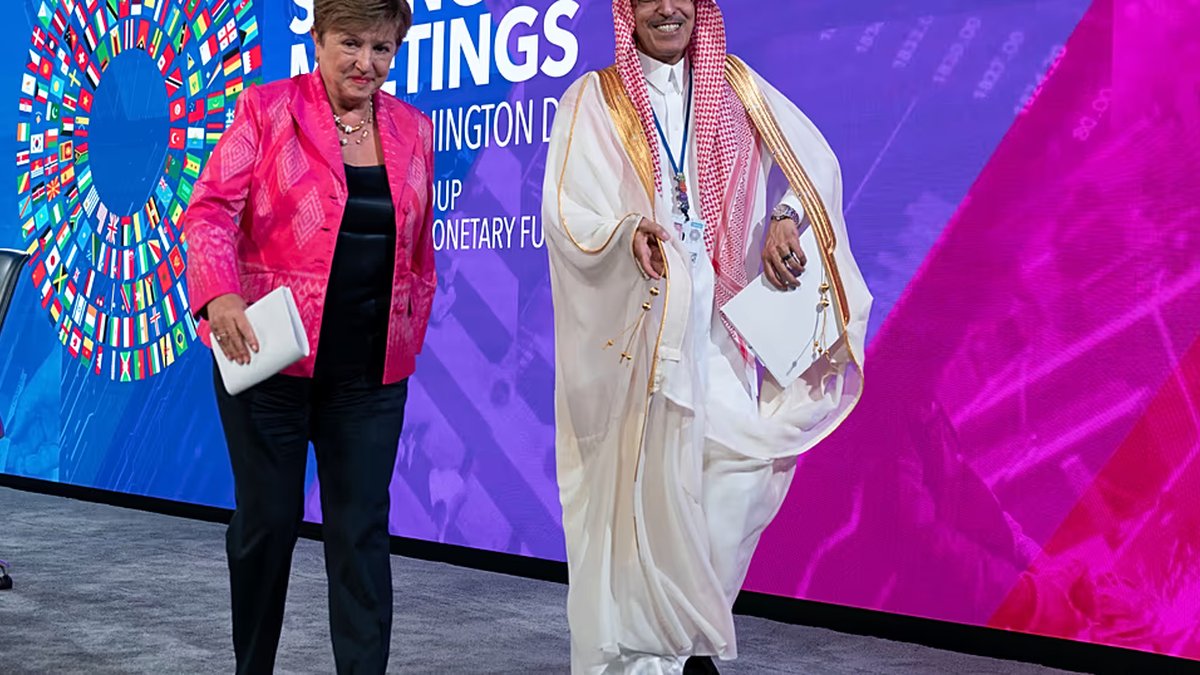
The International Monetary Fund has lowered its global growth forecast for the world economy this year to 3 per cent, down from 3.5 per cent in 2025.
In its latest World Economic Outlook, it warns that conflict in the Middle East, higher energy prices, and ongoing geopolitical uncertainty continue to weigh on global output growth.
The forecast reflects the damaging toll from the decision by the United States and Israel to strike Iran earlier this year.
Tehran responded by closing the strategic Strait of Hormuz and attacking energy infrastructure in the region.
In addition, strikes on tankers in the waterway this week have raised doubts about whether a recent ceasefire between Washington and Tehran will hold.
The IMF says, however, that fallout from the conflict is being partially offset by booming investment in artificial intelligence and other technologies.
It expects global inflation will rise to 4.7 per cent in 2026 from 4.1 per cent last year because of elevated commodity prices.
But despite the weaker outlook, the IMF says the global economy has shown resilience and expects growth to recover to 3.4 per cent in 2027.
It warns, however, that risks remain elevated and any renewed disruption to energy supplies or a deterioration in geopolitical tensions could further weaken the world economy.
00:56
Ghana's inflation rises in June as high fuel prices persist
00:41
At least 12 dead in devastating Accra floods
11:18
Can the IMF help Africa break the debt cycle? {Business Africa}
01:20
BRICS security meeting concludes in New Delhi amid global uncertainty
00:50
IMF's new Africa chief warns of Middle East conflict fallout, sees bright future for Africa
01:02
Ivory Coast police arrest man over murky Abidjan homes demolition
Sentinel — Human
This content reads like an excerpt from a news report summarizing the IMF's World Economic Outlook and linking it to relevant current events, exhibiting a consistent journalistic style.