What’s Happening in Space Policy March 8-14, 2026
Here is SpacePolicyOnline.com’s list of space policy events for the week of March 8-14, 2026 and any insight we can offer about them. The Senate is in session this week. The House is in recess except for pro forma sessions.
During the Week
Welcome to Daylight Saving Time in the United States! If you haven’t turned your clocks forward an hour (“spring forward”), you may be late to your events today unless you live in Arizona or Hawaii, the two states that don’t observe this ritual. Remember that other countries change to summer time on different schedules. Europe, for example, doesn’t switch from Central European Time (CET) to Central European Summer Time (CEST) until March 29. That’s important for anyone in the U.S. planning to listen to ESA’s pre-launch briefing for the Celeste LEO PNT mission on Thursday, for example.
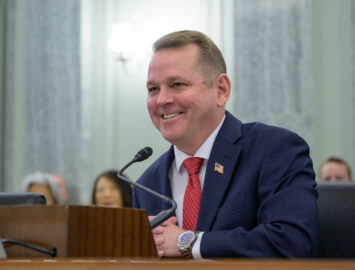
The House is in recess this week. The Senate will be at work, though, and the Senate Commerce Committee will meet in Executive Session on Thursday to vote on several nominations, including Matt Anderson to be NASA Deputy Administrator. His nomination hearing last week went very well. Committee chair Sen. Ted Cruz (R-Texas) commented that Anderson would work with Administrator Isaacman to ensure a “safe and successful launch for Artemis II.” That could be coming up as early as next month, suggesting Cruz is pretty confident Anderson will be confirmed by the full Senate quickly.
Elsewhere, there are some very interesting conferences and, on Friday, the annual “space prom” here in D.C., but let’s hit some of the highlights earlier in the week first.
On Tuesday, Florida International University’s (FIU’s) D.C. office will hold a fireside chat with Laura Delgado López to discuss her recent report comparing space security perspectives of key space nations in Latin America with those of the U.S. Well known in the D.C. space policy community, Delgado López is now a Senior Fellow at FIU’s Jack D. Gordon Institute for Public Policy after leaving NASA HQ last year. The event will be webcast.
The American Astronautical Society’s annual Goddard Space Science Symposium is Thursday-Friday at the National Housing Center in D.C. As usual it has a terrific line-up of speakers and panel sessions. “Advancing an Integrated Space Enterprise” features panels on Navigating and Communicating from the Moon to Mars, Accelerating Commercial Space Stations, Space Science: Impacts on the Economy and National Security, and many more.
Headline speakers include Chris Scolese, Director of the National Reconnaissance Office and former Director of Goddard Space Flight Center, who will also receive the National Space Club’s prestigious Goddard Memorial Trophy the next day (see below). Also on tap at the AAS meeting are Casey Swails, NASA Deputy Associate Administrator, Cynthia Simmons, Acting Director of GSFC, and Charlie Powell from the White House Office of Science and Technology Policy. Susan Nelson will moderate a panel on “A View from the Hill” with staffers from the House and Senate appropriations committees on Friday morning. Nicky Fox, NASA Associate Administrator for the Science Mission Directorate, gives the closing luncheon address that day.
A few hours later (giving everyone time to get gussied up), the National Space Club holds its annual Goddard Memorial Dinner at the Hilton Washington close by. The AAS and the Space Club are two different entities, but most years they coordinate the two events.
The Goddard Dinner is fondly known as the “space prom” where 2,000 or more space professionals gather to celebrate achievements across the civil-commercial-military space spectrum and present awards. The Press Award is one of them and we are delighted that Ken Chang, science reporter for the New York Times, is this year’s recipient. Congratulations, Ken!!
As we mentioned earlier, Chris Scolese will receive the Goddard Memorial Trophy, one of the highest accolades in the space community. Other awardees include Firefly Aerospace for the Blue Ghost Mission 1 Team that accomplished that breathtaking landing on the Moon last year, Howard Hu, NASA JSC’s Orion program manager, Dana Weigel, NASA JSC’s International Space Station program manager, Lt. Col. Amanda Salmoiraghi from the U.S. Space Force’s Space Warfighting Analysis Center, and others with amazing accomplishments we wish we could list here. Super impressive group. The complete list is on the Space Club’s website. Congratulations all!
Lots of other great events this week, too, like the annual IEEE Aerospace Conference in Montana, and the first half of the South by Southwest (SXSW) extravaganza in Austin, TX that continues through March 18.
Those and other events we know about as of Sunday morning are shown below. Check back throughout the week for others we learn about later and add to our Calendar, or changes to these.
Sunday, March 8
- Daylight Saving Time begins in the United States
Sunday-Saturday, March 8-14 (continued from yesterday)
- IEEE Aerospace Conference, Big Sky, Montana
Tuesday, March 10
- Space Security in Latin America – Fireside Chat with Laura Delgado López (FIU), 601 New Jersey Ave, NW, Washington, DC/online, 12:30-2:00 pm ET
Tuesday-Wednesday, March 10-11
- NOAA Science Advisory Board, College Park, MD/online
Thursday, March 12
- Northrop Grumman’s Cygnus-23 Departs the ISS, Earth orbit, 7:00 am ET (NASA coverage begins 6:45 am ET)
- ESA Pre-Launch Briefing (in English) for Celeste LEO-PNT mission, 14:00 CET/9:00 am EDT, watch on ESA TV
- Senate Commerce Committee vote on Matt Anderson’s Nomination to be NASA Deputy Administrator, S-216 Capitol, approximately 11:30 am ET (not webcast)
Thursday-Friday, March 12-13
- AAS Goddard Space Science Symposium, Washington, DC
Thursday, March 12-Wednesday, March 18
- SXSW, Austin, TX
Friday, March 13
- Schriever Spacepower Series with LTG Dennis Bythewood (Mitchell Inst), virtual, 10:30-11:30 pm ET
- Goddard Memorial Dinner (National Space Club), Hilton Washington, 1919 Connecticut Ave., NW, Washington, DC, 6:30 pm ET
User Comments
SpacePolicyOnline.com has the right (but not the obligation) to monitor the comments and to remove any materials it deems inappropriate. We do not post comments that include links to other websites since we have no control over that content nor can we verify the security of such links.
Facts Only
* Daylight Saving Time begins on March 8, 2026.
* The Senate is in session.
* The House is in recess.
* Matt Anderson is nominated to be NASA Deputy Administrator.
* The Senate Commerce Committee will vote on Anderson’s nomination on March 12, 2026.
* The American Astronautical Society’s Goddard Space Science Symposium will be held March 12-13, 2026.
* Florida International University’s D.C. office will host a fireside chat with Laura Delgado López on March 10, 2026.
* The National Space Club’s Goddard Memorial Dinner will take place on March 13, 2026.
* Northrop Grumman’s Cygnus-23 will depart the International Space Station on March 12, 2026.
* SXSW will occur in Austin, TX, March 12-18, 2026.
* The IEEE Aerospace Conference will be held in Big Sky, Montana, March 8-14, 2026.
* NOAA’s Science Advisory Board will meet March 10-11, 2026.
Executive Summary
Full Take
This week's space policy landscape is dominated by a classic “event-driven” narrative—a collection of carefully coordinated activities designed to showcase progress, generate enthusiasm, and solidify key players' positions. The timing of Daylight Saving Time itself is a subtle but significant framing element, immediately establishing a sense of forward momentum and technological advancement. The Senate’s focus on Anderson’s nomination represents a tactical maneuver, exploiting the opportunity to demonstrate legislative engagement and, crucially, to signal confidence in Isaacman’s leadership—a clear attempt to manage public perception of NASA’s trajectory toward Artemis II. The AAS symposium, with its broad range of panels, is designed to cultivate a sense of collaborative progress across multiple domains of space exploration, while simultaneously showcasing NASA’s key personnel to external stakeholders.
However, the sheer density of events, particularly the “space prom” motif, hints at a broader, arguably performative, agenda. The lavish awards ceremony, replete with celebrity endorsements (Ken Chang from the NY Times), feels less like genuine recognition of achievement and more like a calculated effort to bolster public enthusiasm and attract investment. There's a carefully orchestrated demonstration of success, designed to mask underlying uncertainties surrounding NASA’s budget, technological challenges, and political headwinds. The strategic timing of the Cygnus-23 departure—coordinated with the symposium—suggests an attempt to capitalize on the event's attention to promote NASA’s capabilities.
Underlying this narrative is a persistent tension between the perceived urgency of space exploration and the demonstrable limitations of current funding models. The confident pronouncements regarding Anderson’s confirmation, coupled with Cruz’s reference to “safe and successful launch,” subtly downplays the complexities of deep-space missions. The system is implicitly relying on a successful launch of Artemis II as a key demonstration of competence and justification for continued investment – a high-stakes bet. The inclusion of SXSW, a sprawling tech and culture conference, in the broader schedule suggests a strategy to broaden the appeal of space exploration beyond traditional scientific and military audiences, seeking to integrate it into wider narratives of innovation and human progress. Patterns detected: ARC-0024 Ambiguity (multiple, seemingly unconnected events linked through a shared framing of “progress”).