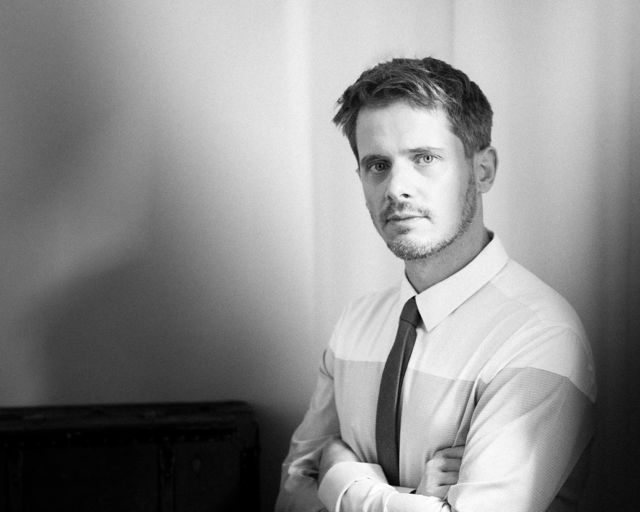
By Francisco SalazarComposer Gregory Spears is in the middle of celebrating his breakthrough opera “Fellow Travelers,” which premiered 10 years ago.
The opera, which is based on the Thomas Mallon novel set in Washington D.C., during the McCarthy era of the 1950s and focuses on the “lavender scare,” a witch hunt and mass firings of gay people from the United States government, will tour through ten cities in the next year making stops in Seattle, Portland, San Diego, and Cooperstown, among others.
This year, Spears, who blends romanticism, minimalism, and early music influences to become one of the most sought-after composers of his generation, will also premiere a new opera “Sleeps Awake” for Opera Philadelphia, which is inspired by the fairy tale “Sleeping Beauty.”
OperaWire spoke to him about the influence of “Fellow Travelers” and his new work “Sleepers Awake.”
OperaWire: “Fellow Travelers” is doing a 10-city tour and celebrating its 10th anniversary. What does it feel like for a work of yours to be presented so often and to continue to be relevant within the repertoire?
I feel like they connect with material in a way that you’re always hoping for as a composer. So, it’s wonderful.
OW: Why do you think that the work has been able to live on for all these years and do you think it is due to the themes and the time with live in?
GS: Yeah, I was thinking about this the other day and I was talking about Puccini and one of the great innovations of Puccini and the verismo composers was writing opera about ordinary people and being able to wed this form that is larger than life and unusual and strange with people who we think we could meet on the street.
It’s very counterintuitive in fact because Handel certainly didn’t do that. Handel was writing about princes, dukes and gods. But this ability to take this extreme form and say, this could enter your own life, I think was such a counterintuitive thing to do and that’s part of why I love Puccini so much. “La Boheme” is a perfect example is about hipsters in Paris trying to pay their rent.
And I think that “Fellow Travelers” is in that tradition of trying to say, you can go and work a 9 to 5 job in a suit and your life is operatic on some level. You’re part of this larger historical movement. These guys working in the State Department that were getting interrogated and really be anonymous. Hawk and Tim aren’t historical figures, but they represent the ordinary people caught up in these historical moments. And I think we can all relate to that and then just see that expressed through opera, in a way, it says to the audience, your life is operatic as well. And Tracy K. Smith, who I work with a lot, she says, “when we say what feels mythic or what feels operatic, you just think of getting your heart broken in high school. To experience that is utterly operatic.”
And so I think of opera that way. I don’t think of operatic like an Apocalypse movie or something like that. I think opera is not extreme. It’s about being very, very personal. And I think that these characters feel very ordinary and very personal. And I feel like we know them and yet we see them caught up in this larger thing. And hopefully we can have an emotional experience of that historical moment through this really approachable set of characters.
And so when singers take these arias to auditions, that’s perhaps part of what they’re feeling is. They don’t have to be a duke from the 18th century or earlier. Actually, I can just be someone closer to myself, which is wonderful.
OW: There was a series that was produced right after the opera. Did this series bring further attention to the opera? Have people who’ve seen the series first been to see the opera and have you heard from people say they were interested in coming to see the opera because of that series?
GS: Yeah, I think so. And that’s exciting. For me to sort of see that reaction. The opera was done in Pittsburgh for the first time post series. And, of course, the series is very different than the book. The book really sticks pretty closely to the mid-1950s. The series, of course, goes all the way through the decades, and it really builds on what the book was doing, and the opera is much closer to the book. So I imagine someone might go and say, “oh, what about, you know, the 1970s?” and not realizing that the series expanded it. So I’m excited to hear what people think.
It’s kind of fun that it was an opera first before the series. The opera is much more concentrated in that one moment and around their relationship because in opera, you can expand things. I feel like in the Showtime series, they’re expanding it by expanding it through time.
In the series, there’s a breakup scene and it can take a minute. But in an Opera, it can take 10 minutes because things just get stretched out. So by focusing it on one time period, we can really go deep into that. And so I think that that’s one of the differences.
But I am excited to hear that some folks have come because of the series, and I’m really curious to check in with them and see afterwards because it’s such a different experience.
OW: This year, you also have “Sleepers Awake,” which is a new work that we will be premiering in Philadelphia. Can you tell me a little bit about that work and working with Opera Philadelphia?
GS: It’s a fairy tale opera. It’s “Sleeping Beauty,” but it takes a different kind of approach to it. So traditionally, in the tale, the end of the story, the prince wakes Sleeping Beauty and the rest of the castle up, and everyone’s happy and they have a party. In this story, it starts with the prince, who’s called the Stranger and he wakes up Sleeping Beauty, and they all get really mad at him because they were having a great sleep. It’s kind of an existential take on “Sleeping Beauty.”
The way the piece moves is very unusual, but the story’s familiar. It really focuses on the chorus and we have a couple of really wonderful leads that include Susanne Burgess and Jong Yoon park, who just finished up the Lindemann Young Artist program.
There are big arias but city also meant to feature their chorus. And then Corrado Rovaris is conducting in the pit at the Academy. And I’m super excited about it.
The piece is also very different piece than “Fellow Travelers,” as its less naturalistic and more fantastical. I think its more unusual musically.
OW: The piece is also inspired by Robert Walser. Tell me about discovering his work?
OW I always loved Robert Balser and they call him the Swiss Kafka. He’s a very unusual guy and he spent decades in a mental hospital at the end of his life. The whole second half of his life, actually.
But I’ve always loved his writing, and it’s very unusual, and has this kind of charming beauty to it. But it’s also extremely modernist and existentialist.
He wrote a series of little plays that are rewrites of fairy tales. For example, he did a “Snow White,” which was turned into an opera as well as “Cinderella,” and “Sleeping Beauty.”
So the piece begins with his version of it, but it is quite different because I use some other writers, Arthur Quiller-Couch for instance, who wrote, a very traditional “Sleeping Beauty” in 1911 in Britain. And I sort of mixed these two versions together in the libretto. And there’s also a bit of the hymn text “Sleepers Awake,” which is a very famous German hymn text, which Bach set famously in a cantata called “Sleepers Awake.” So the piece is really philosophical and what it means to be awake and what it means to sleeps.
And it’s really complicated because when we think of being asleep, we think of being of unknowing or sort of like, if you were to sleepwalk through life, that wouldn’t be a good thing.
And yet, when you’re sleeping, you’re also dreaming and Walser is really interested in these ideas that we can’t quite decide if they’re good or bad. Sleeping can be very healing and Sleeping is rest. We need to sleep every night, but then every morning we wake up again and there’s these cycles of renewal and turning away or running away. So it’s a very powerful metaphor of falling asleep and waking up. And actually the ballet “Sleeping Beauty,” is very philosophical and how it’s about reawakening art. So “Sleeping Beauty,” Aurora, is a metaphor for Russian art and bringing back the 17th century of Louis XIV splendor, but bringing it to Russia. it’s kind reawakening art.
OW: A lot of these fairy tales are known through Disney and are generally “children friendly.” But a lot of the times the original source material is actually very dark and much more dramatic. What is it like to rediscover this story in that way?
GS: They’re very mysterious and hard to kind of like, come out of it with an easy message. And Balzer’s like that. His writing is so delightful to read and at the end you think, “what was that about?” You have to meditate on it because it’s like two things at once. And those are the things that really excite me because music is like that.
In “Fellow Travelers,” the opening music reveals a beautiful day in D.C. and they’re sitting in Dupont Circle and Hawk and Tim are flirting. And that same music comes back when they’re sitting at the same park bench. But they’ve been through this terrible ordeal and broken up and they’re destroyed. But it’s the same music. And so music has this ability, I think, to capture two things that are not only different, but oftentimes opposite.
So fairy tales are good at that too.
OW: You’re working with Jenny Koons for this production? What is the concept for the opera and what has been like to work with her?
GS: She does a lot installation work. She’ll do a lot of different theatrical productions that are site specific but then she has old school theater chops and does plays. So it’s been really fun to work with her.
It wasn’t like “here’s the score, stage the piece.” We have really talked at every step of the way about the libretto and about how to realize this piece as a piece of theater. So, there’s an installation element because in a way, the Academy will become Sleeping Beauties palace.
The theater looks like a palace and as it were right out of Europe. So when you walk into the Academy, it’ll be like you’re walking into this Sleeping Castle community. And so it’s really been fun to talk through what it means to create more of an installation environment.
She has a real intellectual, philosophically minded kind of approach which has been amazing to work with. And I think were well matched.
OW: Anthony Roth, Costanzo has such an incredibly amazing vision for Opera Philadelphia. What has it been like to work with him and how open has he been to this production?
GS: He sang in “The Righteous” two years ago and I’ve known him and collaborated with him for a long time. So he actually knew some of my work from before “Fellow Travelers.” I’ve known him since I first came to New York.
So I think when he asked me to write this, he wanted a piece that featured the chorus, and I think he wanted me to reconnect with some of that kind of writing from a long time ago like a requiem I wrote. So that was exciting for me to work for a producer whoreally knew a whole different side of my artistic output that I really wanted to go back and kind of revisit. And so I think he sort of gave me permission to do that and to go back into this other world. For example, the piece uses a Theorbo, and it sounds kind of Neo medieval. So it’s a different kind of vibe and that’s been really amazing.
He really trusts me because we work together a lot and he’s been wonderful and trusting.
He will come in when we have a question. For example, Jimmy and I had a question about something and we were talking through it with him, and he has both the practical producer side and then he has decade’s worth of experience on the stage at this point. So it’s been amazing.
And of course, to continue our collaboration with him in a sort of different position, has been exciting to watch that. And Opera Philadelphia is great and I love all those folks and they work very hard.
OW: As a living composer, what is it like to work with singers and how does the process work? What do you feel when they bringing your music to life?
GS: It’s wonderful and it’s exciting and it’s also weird actually. It’s a very surreal experience to think about and imagine this piece of music and then to see someone embody it. And that’s the great thing about opera. It’s not something you make and then post it on the Internet. It actually is physicalized and someone does it. That’s a thrill.
Recently, John Yoon park, who’s doing the Stranger in the production sang in a workshop in Cincinnati that I showed up to. He sang these arias, and I was like, “that’s it.” And I actually don’t usually have that reaction. It’s a real thrill when there’s certain singers who have such good instincts. It doesn’t matter how you notate it on the score and all that stuff that we learn as composers to communicate the music really well are all important. But there’s some singers that just know exactly what to do. And he’s a good example of that. I’m his Biggest fan now.
And Susanne Burgess is that way too. So with that, it’s been amazing.
And then sometimes I work with younger singers who are finding their way to that kind of freedom. Because to get to that ability to be just instinctual is hard and that’s exciting, too.
It’s really fascinating.
Directors are also good to watch because directors are very good at this. They’re much better than composers at not just saying the right thing, but knowing what’s the right time to say the right thing and how much.
But the best thing is when you have someone like Jong Yoon Park where I have nothing to say.
OW: Have you ever encountered when you were composing something that something is not singable and you have to make changes?
GS: Yes, constantly. And I love that too, because I like to read biographies and Verdi was always doing this. He was married to a singer and so was Strauss. And so that’s really fun.
Singers don’t often know exactly what’s going to happen and actually have to kind of try it on in their voice. And sometimes they’re like, “Oh, I thought that would be hard. And it’s actually quite easy.”
Or the opposite when can happen and a singer says, “I thought that would be really gratifying to go down into that chest range. But it’s actually proving really problematic because of this.
And so it’s kind of like science. You have a hypothesis and then you do the experiment, and then you have to refine the hypothesis.
And it’s also like science. You shouldn’t do an experiment that you necessarily know the answer to, right? It should fail on some level if you’re doing something interesting and then you adjust.
The other metaphor I think of is it’s like going and getting a new suit. There’s no suit that’s going to fit you perfectly. If you put the suit on and the tailor doesn’t do any changes, then they’re not really looking carefully enough. There’s always an adjustment. So I like that. Tailoring the piece to the singer.
And I’ll do that for an old piece, if I come in and I hear a singer and I’m like, “oh, you know what? Your voice doesn’t want to do that. It actually wants to do this. Let’s just flip that note around or change something.” And I love doing that. Mozart would just write a completely new aria for a singer. And that’s really great. And some singers love that.
And some singers get freaked out by that because the notes start moving around and they’re like, “wait a second. That wasn’t in the deal.” But most singers really enjoy it because it becomes about them. It’s a response to them and their uniqueness and artistry. And you have time to do that in a way that you very rarely have time to do in the orchestral world.
OW: How do you see your evolution as a composer?
GS: Yeah, I love that question, because I’ve been thinking a lot about that and just sort of following on what I was saying about Anthony in Opera Philadelphia. I feel like I have different kind of modes as a composer. So “Fellow Travelers” is a mode that really led to “The Righteous.” And so that sort of naturalistic world where the text is set in a way that feels like they’re talking, hopefully, if it’s done well and if it’s been written well.
And it’s the kind of opera that one audience member once said to me, “I forgot it was an opera.” So hopefully you get involved in the world in a way that it feels natural. That’s the goal.
And then I have another world, which is much more stylized, which is much more about process. Maybe a little bit more minimalist with more unusual sounds. With “Sleepers Awake” for instance it feels a little neo medieval and little more stylized. So you go in and you feel that these are characters in a fairy tale. This past year, I wrote a piece for the Frick Collection, which we premiered a couple weeks ago. I’m writing a piece for Jennifer Cano on the short story “Bartleby,” and then this opera “Sleepers Awake” are more in that of stylized world.
So that’s a long way of saying, I think my music this year actually sounds quite different from “Fellow Travelers” and “The Righteous.” I felt like I’d reached a point where I wanted to kind of switch gears. So I’m really excited about this world.
OW: Is there a style that you like more, or you just really enjoy the process of being able to see what comes out?
GS: I love going back and forth between them because they kind of refresh one another. And as a composer, I find that, especially after writing a big opera, I have to try to go in a totally different direction, which you never completely succeed in doing. We are all just who we are.
So for me, I’ll get sort of burned out if I just keep going down the same path. And it’s been fun to leap over into this other path. I’m sure I will be back to high naturalism soon enough. But this year has been so refreshing for me to go back to this kind of other style that I used to write in.
Facts Only
Gregory Spears is a composer known for blending romanticism, minimalism, and early music influences.
His opera *Fellow Travelers* premiered 10 years ago and is based on Thomas Mallon’s novel about the "lavender scare" during the 1950s McCarthy era.
The opera is touring ten cities, including Seattle, Portland, San Diego, and Cooperstown.
A Showtime series based on the same novel has brought additional attention to the opera.
Spears’ new opera, *Sleepers Awake*, will premiere with Opera Philadelphia and is inspired by *Sleeping Beauty*.
The libretto for *Sleepers Awake* incorporates Robert Walser’s existential retellings of fairy tales and other literary sources.
The production features singers Susanne Burgess and Jong Yoon Park, with Corrado Rovaris conducting.
Spears collaborates closely with directors and singers, often adjusting music to fit performers’ strengths.
He describes his compositional evolution as shifting between naturalistic and stylized modes.
*Fellow Travelers* is noted for its accessibility and emotional resonance, while *Sleepers Awake* explores more abstract, philosophical themes.
Spears has worked with Opera Philadelphia’s Anthony Roth Costanzo, who sang in his previous opera *The Righteous*.
The Academy of Music in Philadelphia will host *Sleepers Awake*, with the theater designed to resemble Sleeping Beauty’s palace.
Executive Summary
Full Take
The strongest version of this narrative highlights Gregory Spears’ ability to bridge historical drama and existential inquiry through opera, making complex themes accessible while maintaining artistic depth. His work *Fellow Travelers* succeeds by grounding its story in relatable, ordinary characters—a technique Spears explicitly ties to Puccini’s verismo tradition—while *Sleepers Awake* pushes into more abstract, philosophical territory. The article effectively steelmans Spears’ artistic vision by emphasizing his collaborative process, his adaptability in tailoring music to singers, and his deliberate stylistic shifts between naturalism and stylization.
Pattern scan: The piece avoids overt manipulation, but it leans into a subtle form of **authority games** (ARC-0012) by framing Spears’ work through comparisons to canonical composers like Puccini and Handel, lending his contemporary operas an air of timeless legitimacy. There’s also a mild **appeal to emotion** (ARC-0008) in the emphasis on "ordinary people" and "personal" stories, which could be seen as a way to soften the political edge of *Fellow Travelers*’ historical critique. However, these patterns are organic to arts journalism rather than overtly manipulative.
Root cause: The narrative assumes that opera’s relevance hinges on its ability to reflect contemporary social issues (*Fellow Travelers*) or subvert expectations (*Sleepers Awake*). This reflects a broader paradigm in modern opera: the tension between tradition and innovation, where composers must justify their work’s place in a crowded cultural landscape. Spears’ dual approach—naturalistic storytelling versus stylized abstraction—mirrors this tension, suggesting that opera’s survival depends on both emotional immediacy and intellectual provocation.
Implications: Spears’ success underscores a shift in opera toward inclusivity, both in subject matter (LGBTQ+ history) and artistic process (collaborative tailoring to singers). However, the reliance on fairy tales (*Sleepers Awake*) risks reinforcing escapism over engagement, even as it critiques traditional narratives. The second-order consequence is a potential dilution of opera’s political bite when framed as "personal" rather than systemic.
Bridge questions: How might Spears’ stylistic shifts reflect broader trends in contemporary classical music? Does the emphasis on "ordinary people" in opera risk oversimplifying historical trauma, or does it democratize the art form? What would it mean for opera to fully embrace abstraction without losing its emotional core?
Counterstrike scan: If this were part of a coordinated campaign, the playbook would likely emphasize Spears’ accessibility to counter critiques of opera as elitist, while using canonical comparisons to preemptively validate his work. The actual content aligns with this strategy but stops short of overt propaganda, focusing instead on artistic intent. No red flags detected.
Sentinel — Human
The article exhibits strong human authorship signals, including natural conversational flow, personal voice, and detailed, verifiable references. No significant indicators of synthetic generation were detected.