Skip to content
Chimera readability score 80 out of 100, Expert reading level.

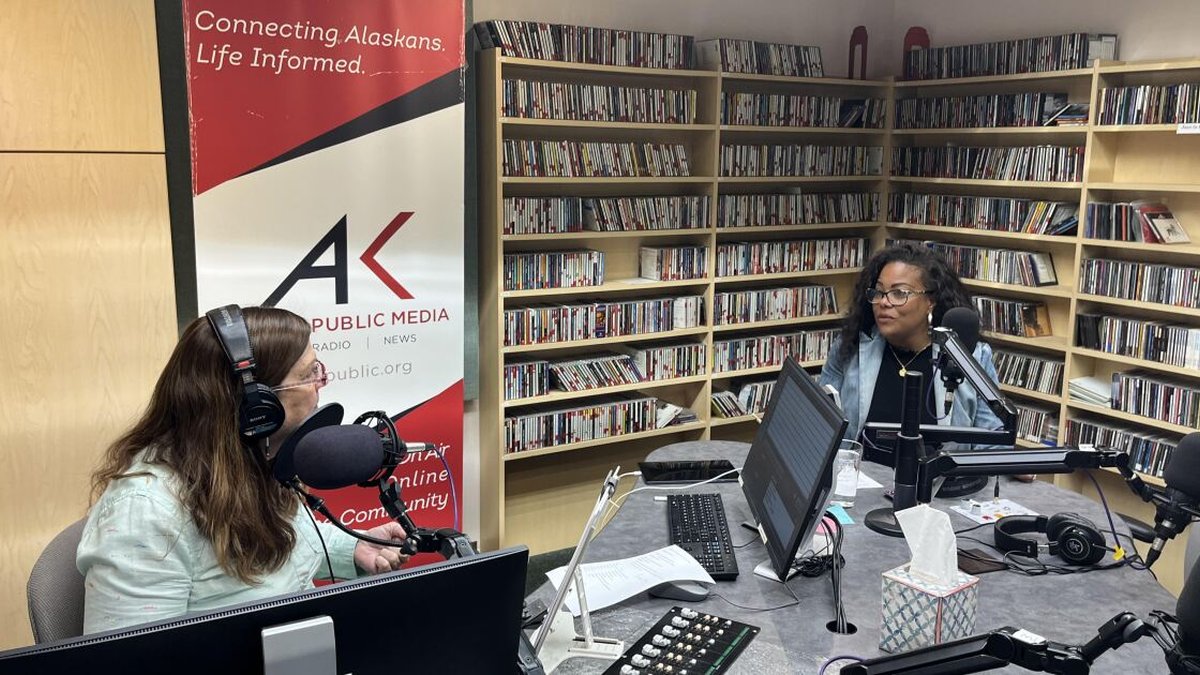
As Alaska and the nation celebrate the United States' 250th anniversary, how do Alaska Native and other underrepresented communities think we're faring on equity, cultural respect and representation? What does true equity look like — and who gets to define it? On this Talk of Alaska, we reflect on who we are as a diverse but divided nation, and how we can build more unity.
Guests:
- Chalyee Éesh Richard Peterson, President of the Central Council of the Tlingit & Haida Indian Tribes of Alaska (Tlingit & Haida)
- Kim Waller, Municipality of Anchorage Chief Equity Officer
Resources:
- READ: Respect for Alaska Native Homelands, Cultures, and Peoples is Not Optional
- Learn more about Tlingit & Haida here
- Office of Equity and Inclusion 2025 Annual Report
- Follow the Municipality of Anchorage on Facebook and Instagram for resources, updates and stories from across the municipality.
- Municipality of Anchorage's Office of Equity and Inclusion
- Contact the Office of Equity and Inclusion via phone at 907-343-7119, or via email at Kim.Waller@anchorageak.gov
- Anchorage Chamber of Commerce's Diversity, Equity and Inclusion Resources

Facts Only

* The event references the United States' 250th anniversary.
* Guests included Chalyee Éesh Richard Peterson, President of the Central Council of the Tlingit & Haida Indian Tribes of Alaska.
* A guest included Kim Waller, Municipality of Anchorage Chief Equity Officer.
* Resources provided include information on Alaska Native homelands, the Office of Equity and Inclusion 2025 Annual Report, and municipal resources from the Office of Equity and Inclusion.
* The event prompted reflection on equity, cultural respect, and representation for underrepresented communities.

Executive Summary

The discussion centers on the state of equity, cultural respect, and representation for Alaska Native and other underrepresented communities in the context of the United States' 250th anniversary. The event features perspectives from Chalyee Éesh Richard Peterson, President of the Central Council of the Tlingit & Haida Indian Tribes of Alaska, and Kim Waller, Municipality of Anchorage Chief Equity Officer. The context calls for reflection on what true equity entails and who holds the authority to define it within a diverse but divided nation. Resources are provided for further learning about Alaska Native homelands, reports from the Office of Equity and Inclusion, and local municipal resources regarding diversity, equity, and inclusion in Anchorage.

Full Take

The framing of the conversation centers on establishing epistemic authority regarding concepts like "true equity" and defining which groups possess the power to set those definitions. This immediately introduces a tension between lived experience and institutional frameworks; Alaska Native voices are positioned as central to this inquiry, suggesting that current national understandings of equity may overlook specific cultural and territorial realities. The inclusion of municipal leadership alongside tribal leadership suggests an attempt to bridge local governance with broader national concepts of equity, but the potential for divergence in how these terms are operationalized remains an unaddressed space. A pattern emerges where complex socio-political issues—equity, representation, sovereignty—are framed as solvable through dialogue and reflection, which can be a strategy for building unity while simultaneously sidelining structural critiques that demand immediate material realignment rather than just reflective agreement. The implications suggest that defining equity is fundamentally a struggle over who controls the narrative and resource allocation within Alaska and the nation at large.