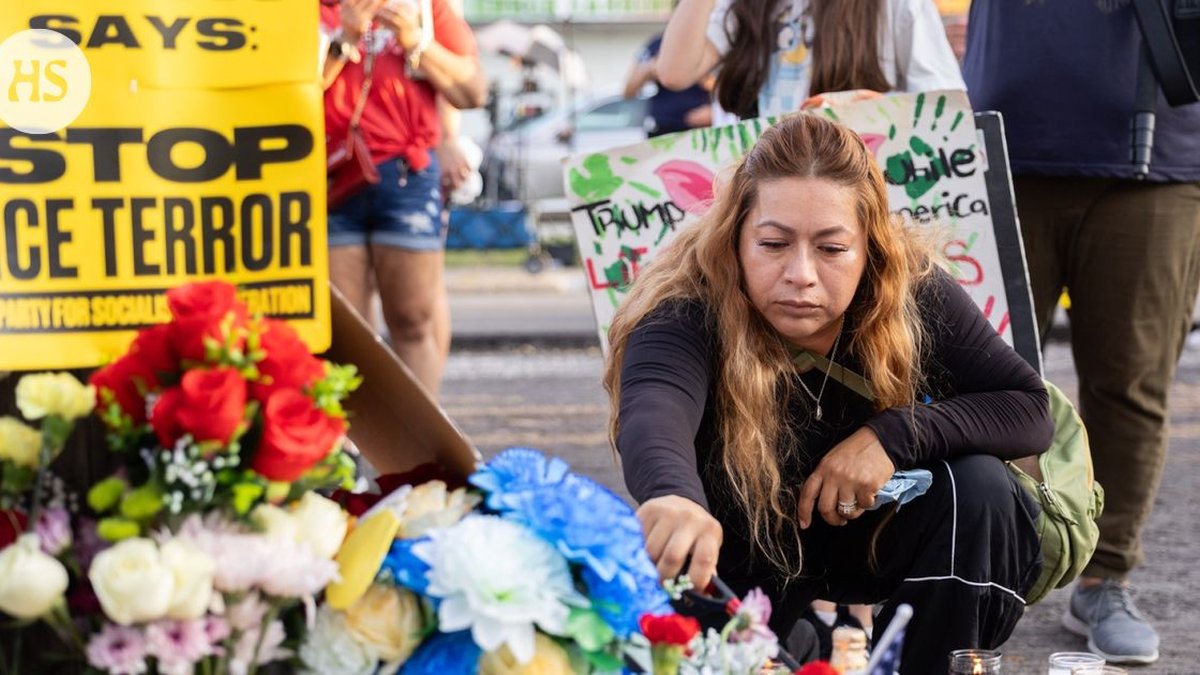
Meksiko aikoo vaatia rikossyytteitä Yhdysvalloissa 17 meksikolaisen kuolemasta. He ovat kuolleet maahanmuuttoviranomaisten pidätyskeskuksissa tai viranomaisten operaatioissa presidentti Donald Trumpin toisella presidenttikaudella. Asiasta kertoivat esimerkiksi uutistoimisto AFP ja uutiskanava CNN.
Meksikon ulkoministeri Roberto Velasco ilmoitti, että maa ”ohittaa diplomaattisen tason ja kääntyy suoraan Yhdysvaltain syyttäjien puoleen”. Vaatimus toimitetaan sekä osavaltioiden syyttäjille että Yhdysvaltain oikeusministeriölle.
Lisäksi Meksiko aikoo nostaa siviilikanteita pidätyskeskuksia ylläpitäviä yrityksiä vastaan ihmisoikeusloukkausten lopettamiseksi.
”Aiomme tehdä kaikkemme, sillä emme voi pysyä vaiti” meksikolaisten kuolemitsta, Meksikon presidentti Claudia Sheinbaum sanoi torstaina tiedotustilaisuudessaan uutistoimisto AP:n mukaan.
Sheinbaumin mukaan meksikolaisten ”ainoa rikos on ollut tehdä rehellistä työtä Yhdysvalloissa”.
Viimeisin tapaus sattui tiistaina, kun maahanmuuttoviranomaisen ICE:n agentti ampui 52-vuotiaan meksikolaisen Lorenzo Salgado Araujon kuoliaaksi Houstonissa Texasin osavaltiossa. Salgado Araujo oli pakettiautossaan, kun hänet ammuttiin. Hän oli asunut ja työskennellyt Yhdysvalloissa yli 30 vuotta.
Yhdysvaltain sisäisen turvallisuuden ministeriö DHS, jonka alaisuudessa ICE toimii, on kertonut AP mukaan agentin ampuneen itsepuolustukseksi. Ministeriö väittää, että Salgado Araujo yritti ajaa ICE:n agentin yli.
DHS kertoi myöhemmin, että ICE:n agentit eivät olleet etsineet Salgado Araujoa vaan kahta guatemalalaista epäiltyä. The New York Times -lehden mukaan toisen guatemalalaisen epäiltiin olleen Salgadon autossa, vaikka niin ei ollut.
DHS:n mukaan Salgado Araujo oli asunut Yhdysvalloissa ilman tarvittavia lupia.
Araujon uskotaan olevan ensimmäinen henkilö, jonka ICE:n agentit ampuivat kuoliaaksi sen jälkeen, kun kaksi amerikkalaista ammuttiin Minneapolisissa tammikuussa. Minneapolisin tapaukset johtivat laajoihin mielenosoituksiin.
Meksikon hallituksen mukaan yhteensä 17 meksikolaista on kuollut Trumpin toisen presidenttikauden aikana. Heistä 14 kuoli ICE:n pidätyskeskuksissa ja kolme viranomaisten operaatioiden aikana.
Tähän asti Meksikon hallitus on tukenut uhrien perheitä, lähettänyt Washingtoniin diplomaattisia kirjelmiä sekä vienyt asian Amerikan maiden ihmisoikeuskomissioon.
Sheinbaum määräsi aiemmin tänä vuonna konsulaatit tarkastamaan säännöllisesti ICE:n pidättämien ihmisten tilannetta. Hallitus on myös tehnyt valituksen YK:n ihmisoikeusvaltuutetulle.
Viimeisin vaatimus kiristää entisestään Meksikon ja Trumpin hallinnon jo valmiiksi jännittyneitä suhteita. Sheinbaum on ryhtynyt edeltäjiään tiukempiin toimiin järjestäytynyttä rikollisuutta vastaan sen jälkeen, kun Trump uhkasi käyttää sotilaallisia toimia meksikolaisia huumekartelleja vastaan.
Facts Only
* Seventeen Mexican nationals died in the United States during custody or operations by immigration authorities during Donald Trump's second term.
* The deaths occurred in detention centers or during official operations.
* Mexico’s Foreign Minister stated it would appeal directly to U.S. prosecutors, bypassing diplomatic channels.
* Mexico plans to file civil lawsuits against detention facility operators to end human rights violations.
* President Claudia Sheinbaum stated the only crime committed by Mexicans in the U.S. was working honestly.
* The most recent death involved an ICE agent shooting and killing Lorenzo Salgado Araujo in Houston, Texas.
* The deceased had resided and worked in the U.S. for over 30 years.
* U.S. DHS stated the agent acted in self-defense against Salgado Araujo, who allegedly attempted to flee.
* DHS also indicated agents were seeking two Guatemalan suspects in the vehicle of Salgado Araujo.
* Mexico has sent diplomatic notes and requests to the Inter-American Commission on Human Rights regarding the victims.
Executive Summary
Full Take
The narrative frames a conflict where legal and procedural mechanisms—diplomacy, civil litigation, and international human rights bodies—are being bypassed in favor of direct appeals based on sovereign responsibility. The focus shifts from establishing accountability through domestic or established legal routes to asserting immediate, direct pressure on the U.S. government via formal requests and litigation against institutions. This shift suggests a recognition that existing diplomatic frameworks are insufficient for addressing perceived systemic abuses by immigration enforcement bodies.
The context of the deaths, linked directly to immigration detention and operations, establishes an implicit pattern where state action results in loss of life, which is then reframed as an issue requiring immediate moral redress rather than protracted legal review. The assertion that the only crime was working honestly introduces a stark moral counter-narrative against official operational justifications, emphasizing the perceived injustice inherent in the system itself.
The specific incident involving Salgado Araujo, where the subsequent U.S. defense focused on the presence of other suspects rather than the alleged flight attempt by the deceased, highlights the difficulty in establishing verifiable timelines and intentions when state actors are involved. The pattern suggests a dynamic where official narratives (self-defense vs. pursuit of others) function to manage accountability. The implied consequence is that achieving genuine justice requires reorienting the entire relational structure—moving from bureaucratic appeals to direct confrontation with the source of power, which inherently changes the dynamic of perceived agency and victimhood.
Bridge Questions: What established legal precedents exist for invoking direct appeals against sovereign enforcement actions when diplomatic avenues are rejected? How do international human rights bodies effectively intervene when states explicitly opt out of conventional diplomatic processes? What conditions must be met for a society to successfully shift focus from procedural compliance to existential demands for accountability?
Sentinel — Human
The text appears to be a synthesis of reported events and official statements, structured like journalistic reporting, suggesting human compilation rather than purely synthetic generation.