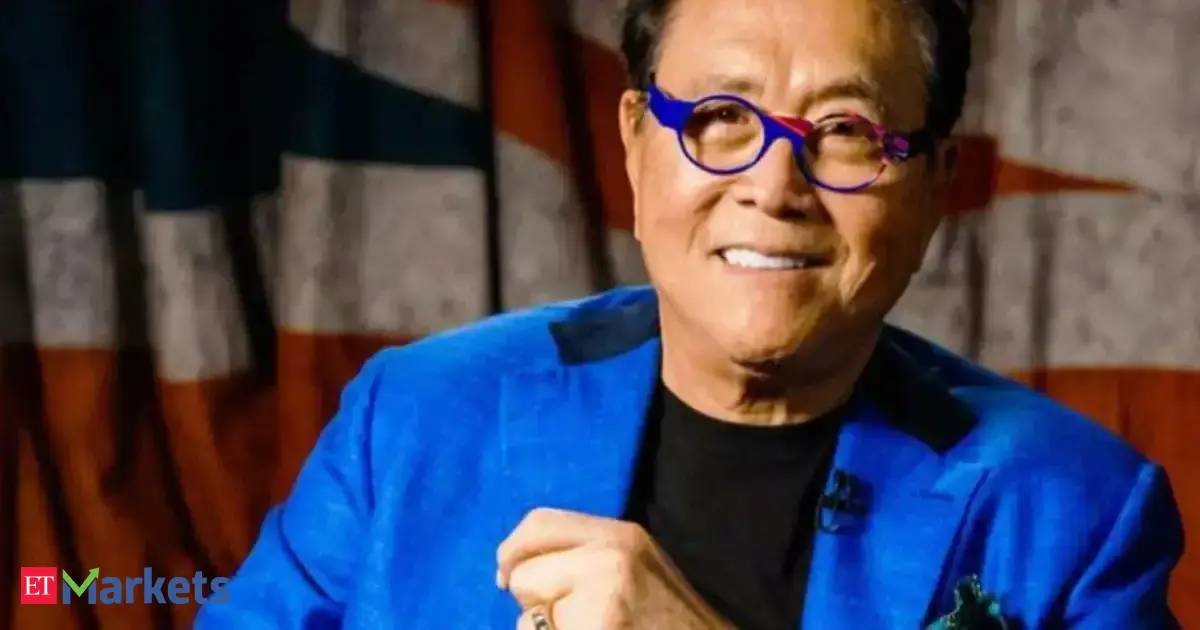
Taking to X, the popular author quoted a Vietnam-era protest song: “War: What is it good for? Absolutely nothing.” He, however, noted that if wars were not profitable, there wouldn’t have been any wars.
Kiyosaki said that he served Vietnam’s military twice, once in 1966 and then in 1971-72. During this time, he lost many friends. “I returned to Vietnam three weeks ago to find my own answers, say goodbye to lost friends, and make peace with myself. My concern about this war in the “Holy Lands” is for those killed and wounded in this war,” he said.
The author added that his concern also includes those of us at home who are far from this war but will suffer financially due to inflation. “Our national debt, poverty, and homelessness are how we all pay for this war,” he further said, adding that this is why financial education is essential in times of peace and especially in times of war.
“Your greatest asset is you, and your choices as to what financial education you choose to put into your brain. War may be a time for you to get smarter and richer….if you choose your teachers and your financial education with care,” he wrote.
https://x.com/theRealKiyosaki/status/2038050835574472771
In another post earlier, Kiyosaki reiterated his view that investors can get richer in case of a crash in 2026, as predicted by the renowned French astrologer Nostradamus in the 1500s and Edgar Cayce in the early 1900s.
“I started with nothing while still flying for the US Marines and rarely sell. Like many of you, I had no money to start with… but I just bought small assets, held them for years, and rarely sold. Most of you know I bought my first six Bitcoins for $600 — all the money I had — and did not eat for days. It took plain and simple US Marine Corps discipline and close friends, not with money but with spiritual support,” he wrote in his post on X.
Kiyosaki claimed that even billionaire investor Warren Buffett has sold billions of dollars worth of stocks and is sitting on large cash reserves, waiting for markets to fall so he can buy assets at lower prices.
“Rich lesson on investing: Investors who can see the future are the investors who get richer. The ‘buy, hold, and pray’ crowd will be the biggest losers,” he added.
The rising hostilities in the oil-rich Middle East have led to the prolonged closure of the Strait of Hormuz, resulting in a mind-boggling rally in oil prices. Brent crude is currently hovering above the $110-level. The sharp surge has triggered inflation worries back in India as well, leading to a massive selloff on Dalal Street.
(Disclaimer: Recommendations, suggestions, views and opinions given by the experts are their own. These do not represent the views of The Economic Times)
(What's moving Sensex and Nifty Track latest market news, stock tips, Budget 2025, Share Market on Budget 2025 and expert advice, on ETMarkets. Also, ETMarkets.com is now on Telegram. For fastest news alerts on financial markets, investment strategies and stocks alerts, subscribe to our Telegram feeds .)
Subscribe to ET Prime and read the Economic Times ePaper Online.and Sensex Today.
Top Trending Stocks: SBI Share Price, Axis Bank Share Price, HDFC Bank Share Price, Infosys Share Price, Wipro Share Price, NTPC Share Price
(What's moving Sensex and Nifty Track latest market news, stock tips, Budget 2025, Share Market on Budget 2025 and expert advice, on ETMarkets. Also, ETMarkets.com is now on Telegram. For fastest news alerts on financial markets, investment strategies and stocks alerts, subscribe to our Telegram feeds .)
Subscribe to ET Prime and read the Economic Times ePaper Online.and Sensex Today.
Top Trending Stocks: SBI Share Price, Axis Bank Share Price, HDFC Bank Share Price, Infosys Share Price, Wipro Share Price, NTPC Share Price
Facts Only
Robert Kiyosaki, author of *Rich Dad Poor Dad*, posted on X (formerly Twitter) quoting a Vietnam-era protest song about war.
He served in Vietnam’s military in 1966 and again in 1971-72, losing friends during his service.
Kiyosaki recently visited Vietnam to reflect on his experiences and honor lost friends.
He expressed concern for casualties in the ongoing Middle East conflict and its financial impact on people globally.
He linked war to inflation, national debt, poverty, and homelessness, advocating for financial education.
Kiyosaki claimed investors can profit during crises, citing his early Bitcoin purchase (six coins for $600) and long-term holding strategy.
He mentioned Warren Buffett selling stocks and holding cash reserves in anticipation of a market downturn.
He referenced predictions by Nostradamus and Edgar Cayce about a 2026 market crash as a potential wealth-building opportunity.
Middle East hostilities have closed the Strait of Hormuz, causing Brent crude prices to exceed $110.
The oil price surge has triggered inflation concerns and stock market selloffs in India.
The Economic Times disclaimer states that expert opinions do not represent their views.
Executive Summary
Robert Kiyosaki, author of *Rich Dad Poor Dad*, shared his views on war and financial education via social media, referencing a Vietnam-era protest song to critique the profitability of war. He recounted his military service in Vietnam (1966 and 1971-72), expressing concern for casualties in the ongoing Middle East conflict and its financial repercussions, including inflation, national debt, and homelessness. Kiyosaki emphasized the importance of financial education during turbulent times, suggesting that individuals can leverage crises to grow wealthier through disciplined investing. He cited his own experiences, including early Bitcoin investments and holding assets long-term, while noting Warren Buffett’s strategy of holding cash reserves ahead of potential market downturns. Meanwhile, geopolitical tensions in the Middle East have disrupted oil supply routes, driving Brent crude prices above $110, sparking inflation concerns and market volatility in India.
Kiyosaki also referenced predictions by Nostradamus and Edgar Cayce about a potential 2026 market crash, framing it as an opportunity for prepared investors. His narrative blends personal anecdotes, investment advice, and macroeconomic observations, urging readers to prioritize financial literacy and strategic asset accumulation. The broader context includes rising oil prices, market selloffs, and the interplay between geopolitical conflicts and economic stability.
Full Take
**Steelman:** Kiyosaki’s narrative is a compelling blend of personal reflection, financial advice, and macroeconomic critique. By tying his military experiences to broader economic consequences of war, he humanizes abstract financial concepts. His emphasis on financial education as a tool for resilience—rather than passive victimhood—resonates with readers seeking agency in uncertain times. The reference to historical market predictions and Buffett’s strategy adds credibility, positioning him as a contrarian thinker who sees opportunity in chaos.
**Pattern Scan:** The analysis detects subtle emotional framing—war as a financial burden, inflation as a hidden tax—without outright manipulation. Kiyosaki’s use of personal anecdotes (e.g., Bitcoin investment, military service) serves as an appeal to authority (ARC-0012 *Anecdotal Authority*), blending lived experience with financial advice. The disclaimer from The Economic Times acts as a *sanewashing* mechanism (ARC-0037 *Plausible Deniability*), distancing the publication from Kiyosaki’s views while still amplifying them.
**Root Cause:** The narrative assumes that financial literacy is the primary shield against systemic risks (war, inflation, market crashes), which may understate structural barriers like wealth inequality or policy failures. It echoes the "bootstraps" paradigm, where individual discipline trumps systemic constraints—a common trope in self-help finance.
**Implications:** For human agency, Kiyosaki’s message is empowering but risks oversimplifying complex geopolitical and economic forces. The beneficiaries are likely those already positioned to invest (e.g., asset holders), while the costs fall disproportionately on marginalized groups. Second-order effects could include increased speculative behavior or distrust in traditional financial institutions.
**Bridge Questions:**
How might Kiyosaki’s advice apply differently across socioeconomic classes?
What systemic changes (e.g., policy, corporate accountability) could mitigate the financial fallout of war beyond individual investing?
If market crashes are predictable, why do so few investors act on such forecasts?
**Counterstrike Scan:** A coordinated influence campaign might weaponize Kiyosaki’s narrative to promote financial fatalism ("only the prepared survive") or distract from systemic critiques of war profiteering. However, the content here leans more toward motivational finance than overt manipulation. No structural alignment with a hypothetical attack playbook is detected.
Patterns detected: ARC-0012 Anecdotal Authority, ARC-0037 Plausible Deniability