Sun 5 Jul 2026 at 11:35pm
In short:
Wildfires have devastated more than 17,000 hectares of land across France, Spain and Portugal.
In Greece, a fast-moving wildfire broke out near Thessaloniki, the country's second largest city, causing evacuations.
What's next?
Temperatures in some places are forecast to reach 40 degrees Celsius on Sunday, local time.
Hundreds of firefighters have been battling forest infernos in heatwave-scarred Europe, as temperatures are set to rise again on Sunday, local time.
The latest wildfires have already devastated more than 17,000 hectares of land across France, Spain and Portugal where temperatures in some places are forecast to reach 40C.
Authorities registered thousands of excess deaths during one of Europe's worst heatwaves in June, and with more extreme weather on the way.
In Spain, a fire near the north-eastern Costa Brava coast burned more than 2,200 hectares in two days.
Firefighters "worked tirelessly throughout the night to consolidate the perimeter of the La Bisbal d'Empordà forest fire, which is now stabilised," the Catalunya fire service said in a statement.
Catalunya regional government president Salvador Illa said that a man had been detained in connection with the fire which has badly hit the Gavarres protected natural area between Barcelona and the French border.
In France, nearly 600 firefighters have been mobilised to contain a wildfire that has burned more than 1,000 hectares on a mountainside at Trevillach, about 36 kilometres east of Perpignan.
Another 300 firefighters battled another forest fire in a mountainous district of the south-eastern Drome department.
In Portugal, emergency services said they had controlled 80 per cent of a wildfire that had devastated about 13,000 hectares of forest in the north of the country.
Several regions across Portugal, Spain and southern France stepped up heat alerts on Sunday as temperatures rose again.
On Monday, the heatwave is expected to move north, with forecasters saying it could last until next weekend.
Evacuations in Greece
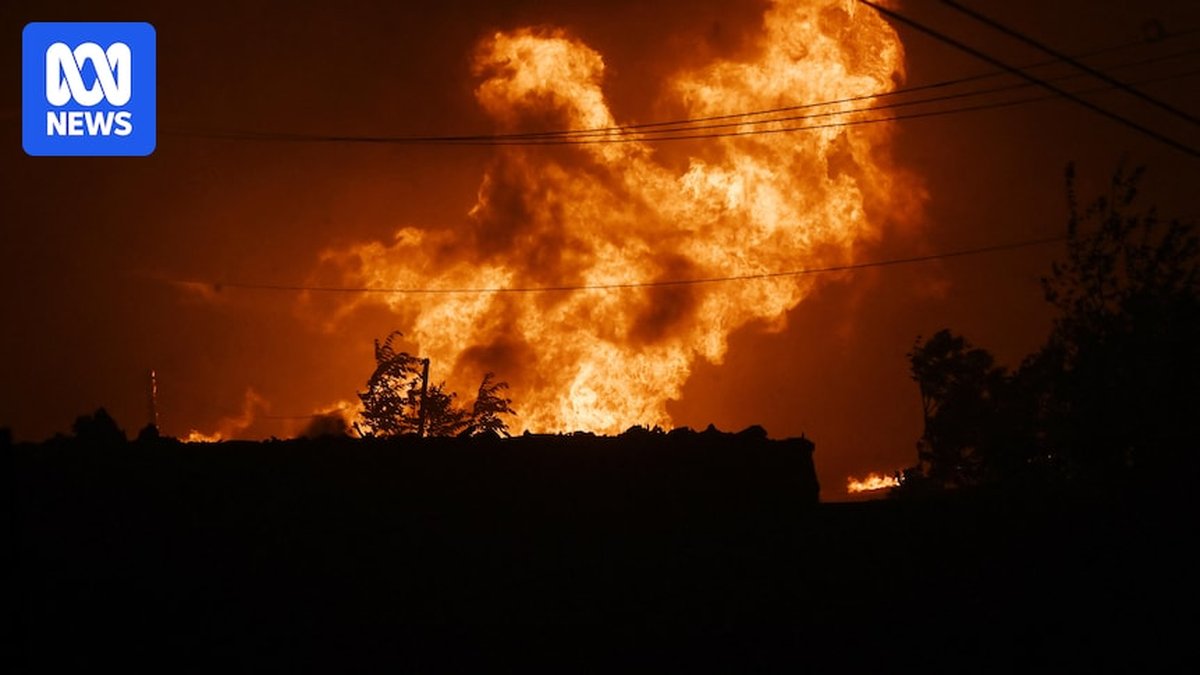
In Greece, a fast-moving wildfire broke out Saturday evening, local time, near the suburbs of Thessaloniki, the country's second largest city.
Residents of the small settlements of Anthoupoli, Filothei and Galini were notified by text to evacuate.
While residences were spared, several businesses were damaged.
Residents of Thessaloniki could see the flames and even heard explosions as flammable materials inside businesses burned.
About 115 firefighters along with 38 fire engines and an unknown number of volunteers battled the blaze, the fire service said.
Authorities announced overnight that a 76-year-old man was arrested on suspicion of starting the fire.
Additional blazes were burning around Thessaloniki on Saturday, including in the Halkidiki Peninsula and the city of Kilkis to the north.
More trouble ahead
Western Europe has already seen heatwaves this year in May and June that would have been "virtually impossible" without climate change, the World Weather Attribution group of scientists said.
Following a two-week surge in temperatures in June, France said there had been more than 2,000 extra deaths than usual in just one week, while Spain and Belgium each reported more than 1,000.
Authorities in several countries fear more summer trouble ahead.
"Climate change is here, we are living the consequences and it is only the start of July," said French fire service Colonel Eric Belgioino.
"The season is going to be long for the soldiers fighting fires. You have to help us,"he said.
AFP/AP
Sentinel — Human
The text exhibits the clear organizational and stylistic markers of professional news reporting, grounding specific incidents with broader climate context, suggesting human editorial oversight.