In the first half of the 2026 fiscal year, the Labor Department certified 17% more (H-2A Temporary Agricultural Worker) jobs than in the same period the year before.
Bayer Wins Supreme Court Roundup Case to Limit Lawsuits
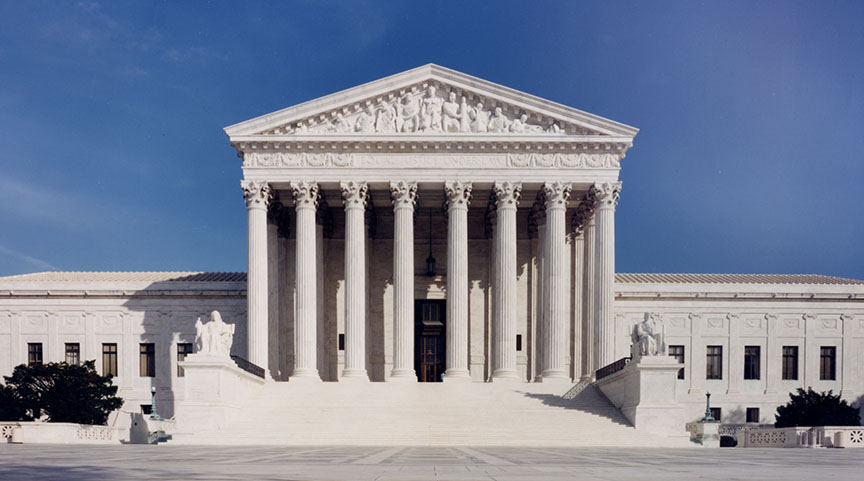
CNBC’s Garrett Downs reported that “the Supreme Court in a 7-2 decision on Thursday said Bayer cannot be sued over state-level claims that the company failed to warn of cancer risks from its weedkiller Roundup and its chemical glyphosate.”
“The decision is a major win for Bayer and the Trump administration, which argued that failure-to-warn claims were preempted by a federal law that governs pesticides,” Downs reported. “It’s also a major blow to the Make America Healthy Again movement, which helped return Trump to the White House in the 2024 election but has felt betrayed by the administration’s embrace of glyphosate — the most commonly used weedkiller in agriculture that has long been linked to cancer claims.”
“Justice Brett Kavanaugh wrote for the majority, arguing that because the Environmental Protection Agency deems glyphosate safe when used properly and has not required a cancer warning label, the Federal Insecticide, Fungicide and Rodenticide Act preempts state-level failure to warn claims,” Downs reported. “‘With respect to pesticide labels, FIFRA demands ‘[u]niformity’ and expressly preempts state labeling requirements that are ‘in addition to’ or ‘different from’ federal labeling requirements,’ Kavanaugh wrote. ‘And as a matter of law, state tort law may not impose labeling requirements ‘in addition to’ or ‘different from’ federal requirements imposed under FIFRA.'”
“Bayer celebrated the decision on Thursday, saying it is ‘good for science, farmers, and industries that depend on regulatory clarity for innovation,'” Downs reported. “‘It should help significantly contain the Roundup litigation after nearly a decade of legal battles. The ruling should result in the dismissal of current warning-based claims and bar future failure-to-warn claims,’ the company, which bought Roundup maker Monsanto in 2018, said in a statement.”
The Wall Street Journal’s Lydia Wheeler and Patrick Thomas reported that “the company’s appeal to the Supreme Court stemmed from a case brought by John Durnell, a Missouri gardener who sued Monsanto in 2019 under the state law for not warning him about the dangers of glyphosate, which he alleges caused him to develop non-Hodgkin lymphoma. A jury awarded him $1.25 million in damages. ”
“The Durnell verdict is one of several multimillion-dollar awards against the company in the Roundup cases that have gone to trial so far. Some of the other early trials have ended in verdicts for the defense,” Wheeler and Thomas reported. “…The court’s ruling could help pave the way for the dismissal of thousands of claims against Bayer and preclude new ones. Some plaintiffs could refile their cases, but it would eliminate a key argument about the alleged failure to warn.”
MAHA Movement Upset by Ruling
E&E News’ Ellie Borst and Pamela King reported that “the Supreme Court’s ruling shielding the maker of Roundup weed killer from cancer lawsuits is the latest in a string of decisions that the Make America Healthy Again coalition says could cost Republicans at the ballot box in November.”
“‘Today’s devastating SCOTUS decision was enabled by the Trump administration, which chose the profits of foreign pesticide manufacturers over the health of American citizens including children who will grow up sick from exposure to toxic chemicals,’ said Kelly Ryerson, a MAHA influencer known online as ‘Glyphosate Girl,'” Borst and King reported. “‘It is unforgivable,’ she continued. ‘We will make sure all voters know exactly how this domestic chemical attack happened.'”
Today’s SCOTUS ruling is historic. Never in history has an administration so blatantly and willingly sold out our fertility, vitality, and health to corporate interests. It is unforgivable. We will make sure all voters know exactly how this domestic chemical attack happened.
— Kelly Ryerson (@GlyphosateGirl) June 25, 2026
“It’s far from MAHA’s first disappointment related to pesticides. The movement’s fury converged in a protest outside of the Supreme Court in April when the justices heard oral arguments for the case,” Borst and King reported. “President Donald Trump earlier this year signed an executive order on the critical importance of glyphosate to U.S. food supply, invoking protections under the Defense Production Act, after multiple meetings with top Bayer officials and an aggressive marketing campaign from the agrichemical giant.”
“Vani Hari, a food blogger with close ties to (Health Secretary Robert F. Kennedy Jr), in a post on the social media site X called the Supreme Court’s decision a ‘devastating blow’ before shifting the focus to ongoing battles in Congress over including liability shields for pesticide manufacturers in the farm bill,” Borst and King reported. “‘This is a defining moment. Every elected official now has a choice: stand with families harmed by toxic chemicals or stand with the corporations that profit from them,’ Hari wrote in the post.”
Farm Groups Praise Ruling
Successful Farming’s Mariah Squire reported that “farmer groups praised the (Supreme Court) ruling, with the National Corn Growers Association (NCGA) calling it ‘great news for all farmers in the country.’”
“‘Farmers depend on clear, consistent labeling and a uniform regulatory framework to use pesticides safely and responsibly,’ the American Soybean Association said in a statement,” according to Squire’s reporting. “‘The Supreme Court’s decision provides much-needed clarity on the role of federal, science-based regulation and reaffirms the value of sound science in the regulatory process.'”
“‘This decision is a win for farmers and the broader agricultural community,’ said National Association of Wheat Growers CEO Sam Kieffer, in a statement,” Squire reported. “‘Farmers depend on clear, predictable, science-based regulations and continued access to effective crop protection tools. Today’s decision reaffirms that EPA’s label, based on a rigorous process of scientific review, is the law. NAWG continues to support a regulatory system grounded in sound science, transparency, and consistency.'”
Facts Only
* The Supreme Court issued a 7-2 decision regarding lawsuits against Bayer over Roundup and glyphosate claims.
* Justice Kavanaugh wrote for the majority, arguing that FIFRA preempts state labeling requirements that differ from federal requirements.
* Bayer celebrated the ruling, stating it benefits science, farmers, and industries.
* The appeal stemmed from a case brought by John Durnell, who sued Monsanto in 2019 alleging failure to warn about glyphosate dangers.
* A jury awarded $1.25 million in damages to Durnell in one of the Roundup cases against Monsanto.
* Agricultural groups, including the National Corn Growers Association and the American Soybean Association, praised the ruling for providing regulatory clarity.
* The Make America Healthy Again (MAHA) coalition expressed fury over the decision, citing concerns about corporate profit overriding public health.
* The Trump administration signed an executive order regarding glyphosate importance to the U.S. food supply.
* Bayer stated the ruling should dismiss current warning-based claims and bar future failure-to-warn claims.
* The Labor Department certified 17% more H-2A Temporary Agricultural Worker jobs in the first half of the 2026 fiscal year compared to the previous year.
Executive Summary
Sentinel — Human
This text exhibits the structure and content blending characteristic of human journalistic reporting that synthesizes legal facts with highly polarized public reaction.