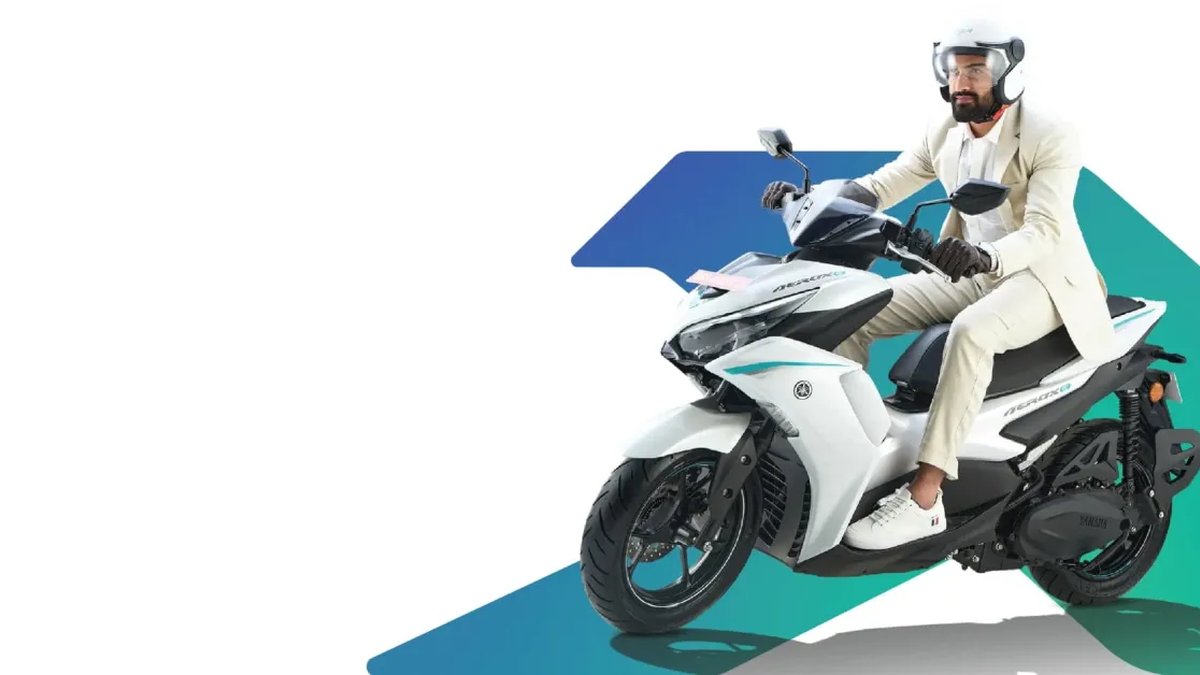
Yamaha has officially entered India’s increasingly competitive premium electric scooter market with the launch of the new Aerox-E, an electric version of its popular sporty maxi-scooter. Rather than chasing outright affordability, Yamaha is targeting riders looking for performance-focused urban transportation with premium features.
That has resulted in a more premium scooter, but also one of the highest scooter price tags in the country.
The Aerox-E retains the aggressive styling of its gasoline-powered sibling, complete with sharp twin-LED headlights, muscular bodywork, and aerodynamic fairings. Underneath the familiar design, however, is an all-new electric drivetrain.
The scooter is powered by a 9.4 kW electric motor producing 48 Nm of torque, enough to propel it to a claimed top speed of 95 km/h (59 mph). Riders can choose between Eco, Standard, and Power ride modes, while a dedicated Boost mode provides extra acceleration for overtaking or quick launches away from traffic lights.
The scooter’s motor is powered by a pair of removable 1.5 kWh batteries, providing a combined 3 kWh of capacity. Yamaha claims up to 117 km (73 miles) of range on the Indian driving cycle, and the batteries can be charged from empty to full in around 3 hours and 10 minutes using the supplied dock charger. The removable battery design also makes charging more convenient for riders without access to parking near an outlet.
However, the batteries do not appear to be one of several competing standards, such as the Honda MPP e: batteries, which a consortium of motorcycle makers, including Yamaha, had previously backed as a unified swappable battery standard.
The Aerox-E also arrives with a respectable list of premium features, including traction control, a color TFT dashboard with smartphone connectivity through Yamaha’s Y-Connect app, smart key functionality, all-LED lighting, and wider rear tires designed to improve stability.
However, Yamaha’s launch strategy comes with a challenge. The Aerox-E is priced at 282,000 INR (roughly US $2,950), which is above several established premium electric scooters in India. Initial impressions from test riders in Indian media also suggest real-world range may land closer to 80 km (50 miles) in Eco mode rather than approaching the full 117 km claim, meaning that premium price could be stretched further by overly optimistic claims.
Even so, if Yamaha can convince buyers that its blend of refinement, performance, and brand reputation is worth the premium, the Aerox-E could become a healthy addition to a broader electric two-wheeler lineup in India. But in one of the world’s fastest-moving EV markets, it’ll face no shortage of capable competition.
FTC: We use income earning auto affiliate links. More.
Comments
Facts Only
* Yamaha launched the Aerox-E in India.
* The scooter is an electric version of the sporty maxi-scooter.
* The motor produces 48 Nm of torque from a 9.4 kW electric motor.
* Claimed top speed is 95 km/h (59 mph).
* The scooter uses two removable 1.5 kWh batteries for a total capacity of 3 kWh.
* The claimed range on the Indian driving cycle is up to 117 km (73 miles).
* Charging time from empty to full is approximately 3 hours and 10 minutes using a dock charger.
* The scooter includes traction control, a color TFT dashboard with Y-Connect app, smart key functionality, all-LED lighting, and wider rear tires.
* The retail price is 282,000 INR (approx. US $2,950).
* Initial testing suggests real-world range in Eco mode may be closer to 80 km (50 miles).
* The battery design allows for convenient charging without immediate parking access.
Executive Summary
Full Take
The narrative positions the Aerox-E in a specific market space: premium performance over absolute affordability. The tension lies between Yamaha's branding and performance claims, the high pricing relative to established alternatives, and the potential gap between advertised range and real-world performance metrics. The discussion moves beyond simple specifications to examine how perceived value is constructed through marketing (premium features) versus demonstrable utility (actual range). A key pattern involves managing expectations: the optimistic 117 km range claim contrasts with preliminary data suggesting a shorter achievable range, creating a potential dissonance that impacts buyer confidence regarding the premium price point. The existence of a swappable battery standard among other manufacturers implies an established technological direction that Yamaha’s specific implementation must either align with or justify deviation from. The core implication is whether the convergence of performance and premium features successfully justifies the high price in a saturated EV market, or if the marketing gloss obscures functional limitations.
Patterns detected: ARC-0043 Motte-and-Bailey, ARC-0024 Ambiguity