When Russian President Vladimir Putin ordered the full-scale invasion of Ukraine in February 2022, he was counting on a weak Western response. More than four years on, Putin still hopes Western support for Ukraine will eventually wane, but he will be far less confident following this week’s NATO summit in Ankara.
Despite high-profile tensions between US President Donald Trump and other NATO leaders on a number of flash points including Greenland, European security, and the US-led conflict with Iran, this week’s two-day summit in the Turkish capital produced a strong show of unity on the key issue of continued support for the Ukrainian war effort. This including major funding commitments worth tens of billions of dollars for 2026 and 2027, as well as official recognition that Ukraine has now transitioned from aid recipient to transatlantic security contributor.
Stay updated
As the world watches the Russian invasion of Ukraine unfold, UkraineAlert delivers the best Atlantic Council expert insight and analysis on Ukraine twice a week directly to your inbox.
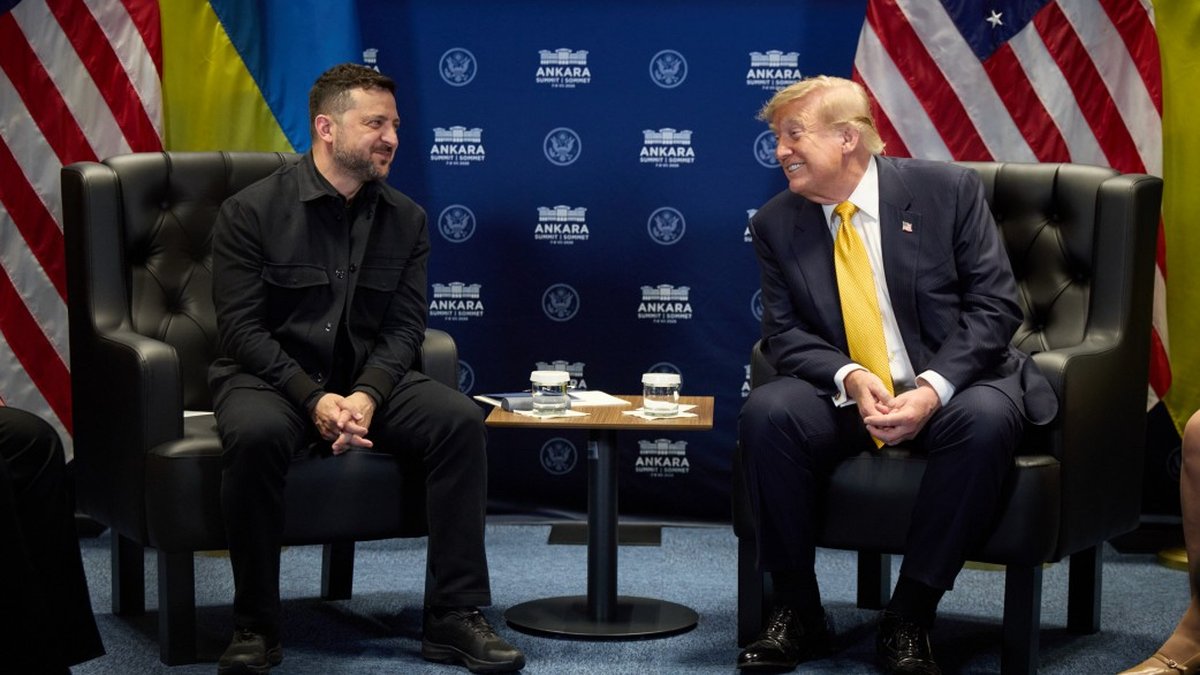
The single most striking feature of the entire summit was arguably the change in tone from Trump on Ukraine. The US leader has frequently been critical or dismissive of Ukraine, but on this occasion, he spoke warmly of his “very good relationship” with Ukrainian President Volodymyr Zelenskyy while acknowledging Ukraine’s recent military progress and talking up the country’s future prospects.
Crucially, Trump also said he was ready to grant Kyiv a license to produce interceptor missiles for the Patriot air defense system. Any co-production agreement will inevitably take time to implement, but this is nevertheless potentially big news for Ukraine’s long-term security.
Kyiv has made great progress since 2022 addressing Russian drone and cruise missile attacks, but remains highly vulnerable to ballistic missile strikes. The Patriot system is the only platform currently capable of intercepting Russian ballistic missiles. However, Ukraine has recently run short of ammunition amid a growing global deficit.
Moscow is seeking to exploit this shortage, with a series of ballistic missile strikes in early July killing dozens of Ukrainian civilians and leaving hundreds wounded. A license to make interceptors in Ukraine could help reduce the ballistic threat to the civilian population and counter what Zelenskyy refers to as Russia’s “last remaining argument in this war.”
Eurasia Center events
Trump’s supportive stance toward Ukraine comes amid growing international awareness that the tide of the war may now be turning in Kyiv’s favor. During the first half of 2026, invading Russian troops struggled to advance at all and actually lost ground in some sectors of the battlefield. Meanwhile, rapidly evolving Ukrainian drone warfare capabilities made it possible to impose a so-called “logistics lockdown” on Russian-occupied Crimea and dramatically escalate the bombardment of military and industrial targets deep inside Russia.
Ukraine’s innovative use of drones has sparked a spiraling fuel crisis across the Russian Federation that is now bringing the war home to millions of ordinary Russians for the first time. This is undermining the Kremlin’s longstanding efforts to shield the Russian population from the negative consequences of the Ukraine invasion. It is also exposing the reality behind Putin’s frequent boasts of inevitable Russian victory.
A number of specific incidents in recent months have highlighted Putin’s weakening position. In early May, fears over possible Ukrainian drone strikes forced him to significantly scale back Russia’s annual Victory Day celebrations in Moscow and seek Trump’s assistance to broker a temporary ceasefire for the duration of the military parade, which the Russian leader has traditionally used to project strength. Zelenskyy took full advance of Putin’s discomfort, issuing a spoof presidential decree permitting the parade to proceed.
One month later, Ukraine marked the opening of Putin’s flagship St. Petersburg International Economic Forum by bombing the city’s oil terminal and naval base, leaving the city shrouded in plumes of black smoke as foreign delegations made their way to the forum venue. Within weeks, the Russian capital had also come under Ukrainian bombardment, including a series of spectacular strikes on the Moscow oil refinery.
These attacks have helped change perceptions of the war inside Russia and among international audiences. With Putin so obviously unable to defend high-value targets such as Moscow, St. Petersburg, occupied Crimea, and the country’s economically vital energy industry infrastructure, many are now questioning whether his continued talk of victory is in fact delusional.
The unity on display in Ankara this week will fuel further doubts over Moscow’s ability to end the war on favorable terms. For years, Putin and his Kremlin colleagues have been confidently anticipating a collapse in Western backing for Ukraine. Many in Moscow thought the return of Donald Trump to the White House in early 2025 would signal the start of this process. Instead, Europe has stepped up support amid growing recognition that Ukraine now has an indispensable role to play in the future of European security.
The Kremlin response to this week’s Ankara summit was predictably stern, with Russian Foreign Ministry spokesperson Maria Zakharova denouncing NATO for “irresponsible decisions that could lead to a catastrophe for the whole world.” This overblown rhetoric reflects a deep-seated sense of frustration in Moscow over the failure to isolate Ukraine. Kremlin officials continue to insist they will achieve all the goals of the invasion, but they also clearly recognize that while Western leaders stand with Ukraine, Russia has no obvious pathway to victory.
Peter Dickinson is editor of the Atlantic Council’s UkraineAlert service.
Further reading
The views expressed in UkraineAlert are solely those of the authors and do not necessarily reflect the views of the Atlantic Council, its staff, or its supporters.
The Eurasia Center’s mission is to enhance transatlantic cooperation in promoting stability, democratic values, and prosperity in Eurasia, from Eastern Europe and Turkey in the West to the Caucasus, Russia, and Central Asia in the East.
Facts Only
* Russian President Vladimir Putin ordered the full-scale invasion of Ukraine in February 2022.
* The NATO summit took place in Ankara over two days.
* The summit featured major funding commitments worth tens of billions of dollars for 2026 and 2027 support for Ukraine.
* Ukraine is recognized as having transitioned from an aid recipient to a transatlantic security contributor.
* US President Donald Trump spoke warmly of his relationship with Ukrainian President Volodymyr Zelenskyy.
* Trump indicated readiness to grant Kyiv a license to produce interceptor missiles for the Patriot air defense system.
* The Patriot system is the only current platform capable of intercepting Russian ballistic missiles.
* Russian ballistic missile strikes in early July resulted in civilian casualties and injuries in Ukraine.
* Drone warfare capabilities allowed for imposing a "logistics lockdown" on Crimea and escalating bombardment inside Russia.
* Moscow demonstrated reduced celebrations regarding Victory Day due to fears over Ukrainian drone strikes.
Executive Summary
The NATO summit in Ankara produced a demonstration of unity regarding continued support for Ukraine, including major funding commitments totaling tens of billions of dollars for 2026 and 2027. This included an official recognition that Ukraine has transitioned from being solely an aid recipient to a transatlantic security contributor. A notable shift occurred in US President Trump's public stance; he expressed a warm relationship with Ukrainian President Zelenskyy, acknowledged recent military progress, and indicated willingness to grant Kyiv a license to produce interceptor missiles for the Patriot air defense system, potentially affecting Ukraine’s long-term security.
The context for these developments involves evolving battlefield dynamics in Ukraine, where Russian forces reportedly struggled to advance in the first half of 2026, and Ukrainian drone warfare capabilities enabled significant strikes deep inside Russia. These actions have generated domestic shifts in Russia, as attacks on energy infrastructure and military targets have exposed limitations in Moscow’s defense and credibility regarding claims of inevitable victory. Despite Russian frustration, evidenced by strong rhetoric from the Foreign Ministry, the unity shown at the summit suggests a potential shift in Western commitment, which is being viewed by Moscow as undermining its expectations for an outcome favorable to Russia.
Full Take
The narrative presented reflects a critical juncture where evolving battlefield realities and internal Russian pressures are beginning to reshape the geopolitical calculus surrounding the conflict. The shift in Western unity, evidenced by financial commitments and a more favorable public tone from US leadership toward Ukraine, challenges the long-held assumption among Moscow that sustained external support would inevitably wane. This suggests that the perception of Russia's military advantage is being contested by demonstrable operational shifts on the ground, particularly concerning drone warfare and internal instability caused by kinetic actions against Russian infrastructure.
The pattern observed is a dynamic where material realities—such as successful defensive maneuvering and strategic strikes—begin to erode the narrative of guaranteed victory, forcing actors to recalibrate expectations. The use of domestic incidents involving targeted strikes against Russian assets appears to be a mechanism for shifting internal political discourse, exposing discrepancies between Kremlin assurances and observable outcomes. Furthermore, the response from Moscow—denouncing NATO actions as irresponsible—signals an attempt to maintain a strong adversarial posture despite apparent shifts in the external balance of power. This dynamic raises questions about the relationship between perceived strength, tangible concessions, and the long-term viability of strategic objectives pursued through military force.
What are the underlying assumptions driving the Kremlin's insistence on achieving victory, even amidst visible signs of operational difficulty? If the focus shifts from a purely territorial objective to a conflict involving systemic economic and psychological impact within Russia, how does that alter the calculus for concluding negotiations or accepting terms now? And what does this demonstrated resilience in Ukraine suggest about the limits of military force as a singular determinant of political outcome in modern conflicts?
Sentinel — Human
This text exhibits the structure and thematic depth of established geopolitical commentary, suggesting it was written by an experienced analyst synthesizing known events rather than purely generative output.