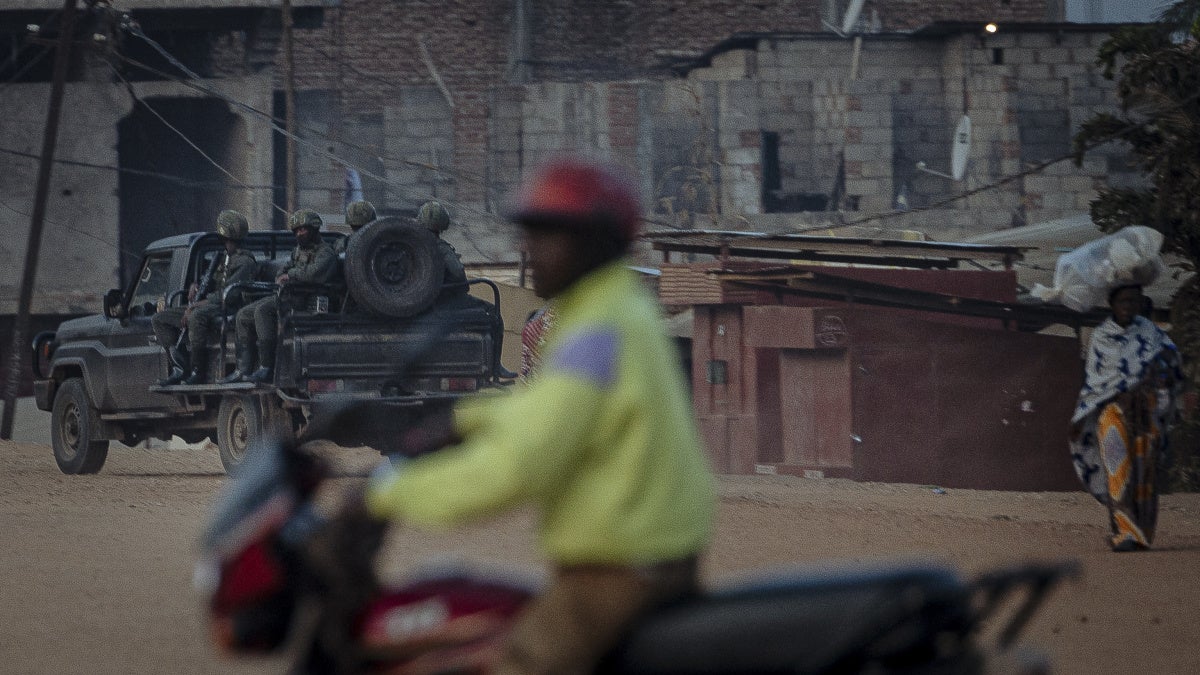
- The M23 armed group and Rwandan military forces carried out an abusive month-long occupation of an eastern Democratic Republic of Congo city beginning in December 2025.
- During this time, these forces shot fleeing civilians, summarily executed more than 50 people during door-to-door searches, raped at least 8 women, and forcibly disappeared at least 12 people.
- Criminal investigations are needed, including by the International Criminal Court, to ensure these crimes do not go unpunished.
(Kinshasa) – The M23 armed group and Rwandan military forces carried out an abusive month-long occupation of the eastern Democratic Republic of Congo city of Uvira beginning in December 2025, Human Right Watch said in a report released today.
The 23-page report,“‘We Are Civilians!’: Killings, Sexual Violence, and Abductions by the M23 and Rwandan Forces in Uvira, Democratic Republic of Congo,” documents the M23 and Rwandan forces’ occupation of Uvira, the second largest city in South Kivu province from December 10, 2025, days after the signing of the United States-brokered Washington Accords, until their withdrawal on January 17, 2026. During this time, these forces shot fleeing civilians, summarily executed more than 50 people during door-to-door searches, raped at least 8 women, and forcibly disappeared at least 12 people.
“After taking control of Uvira, M23 fighters and Rwandan forces went door-to-door to summarily kill men and boys and committed rape and abductions,” said Philippe Bolopion, executive director at Human Rights Watch. “Human Rights Watch documented numerous horrific abuses but may have only scratched the surface. Criminal investigations are needed, including by the International Criminal Court, to ensure these crimes do not go unpunished.”
The report, the result of the first field research into abuses in Uvira during the M23 and Rwandan occupation, is based on over 120 interviews conducted in March and April 2026. Human Rights Watch wrote to the government of Rwanda and to Bertrand Bisimwa, the head of the M23, to provide the report’s preliminary findings, but received no responses.
On March 2, the US government imposed sanctions on the Rwandan army and its commanders for their role in the capture and occupation of Uvira.
The M23, first formed in 2012 as a rebellion against the Congolese government, reemerged in late 2021 with support from Rwanda. Since then, fighting between the M23 and Rwandan forces, on one side, and Congolese armed forces along with allies including the abusive militias known as the Wazalendo, on the other, have displaced hundreds of thousands of people in North and South Kivu, in eastern Congo. The warring parties have committed unlawful killings, rape, forced recruitment, and forced labor.
While taking control of Uvira, the M23 and Rwandan forces repeatedly fired their weapons at civilians, killing and wounding them, including those attempting to flee to safety. One man who tried to flee with family members saw four of them shot as they tried to flee the city on December 10. “It was chaos,” he said. “We had small bags that we threw off and we ran. I wasn't hit so I just ran to the lake. I saw my brother, his wife, and two of his children fall.”
Once M23 and Rwandan forces had control of Uvira, they began seeking out men and boys in door-to-door operations, accusing them of ties to the Wazalendo and executing many on the spot. Human Rights Watch documented the summary execution of 53 civilians by the M23 and Rwandan forces, most on December 10.
Human Rights Watch also documented eight cases of rape by M23 fighters and Rwandan soldiers against women in and around Uvira. Survivors spoke of the near-total lack of accessible healthcare services during the occupation, particularly the absence of timely post-exposure prophylactic (PEP) treatment to prevent contracting HIV, and of adequate care for injuries and infections resulting from sexual violence.
The M23 also abducted civilians into their forces during the Uvira occupation. In at least 12 documented cases, their whereabouts remain unknown.
Congolese and Rwandan authorities, with international support, should commit to a full accounting of the abuses by the M23 and Rwanda military forces that occurred during the occupation of Uvira.
Rwanda should cease its support for the abusive M23, Human Rights Watch said. The Congolese government, in collaboration with international bodies, should conduct prompt, transparent, and impartial investigations into serious violations of international human rights and humanitarian law by the parties to the conflict, and ensure that those responsible are held accountable in fair and transparent trials.
Communal graves remain across the city. The Congolese government should facilitate investigations by independent human rights monitors and instruct military and administrative authorities to facilitate their access, protect witnesses, and preserve any evidence. Congolese authorities should ensure the protection of Uvira civilians, including by ending support to and removing abusive Wazalendo militias from the city.
International partners of both Congo and Rwanda should support the Independent Commission of Inquiry on the Human Rights Situation in the South and North Kivu Provinces, mandated by the United Nations Human Rights Council in 2025, so that it is able to fulfill its mandate. These governments should also sanction M23 and Rwandan commanders and others implicated in serious violations and review military and security assistance and cooperation with Rwanda to ensure such support is not fueling further violations.
“The occupation of Uvira shows the abusive methods used by the M23 and Rwandan forces,” Bolopion said. “Victims and their families in Uvira seek justice and an end to the impunity that drives these crimes. Congo’s supporters need to step up to support these efforts.”
Facts Only
* The M23 armed group and Rwandan military forces occupied the city of Uvira in the eastern Democratic Republic of Congo from December 10, 2025, to January 17, 2026.
* During the occupation, forces shot fleeing civilians.
* More than 50 people were summarily executed during door-to-door searches.
* At least eight women were raped by the forces.
* At least twelve people were forcibly disappeared.
* The occupation involved door-to-door operations targeting men and boys, accusing them of ties to the Wazalendo, and on-the-spot executions.
* Survivors of sexual violence reported a lack of accessible healthcare and post-exposure prophylactic treatment.
* The M23 abducted civilians, with at least 12 documented cases of unknown whereabouts.
* The US government imposed sanctions on the Rwandan army and its commanders in March 2026.
* Human Rights Watch documented numerous horrific abuses.
Executive Summary
Full Take
Sentinel — Human
The text displays the characteristics of investigative journalism, effectively synthesizing documented reports and local context to frame serious human rights violations and demand accountability.