Tenzin Nyidon
DHARAMSHALA, March 18: The Department of Security under the Central Tibetan Administration (CTA), led by Security Minister Gyari Dolma, on Wednesday emphasised the existence of legal mechanisms to address serious defamatory statements, particularly those concerning the life and security of His Holiness the Dalai Lama.
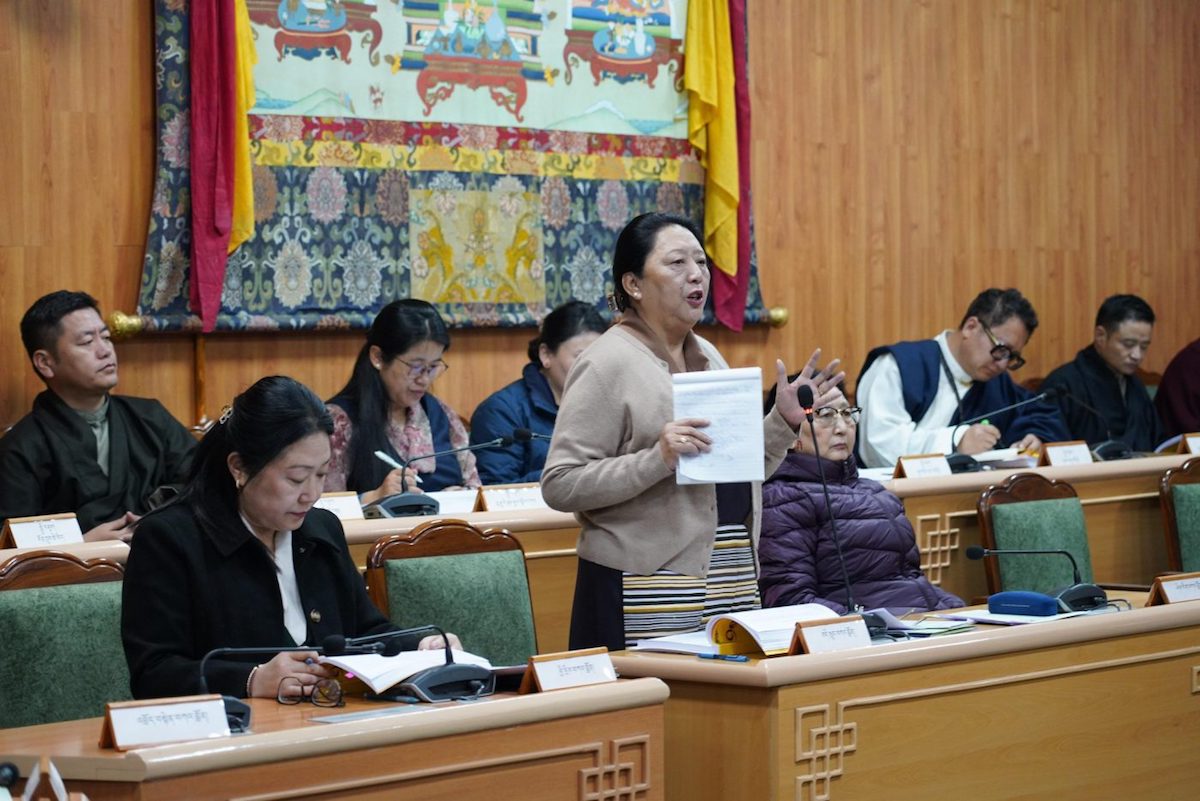
The remarks were made on the third day of the ongoing 11th session of the 17th Tibetan Parliament-in-Exile, following queries raised by Members of Parliament regarding the growing spread of misinformation, fabricated documents, and misleading narratives across social media platforms.
Responding to concerns, Minister Gyari Dolma acknowledged that misleading and harmful content circulating online has increasingly impacted the community. She pointed to the spread of false claims on critical issues, including forged letters falsely attributed to institutions such as the Gaden Phodrang, the Cabinet, and various monasteries.
Emphasizing the seriousness of the issue, she stated that any content undermining His Holiness the Dalai Lama or the Tibetan cause must be treated with the highest priority. At the same time, she noted that a diversity of opinions expressed online, particularly on individual platforms such as YouTube, should be viewed within the broader framework of democratic discourse and not dismissed outright. The Security Minister stressed the need for a balanced and measured response, cautioning against both overreaction and indifference. “It is neither appropriate to treat all such content as entirely negative nor to endorse it uncritically. A balanced approach with proper leadership is essential,” she said.
Highlighting the evolving nature of the challenge, she described the spread of misinformation as a form of “new warfare,” noting that similar patterns are observed globally, where digital platforms are increasingly used to create social unrest and influence political processes. She further warned of the risks posed by hostile forces seeking to undermine Tibetan unity and institutions through coordinated disinformation campaigns. In this regard, she urged Tibetans to exercise vigilance and responsibility in their use of social media, cautioning against the unverified sharing of sensitive or misleading content.
To address these challenges, she stated that the CTA is working toward establishing a coordinated response mechanism, including a proposed emergency response committee comprising key officials such as the Cabinet Secretary, Home Secretary, Security Secretary, and Foreign Secretary. The committee would be tasked with monitoring developments, responding swiftly to emerging crises, and ensuring interdepartmental coordination.
Additionally, the Minister highlighted the role of the Tibetan Computer Resource Center (TCRC) mechanism in tracking the origins and spread of misinformation and strengthening response strategies. She added that efforts are also underway to enhance technological capacity, including the adoption of advanced digital tools and improved monitoring systems.
On the question of publicly disclosing individuals responsible for spreading false information, the minister expressed reservations, stating that “naming and shaming” may not always yield meaningful outcomes. Instead, she emphasized the importance of timely clarification and public rebuttal of false claims as a more effective approach. She revealed that in several instances, authorities have directly engaged with individuals who unknowingly shared misleading content, leading to its removal. At the same time, investigations are ongoing to identify the sources of more serious cases, with relevant information being shared with the Government of India and, where necessary, with authorities in other countries.
The minister reiterated that legal action has been pursued in the past in cases involving grave defamation, particularly those threatening the safety of His Holiness the Dalai Lama. “There are now established mechanisms through which legal recourse can be pursued when such incidents arise,” she affirmed.
Despite current resource constraints, she noted that the CTA is making sustained efforts to strengthen its institutional capacity to respond to digital threats. She also highlighted the collective strength of the Tibetan community, noting that Tibetans often unite in response to issues concerning His Holiness the Dalai Lama.
Concluding her statement, the Security Minister welcomed further suggestions from members of the House to enhance response strategies, particularly in the legal domain, and reaffirmed that a general framework to address such challenges is already in place under the Cabinet.
Facts Only
* The Department of Security under the CTA led by Security Minister Gyari Dolma addressed misinformation concerns on March 18.
* The issue involves defamatory statements regarding His Holiness the Dalai Lama and the Tibetan cause.
* Misinformation, including forged letters, is spreading across social media platforms.
* The CTA is establishing a coordinated response mechanism including an emergency response committee.
* The Tibetan Computer Resource Center (TCRC) is being utilized to track misinformation.
* Legal action has been pursued in the past for grave defamation.
* The CTA views the spread of misinformation as a “new warfare.”
* The Minister believes a balanced response is crucial, avoiding overreaction or indifference.
* “Naming and shaming” is not the primary approach; clarification and rebuttal are preferred.
* Investigations are ongoing to identify the sources of serious cases.
* The CTA is working to enhance technological capacity to monitor and respond.
* The CTA is aware of the potential for coordinated disinformation campaigns.
Executive Summary
Full Take
Sentinel — Likely Human
The article presents a measured response to online misinformation targeting the Dalai Lama, characterized by cautious language and a focus on establishing coordinated response mechanisms. While demonstrating a recognition of the serious nature of the threat, the text exhibits stylistic patterns suggestive of AI assistance, particularly through its heavy use of hedging and lack of distinct voice.