Washington, D.C., March 18, 2026— The Trump administration’s efforts to intimidate news outlets over their coverage of U.S. military action in the Middle East directly threatens the public’s right to know, the Committee to Protect Journalists said Wednesday.
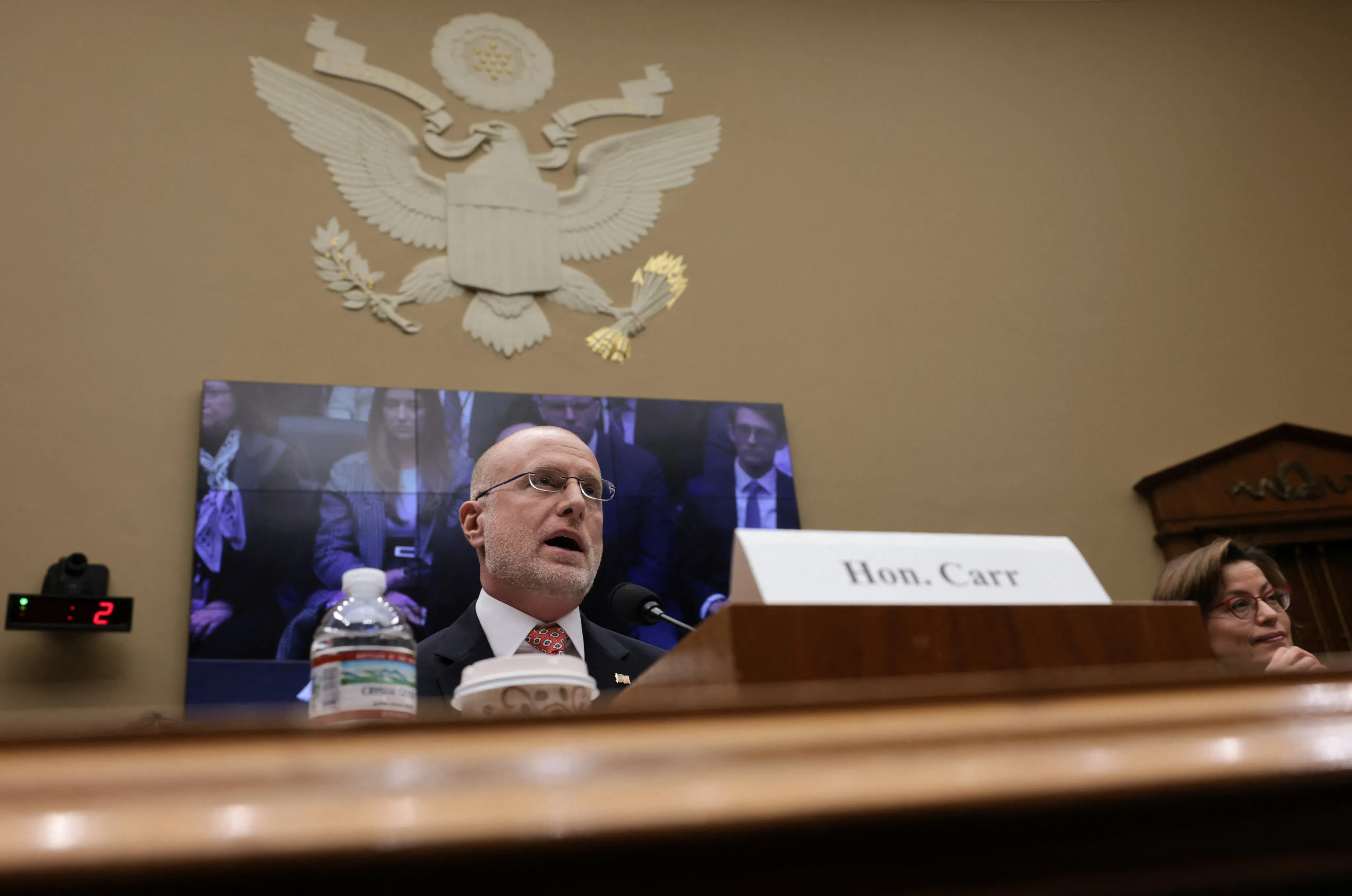
Federal Communications Commission (FCC) chairman Brendan Carr warned in a post on X that “broadcasters that are running hoaxes and news distortions… have a chance now to correct course before their license renewal comes up” and in a post on Truth Social, U.S. President Donald Trump said “fake news” media should be considered to be committing treason. They are the latest in a long line of actions that CPJ has warned are undermining the ability of Americans to access accurate information.
“Restricting what media can report and how is the hallmark of an authoritarian government,” said CPJ CEO Jodie Ginsberg. “The United States is rightly proud of its protections for press freedom. These protections exist not to protect journalists or governments but to protect the public’s right to know. Statements from this administration meant to intimidate the press into silence create a harmful chilling effect that stymies the free flow of information.”
Ginsberg added: “The US Department of Defense has a nearly $1 trillion budget — making it one of the biggest spenders of public money. It’s crucial that journalists be allowed to cover how that money is being spent and what decisions are being made in the name of the American people.”
A report by respected democracy watchdog the V-Dem Institute concluded this week that the United States is no longer a democracy, stating that “the third wave of autocratization” has spread to the United States, and noted that freedom of expression in the United States had fallen to its lowest level since the end of WWII. It said the decline was driven by a range of documented attacks from censorship and financial coercion to legal intimidation and suppression. “Freedom of expression is at the core of democracy and therefore is the most common target among autocratizing leaders over the past 25 years,” the report’s authors noted.
Trump and Carr’s statements over the war are the latest in the administration’s attempts to coerce the media, through threats of license revocation, spurious lawsuits, or limits to media access. Last year, the Trump administration implemented new Pentagon credentialing policies that most media outlets refused to sign onto because they would severely restrict their freedom to report. Last week, photographers were barred from press briefings with Defense Secretary Pete Hegseth because his staff reportedly found the images of him to be “unflattering.”
The statement from Carr on license revocation follows a series of threats from the head of the FCC, which has authority over broadcasters. It does not regulate cable or streaming news, and licenses belong to individual stations, not parent networks like ABC. Revoking a broadcast license on the basis of editorial content would be unheard of, and revocations are rare.
The current U.S. administration is not the first in recent years to seek to control how the media covers the war. Following the U.S. invasions of Iraq and Afghanistan during the Bush administration, journalists, most notably those with foreign outlets, faced increased restrictions and access, and CPJ’s report on the Obama White House found that the administration’s war on leaks and other efforts to control information as the “most aggressive…since the Nixon administration.”
However, as noted in the V-Dem report, “the scale and speed of autocratization under the Trump administration are unprecedented in modern times.”
Attempts to censor war coverage put the United States on a par with several other countries that are trying to control what their media reports on the Iran war. During this conflict CPJ has documented press freedom violations in Iran, Israel and the occupied Palestinian territory (IoPT), Jordan, Iraq, Syria, Lebanon, Oman, the United Arab Emirates, Saudi Arabia, Kuwait, Qatar, and Bahrain in relation to coverage of the conflict.
Facts Only
* Donald Trump issued statements on Truth Social characterizing “fake news” media as “treasonous.”
* Brendan Carr, FCC Chairman, warned broadcasters facing license renewal hearings about “hoaxes and news distortions.”
* The U.S. Department of Defense has a budget of approximately $1 trillion.
* CPJ CEO Jodie Ginsberg described the administration’s actions as undermining the public’s right to know.
* The V-Dem Institute reported a decline in freedom of expression in the United States to its lowest level since WWII.
* The FCC’s authority extends to broadcasters but not cable or streaming news.
* Broadcast licenses are held by individual stations, not parent networks.
* Last year, new Pentagon credentialing policies were implemented, causing media outlets to refuse participation.
* Photographers were barred from press briefings with Defense Secretary Pete Hegseth due to unflattering images.
* The Bush administration also faced restrictions on media access to conflicts in Iraq and Afghanistan.
* CPJ has documented press freedom violations in Iran, Israel, the IoPT, Jordan, Syria, Lebanon, Oman, the UAE, Saudi Arabia, Kuwait, Qatar, and Bahrain related to the ongoing conflict.
Executive Summary
Full Take
Sentinel — Likely Human
This article presents a critical analysis of the Trump administration’s efforts to influence media coverage of the Middle East conflict, using established journalistic techniques. While exhibiting some stylistic patterns common in reporting, the use of attribution and detailed descriptions suggests human authorship rather than AI generation.