Skip to content
Chimera readability score 66 out of 100, Academic reading level.

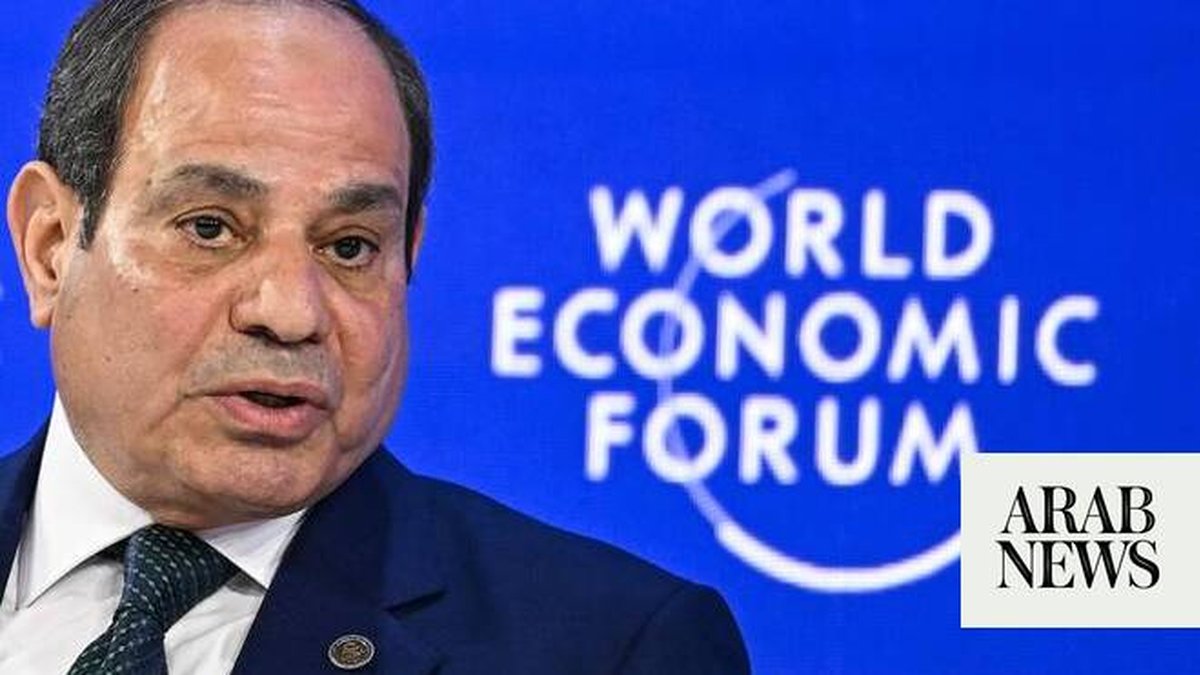
CAIRO: Egyptian President Abdel Fattah El-Sisi said Thursday his country was in an economic “state of near-emergency” as a result of the Middle East war, warning of runaway inflation.
The Arab world’s most populous nation has not been physically impacted by the US and Israeli war with Iran, which has seen strikes on Egypt’s wealthy Gulf allies and paralyzed trade through the vital Strait of Hormuz.
But by the close of business Thursday, the Egyptian pound had fallen to an eight-month low against the US dollar, trading at 50.2 to the USD amid reports of short-term investment outflows.
Egypt’s import-dependent economy has proven highly sensitive to fluctuations in the currency, which has lost two-thirds of its value since 2022.
At a military academy event, El-Sisi said “the current crisis might have some repercussions on prices,” warning that price-gouging traders could be tried “in military courts,” according to a statement from his spokesman.
Over the weekend, El-Sisi had warned the war could spell trouble for the Suez Canal, the region’s other vital waterway besides the Strait of Hormuz and a key source of foreign currency for Egypt.
Major shipping companies have already directed traffic away from the region, rerouting around the Cape of Good Hope off the tip of southern Africa.
El-Sisi said Thursday that Egypt was attempting “sincere and honest mediation efforts to stop the war, as its continuation will have a hefty toll.”
Cairo has in the past hosted nuclear talks between Iran and the International Atomic Energy Agency, and is a guarantor of the US-brokered Gaza peace deal between Israel and Hamas.
But Iranian Foreign Minister Abbas Araghchi said Thursday his country was “not asking for a ceasefire” or negotiations with the US.
El-Sisi says Egypt in ‘state of near-emergency’ as war threatens economy
Short Url
https://arab.news/cs7kv
El-Sisi says Egypt in ‘state of near-emergency’ as war threatens economy
- El-Sisi said “the current crisis might have some repercussions on prices“
- He said Egypt was attempting “sincere and honest mediation efforts to stop the war”

Facts Only

* Egyptian President Abdel Fattah El-Sisi stated the country is in an economic “state of near-emergency” due to the Middle East war and warned of runaway inflation.
* The war has not physically impacted Egypt but has affected strikes on Gulf allies and paralyzed trade through the Strait of Hormuz.
* The Egyptian pound fell to an eight-month low against the US dollar, trading at 50.2 to the USD due to reports of short-term investment outflows.
* Egypt’s import-dependent economy is highly sensitive to currency fluctuations, losing two-thirds of its value since 2022.
* El-Sisi warned that the current crisis might have repercussions on prices and suggested price-gouging traders could face trial in military courts.
* The war threatened the Suez Canal, identified as a key source of foreign currency for Egypt.
* Major shipping companies redirected traffic around the Cape of Good Hope.
* Egypt is attempting “sincere and honest mediation efforts” to stop the war.
* Iranian Foreign Minister Abbas Araghchi stated that Iran was not asking for a ceasefire or negotiations with the US.

Executive Summary

Egyptian President Abdel Fattah El-Sisi stated that Egypt is in an economic "state of near-emergency" due to the Middle East war, warning of runaway inflation. This situation is linked to external pressures, as the conflict has impacted trade routes through the Strait of Hormuz and affected Egyptian Gulf allies. The Egyptian pound has fallen to an eight-month low against the US dollar, with reports indicating short-term investment outflows. The import-dependent economy has shown high sensitivity to currency fluctuations, having lost two-thirds of its value since 2022. El-Sisi also indicated that the ongoing war could affect prices, suggesting that price-gouging traders might face action in military courts. Furthermore, the threat extends beyond immediate economic concerns to vital waterways like the Suez Canal, which is a source of foreign currency for Egypt. In response to the conflict, Egypt is pursuing mediation efforts, while Iran’s Foreign Minister indicated that negotiations with the US were not being sought by Iran.

Full Take

The narrative links geopolitical conflict directly to domestic economic instability, framing the situation as an existential crisis requiring immediate governmental intervention, which is then tied to specific legal and regulatory threats against profiteers. The pattern here involves using external conflict as a justification for internal control mechanisms, shifting focus from the cause (war) to the symptom (inflation/currency volatility) to mandate a specific response (military courts). This moves the discussion away from diplomatic solutions toward internal enforcement, which is consistent with a paradigm where perceived national security threats are managed through centralized, coercive authority. The juxtaposition of Egypt’s historical role as a regional guarantor (Gaza deal, nuclear talks) against the current economic vulnerability suggests a tension between external diplomatic positioning and internal resource management under duress. A key implication is how this framing impacts agency: by invoking emergency status, the narrative seeks to limit public discourse on the war's causes while simultaneously asserting state control over commodity pricing mechanisms. What are the underlying assumptions about the relationship between sovereign security and economic stability in volatile regions? How does the invocation of military legal structures for price control redefine the boundary between legitimate economic regulation and punitive action during crises? What is being obscured by focusing solely on "near-emergency" status rather than detailing the supply chain vulnerabilities or alternative mediation pathways?

Sentinel — Human

Confidence

This text reads like standard geopolitical news reporting, effectively weaving together stated political positions with observable economic consequences stemming from a wider conflict.

Signals Detected
low severity: Sentence length variance is somewhat varied; transitions are functional rather than purely mechanical.
low severity: The piece flows logically from macro-geopolitical context to specific economic impact and a direct quote, suggesting narrative intent.
low severity: Uses specific attribution (El-Sisi, Araghchi) alongside reporting on events, indicating source triangulation.
low severity: The core claims align with established geopolitical realities regarding Egypt's economic vulnerability and the context of regional conflicts.
Human Indicators
The inclusion of specific, context-heavy details (Strait of Hormuz, Suez Canal route changes, previous diplomatic roles) alongside a direct quote from a sitting head of state suggests grounding in real-world events.
The shift between reporting external events and quoting Egyptian officials demonstrates journalistic structure rather than pure LLM summarization.