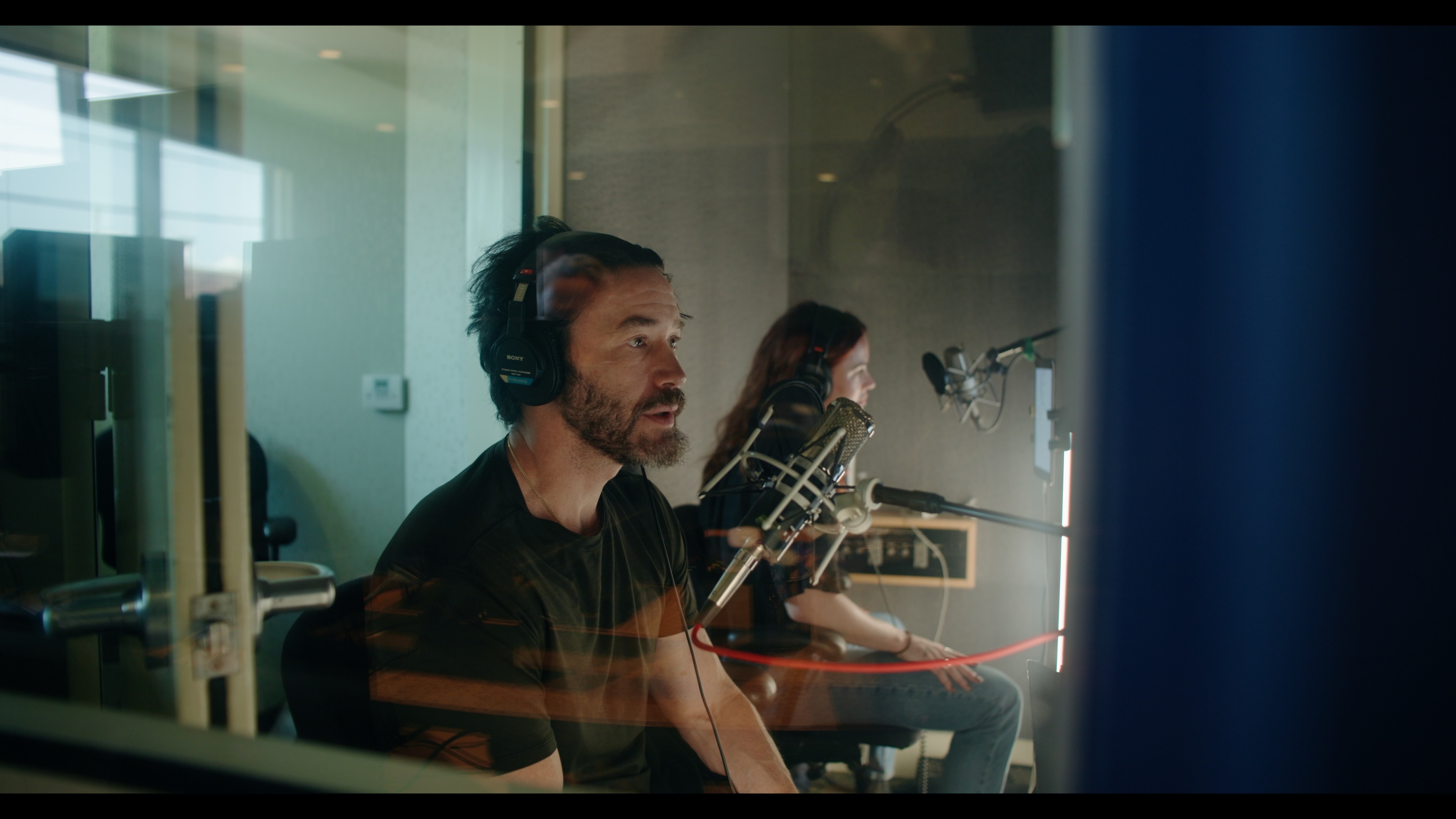
A new audio podcast is bringing the Gospels to life through a new kind of experience. “The Christ,” a four-part audio dramatization of Jesus’ life — from his birth in the manger to his triumphant resurrection — is the first-ever full-scale dramatization of Jesus’ life and ministry produced in this format.
With over 100 distinct characters and the use of cinematic production technology, the podcast features actors Tom Pelphrey as Jesus, David Oyelowo as Pontius Pilate; Paul Walter Hauser as John the Baptist; Courtney Hope as Mary, the mother of Jesus; Patricia Heaton as host; and John Rhys-Davies as the series narrator.
The four episodes will be released during Holy Week — starting on March 30 and ending on April 2.
Mark Ramsey, co-director and producer of the podcast, told EWTN News that he was inspired to create it because “it had yet to be done” and they “wanted to create something that was encouraging, that was thoughtful, that was familiar, that was exciting and fresh, something that supported everything you were hearing in church.”
He added that he was also interested in it because his background is in creating projects that “are as cinematic as possible.”
Mark Ramsey during the production of “The Christ.” | Credit: Ember Pictures
“I’ve always argued that the ears are underappreciated in terms of their contribution to our overall sensory experience,” he said. “I wanted to make audio projects that leverage the power of sound, the power of the ear, that created pictures that didn’t require video just like back in the day, except better and more modern.”
Ramsey highlighted their commitment to be “as faithful as possible” to Scripture when writing the script.
He added that they “wanted to be very faithful to the Gospels because we realize we’re literally dealing with sacred material. And people’s response to it — they will have an expectation that we will be faithful to that material. So, we were committed to that faithfulness.”
“The scenes were all from the Bible, all from the Gospels. How we chose those scenes and how we wove them together was really an artistic process, and it was a function of how well does this translate to audio,” he explained. “There were certain miracles that wouldn’t translate as well as certain other miracles. The miracle of enabling the deaf man to hear is perfect for this kind of vehicle. Enabling blind people to see not nearly so much.”
While the podcast remains faithful to the Gospel stories, they took creative liberties in the sequence in which they are told. Ramsey said the first episode of the podcast actually culminates in the crucifixion of Jesus and then goes back to tell the story of his years in ministry.
For the producer, the most impactful part is the ending — in which Jesus tells his disciples to follow him.
“That gave a lasting message to not only the disciples but anyone listening. And that was ultimately the climax of the story that lives with us today. It is the message today — follow me. And the whole two hours is the why, but that message at the end is the ask. That’s the question. That’s the challenge,” he shared.
Ramsey said he hopes the podcast “creates more hope in Holy Week.”
“We hope it enhances the experience of Holy Week. We hope it brings a new dimension to a familiar story so that people can experience it in a new way and also in a way that’s convenient to them wherever they are,” he said.
“We wanted something that introduced people to the story who had never read the Bible and gave it to them in a convenient way. We wanted something that gave a deeper experience to those who knew the story inside out, had seen or read it many times, but maybe had never heard it unless they were hearing the words of the Bible.”
“The Christ” can be heard wherever listeners get their podcast or directly on the podcast’s website.
Facts Only
A new audio podcast titled "The Christ" is a four-part dramatization of Jesus' life.
The podcast features over 100 distinct characters and uses cinematic production technology.
Notable actors include Tom Pelphrey as Jesus, David Oyelowo as Pontius Pilate, Paul Walter Hauser as John the Baptist, Courtney Hope as Mary, Patricia Heaton as host, and John Rhys-Davies as the narrator.
The four episodes will be released during Holy Week, starting on March 30 and ending on April 2.
Mark Ramsey is the co-director and producer of the podcast.
The podcast aims to be faithful to Scripture while taking creative liberties in the sequence of events.
The first episode culminates in the crucifixion of Jesus and then goes back to tell the story of his years in ministry.
The podcast is designed to enhance the experience of Holy Week and offer a new dimension to the familiar story.
It is available on various podcast platforms and the podcast's website.
Executive Summary
Full Take
The strongest version of this narrative is that "The Christ" podcast represents a innovative and accessible way to engage with the Gospel stories, leveraging modern audio production techniques to bring the Bible to life for both new and familiar audiences. The project's commitment to faithfulness to Scripture while allowing for creative storytelling is a notable balance, aiming to respect the sacred material while making it engaging and fresh.
Pattern scan: The narrative does not appear to employ manipulation patterns. It presents a straightforward account of a creative project with clear intentions and goals. The focus on faithfulness to Scripture and the use of notable actors and production techniques are presented as strengths, not as manipulative tactics.
Root cause: The paradigm driving this narrative is the desire to make religious stories more accessible and engaging through modern media. The unstated assumption is that a dramatic audio format can enhance understanding and appreciation of the Gospel stories, particularly for those who may not be familiar with the Bible or who have heard the stories many times before.
Implications: This project could have a positive impact on human agency and dignity by providing a new way to engage with spiritual material, potentially reaching people who might not otherwise connect with the stories. The use of high-quality production and notable actors could also elevate the perceived value of the content, making it more appealing to a broader audience.
Bridge questions: How might this podcast be received by different religious communities? What are the potential challenges in balancing faithfulness to Scripture with creative storytelling? How might this project influence the way people engage with religious texts in the future?
Counterstrike scan: If this narrative were part of a coordinated influence campaign, the playbook might involve using high-profile actors and modern production techniques to lend credibility and appeal to a religious message, potentially to sway opinions or behaviors. However, the actual content does not match this pattern, as it appears to be a genuine creative project with clear artistic and spiritual goals.