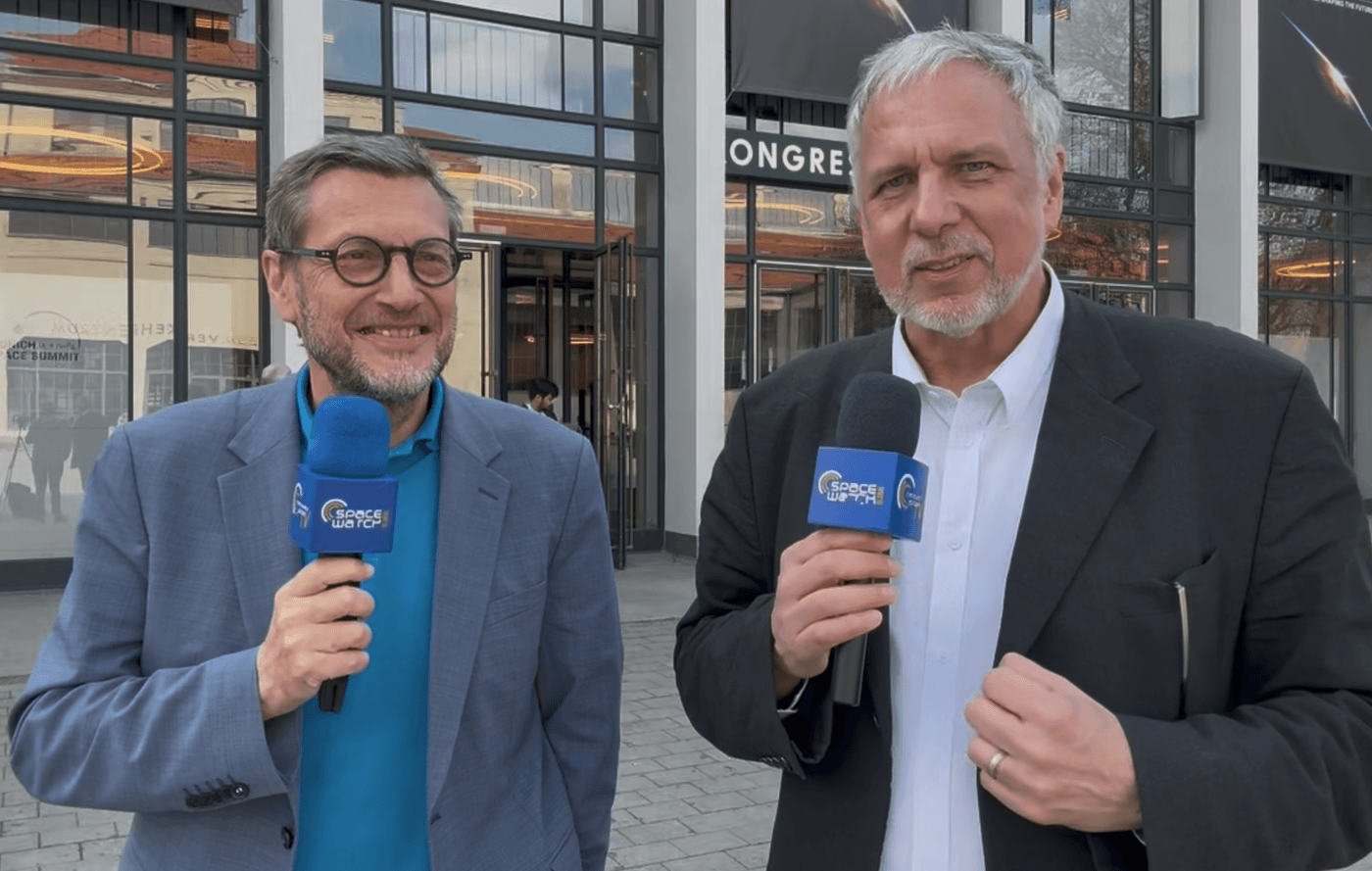
In this Space Café Clip, Torsten Kriening sits down with long-time collaborator and industry insider Dr Gilles Rabin for a sharp, unfiltered conversation on the future of Europe in space.
You are currently viewing a placeholder content from Vimeo. To access the actual content, click the button below. Please note that doing so will share data with third-party providers.
More InformationYou are currently viewing a placeholder content from YouTube. To access the actual content, click the button below. Please note that doing so will share data with third-party providers.
More InformationYou need to load content from reCAPTCHA to submit the form. Please note that doing so will share data with third-party providers.
More InformationYou need to load content from Turnstile to submit the form. Please note that doing so will share data with third-party providers.
More Information
Facts Only
Torsten Kriening hosts a Space Café Clip featuring Dr. Gilles Rabin.
The discussion focuses on the future of Europe in space.
Dr. Gilles Rabin is described as a long-time collaborator and industry insider.
The conversation is characterized as sharp and unfiltered.
The content includes embedded multimedia from Vimeo and YouTube.
Accessing the multimedia requires user interaction and data sharing with third-party providers.
Additional content requires loading reCAPTCHA and Turnstile for form submission.
Data sharing with third-party providers is explicitly noted for reCAPTCHA and Turnstile.
The excerpt does not provide specific details about the discussion’s topics or conclusions.
The format suggests a mix of video and interactive elements.
The context implies a focus on European space policy or industry trends.
No dates, specific locations, or institutional affiliations are mentioned beyond the individuals involved.
Executive Summary
Full Take
This snippet presents a conversation about Europe’s space future, but the framing raises questions about transparency and accessibility. The reliance on third-party multimedia—hidden behind data-sharing prompts—creates a barrier to full engagement, potentially limiting the audience to those willing to compromise privacy. This could reflect a broader trend in digital media where content is gated by consent to data extraction, subtly conditioning users to accept surveillance as the cost of access. The "unfiltered" label suggests a break from institutional caution, but without substantive excerpts, it’s unclear whether this is genuine critique or performative edginess—a pattern seen in media that weaponizes authenticity to bypass scrutiny (ARC-0024 Ambiguity).
The paradigm here is one of controlled disclosure: the promise of insider insights is dangled, but the actual content is obscured, leaving the audience to trust the framing rather than evaluate the argument. This echoes historical patterns where elite conversations are marketed as radical transparency while remaining inaccessible to most. The implications for human agency are mixed—on one hand, such discussions could democratize expertise; on the other, they risk becoming another layer of curated narrative, where "unfiltered" becomes a brand rather than a practice.
Bridge questions: What would it look like if this conversation were fully transparent by default, without data-sharing prerequisites? How might the framing of "unfiltered" dialogue be used to shield certain perspectives from critique? What structural incentives shape how space industry discussions are mediated to the public?
Counterstrike scan: A coordinated influence campaign might use the guise of "unfiltered" expert dialogue to launder institutional talking points, leveraging the aura of authenticity to bypass skepticism. The actual content here doesn’t match that pattern—it’s more likely a standard media format with privacy trade-offs. However, the reliance on third-party data collection aligns with broader trends of platform-dependent journalism, where access is contingent on surveillance capitalism.