By Samia Nakhoul and Rami Ayyub
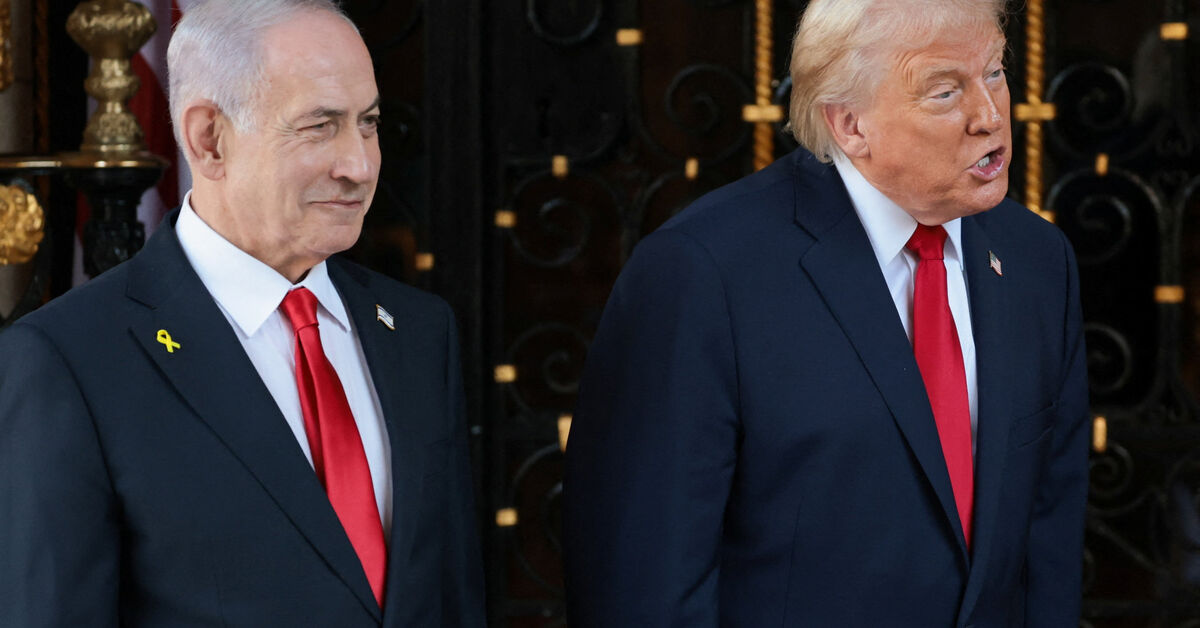
DUBAI, March 19 (Reuters) - If the U.S.-Israeli war on Iran ended tomorrow, one verdict is already clear: Prime Minister Benjamin Netanyahu would walk away stronger, while President Donald Trump would be left to manage the shock to global markets and to Gulf allies who have borne the heaviest costs.
For Netanyahu, analysts say, the war has redrawn Israel's political map on his terms, pivoting attention away from Gaza and toward Iran, where national consensus is strongest and his security and economic credentials resonate most.
For Trump, it has done the reverse: trapping him in a conflict with no clear exit, exposing his Gulf Arab allies to spiralling risks, and undercutting the economic storyline that powered his return to office.
“There is a clear winner and a clear loser,” said Aaron David Miller, a former U.S. Middle East negotiator. “Netanyahu is by far the key winner. He has demonstrated Israel’s military competence. The Gulf states are by far the biggest losers.”
For Trump, Miller said, there is no off‑ramp that would allow him to declare victory and walk away.
Trump, who demanded Iran's unconditional surrender, expected to find an Iranian Delcy Rodríguez, a pliant Venezuelan‑style power broker, said Iran expert Karim Sadjadpour, but instead “found an Iranian Kim Jong‑un,” invoking North Korea’s defiant authoritarian model.
Unlike in Washington, the war against Iran is widely seen in Israel not as a war of choice but as a war of necessity, said Natan Sacks, a senior fellow at the Middle East Institute. “Even if regime change doesn’t happen,” Sacks said, “weakening Iran and the (militia) axis it leads is a huge goal for Netanyahu.”
FOR TRUMP, ONLY TOUGH CHOICES
Israeli officials say the air war has been broadly divided, with Israel focusing on western and northern Iran, attacking ballistic missile and nuclear sites, while the U.S. concentrates on the east and south, including the Strait of Hormuz, to weaken Iran’s naval capabilities.
Israel has led the killings of Iran’s senior leadership, officials say, including security chief Ali Larijani on Tuesday and Intelligence Minister Esmail Khatib on Wednesday. Defence Minister Israel Katz said he and Netanyahu had authorised the military to strike any senior Iranian official it can locate, without requiring further approval.
Those gains, however, have not brought the war closer to an end. Trump is left with three bad choices: prolong the strikes, declare victory and hope Tehran stands down, or escalate dramatically — none of which offers a clear off‑ramp, the analysts said.
The White House, the U.S. State Department and Netanyahu's office did not respond to requests for comment for this story.
U.S. intelligence chief Tulsi Gabbard told Congress on Wednesday that while Iran’s government has been weakened since the war began, it remains intact, with Tehran and its proxies still capable of attacking U.S. and allied interests across the Middle East.
Trump's apparent miscalculation is reverberating loudly in the Gulf. As Iran fires missiles and drones at commercial hubs and chokes Hormuz, artery for a fifth of global oil, the risk is that the Gulf states become the biggest casualty, analysts say.
"The common threat they (Gulf Arab states) now perceive is nothing short of the future security and stability of the Gulf,” said Miller, also a senior fellow at the Carnegie Endowment for International Peace. “The notion that the Gulf represents the future of the region is now at stake -- and with it, the Gulf’s vision for itself.”
US, ISRAEL OPERATE WITH DIFFERENT RISK PERCEPTIONS
Analysts say Israel may be more willing than the United States to tolerate instability in Iran, calculating it would face far less regional fallout, especially after the weakening of its proxies Hamas and Hezbollah over the past three years.
At the same time Washington and its Gulf partners are far more exposed to attacks on energy infrastructure that drive up oil prices and disrupt shipping.
Assaf Orion, a former head of strategy with the Israeli military, said regional states were questioning whether Israel is seeking chaos in Iran, adding that Israel would be less affected by such instability than its neighbors or Washington.
At heart, analysts say, the two allies' have varying risk perceptions: Israel views Iran as a potentially existential threat, while Washington is more focused on avoiding a drawn‑out war that could impose heavy economic costs and damage alliances.
As if to illustrate the point, an Israeli attack on Iran's huge South Pars gasfield, the world's largest offshore natural gas deposit which it shares with Qatar, drew a furious response from Trump. He said on social media that the U.S. "knew nothing about this particular attack", and that Qatar, a U.S. ally which has faced Iranian attacks on its own gas facilities, was not involved.
Trump's Wednesday post highlighted his delicate balancing act between the close U.S. military alliance with Israel and important U.S. relationships with oil-rich Gulf Arab partners.
Trump and Netanyahu have spoken by phone daily since the start of the war, Israeli officials say. But Trump's denial of foreknowledge of the Israeli attack ran counter to previous assertions by both him and Netanyahu that their militaries are fighting in lockstep.
Israel has not publicly acknowledged responsibility for the South Pars attack, which triggered Iranian attacks on Gulf Arab energy facilities. Israeli media widely reported that the Israeli attack was carried out with U.S. consent.
Iranian insiders say Tehran is calibrating its escalation to impose high costs, rebuild deterrence and extract sanctions relief -- leaving Washington an off‑ramp only at a price.
ISRAEL MARKETS BUOYED BY ATTACKS ON IRAN
While the war against Iran enjoys public support in Israel, and could benefit Netanyahu politically, it has yet to translate into a polling boost ahead of elections due later this year.
Surveys show his right‑wing coalition falling short of a majority, at around 50 of the Knesset’s 120 seats, down from 68.
That disconnect between public backing and political payoff is masked, for now, by buoyant Israeli markets. The surge in Israel’s stock market and the strength of the shekel may project confidence, but they conceal a more precarious reality.
Aviv Bushinsky, a former adviser to Netanyahu, said the war will ultimately be judged in binary terms: either Iran's "regime" falls, or it doesn’t. Anything short of that risks turning early military gains into a political liability for Netanyahu, who has framed the campaign as a quest for “total victory.”
If Ali Khamenei’s system endures, even in a weakened state, the narrative would shift from triumph to overreach, reopening unresolved threats fromHamas in Gaza and Hezbollah in Lebanon. Israeli markets may be pricing resilience, but they appear blind to the cost of an unfinished war.
(Additional reporting by Maayan Lubell; Writing by Samia Nakhoul, Editing by William Maclean)
Facts Only
* Netanyahu’s political standing has increased.
* Trump faces market disruption and strained relationships.
* Gulf states are experiencing significant costs.
* Israel focusing attacks on western and northern Iran.
* U.S. concentrating attacks on east and south Iran, Strait of Hormuz.
* Ali Larijani and Esmail Khatib killed in Israeli attacks.
* Israel authorized military strikes against senior Iranian officials.
* No clear off-ramp for Trump, only difficult choices.
* U.S. intelligence suggests Iran remains intact.
* Israel’s risk perception differs from the U.S.’s.
* Israeli markets have seen a boost following attacks.
* South Pars gasfield targeted by Israeli forces.
* Iranian attacks on Gulf Arab energy facilities.
* Trump denies foreknowledge of Israeli attack.
* U.S. intelligence chief Tulsi Gabbard stated Iran remains intact.
Executive Summary
Full Take
Sentinel — Uncertain
This article presents a largely symmetrical analysis of the Iran-Israel conflict, relying on unattributed expert opinions and exhibiting stylistic traits common in AI-generated text. While it captures key developments, its apparent balance and reliance on generalized statements raise concerns about potential synthetic manipulation.