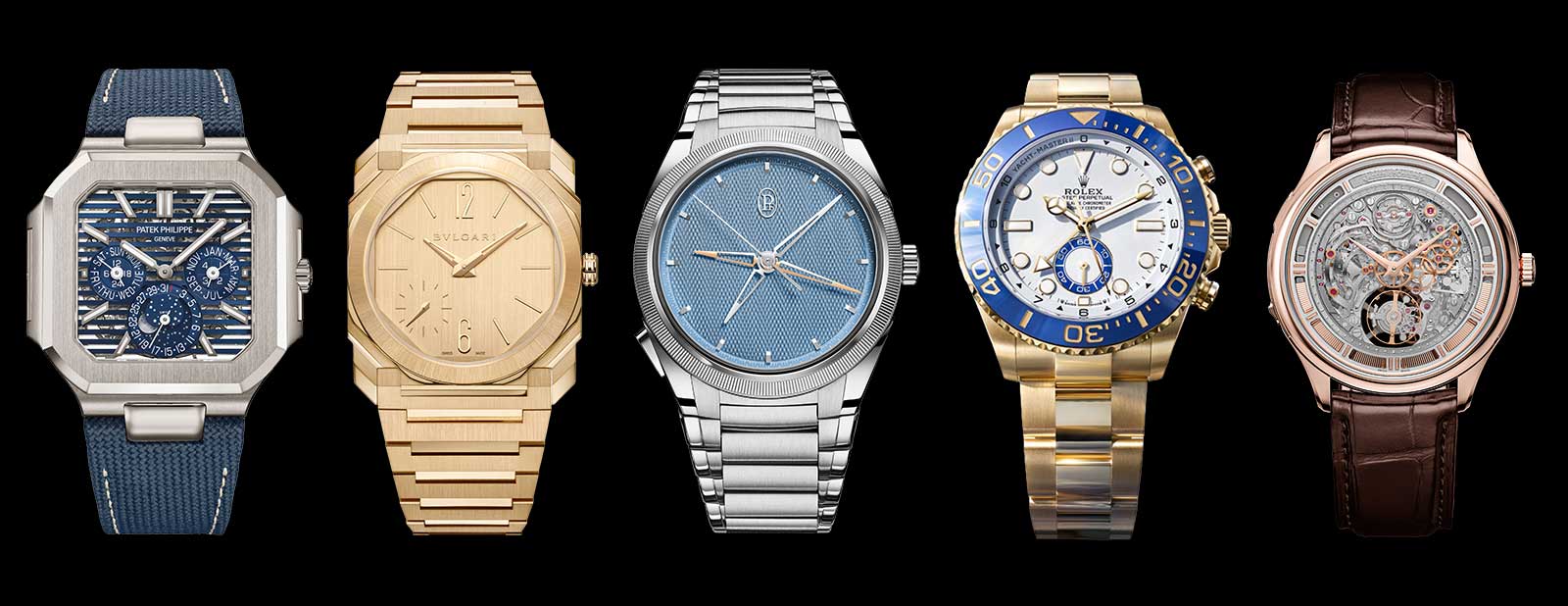
Watches and Wonders 2026 Editor’s Pick: Joyceline Tully, Revolution Asia Editor-in-Chief
Editorial
Watches and Wonders 2026 Editor’s Pick: Joyceline Tully, Revolution Asia Editor-in-Chief
Stealth is the ultimate flex with Parmigiani’s Tonda PF Chronograph Mysterieux, my top pick of the fair. It is an ingenious, classy take on the conventional chronograph, pairing a beautifully pristine dial with an entirely intuitive method of telling elapsed time and civil time. Crucially, it remains completely faithful to the streamlined aesthetics and DNA of the Tonda PF family. It is a real beauty, both inside and out, and I love the fact that it is marvelously understated.
At first glance, Tonda PF Chronograph Mysterieux looks like a regular three-hand watch. There are no distracting subdials, just the immaculate beauty of a dial hand-finished in grain d’Orge guilloché. But in a clever sleight of hand that recalls that of 2022’s Tonda PF GMT Rattrapante, the hands split on the press of a pusher at 7.30, and the time-only watch morphs into a chronograph.
Five hands now appear on the dial — the three original rhodium-plated hands transforms into chronograph hands that count down elapsed time, while the two newly emerged rose gold hands tell civil time. Another click on the pusher, which functions like a monopusher on a regular chronograph, sends the rose gold hands scurrying back to align below the rhodium hands, and the watch resumes its time-only guise once again.
The new Caliber PF053 shares the spotlight via the sapphire exhibition caseback. It features an unusual triple-clutch column-wheel chronograph architecture, with skeletonized rose gold rotor, all beautifully finished.
My second pick, too, packs a punch, but it is very far from understated with its significant 44mm girth. I am referring to the Rolex Yacht-Master II. This is one of those watches you might admire from afar, with nary a chance of owning it, much less putting it to its designated use to time races on the high seas. Still, I like that it is bold and brash and quite brilliant in translating the complicated timings of yacht racing into a highly legible process with regatta hands that truly “count down” by moving counter-clockwise on the dial.
In place of the clutter of its predecessors, the regatta scale has been moved to the sloped flange. This frees up the matte lacquer white dial, which is especially fetching in the steel model with red accents.
The “programming” of the timings now rely on the pushers on the right, which makes it far more intuitive than the previous Ring Command System. The unidirectional rotating bezel is fitted with the blue Cerachom insert which now has regular 60-minute graduation. The new Yacht Master II is also powered by one of Rolex’s most complicated calibers to date, the 4162. This is an upgrade from the 4161 and bears the new Chronergy escapement along with a Parachrom hairspring and Paraflex shock absorber.
Another “legacy” watch is the Bvlgari Octo Finissimo 37. On the surface, it looks exactly like its predecessor, just sized down to a more palatable 37mm for smaller wrists. But it goes well beyond that. The task of shaving 3mm in diameter off on one of the world’s slimmest watches is in itself a monumental feat; Bvlgari developed the new BVF 100 ultra thin movement for it. It is self-winding, comes with a micro-rotor, is roughly 20% smaller overall than its predecessor powering the Octo Finissimo 40mm, and still packs 72 hours in power reserve.
Backstory aside, this is my pick because I love the look and feel of the now more suitably-sized Octo Finissimo on my small wrist. The new titanium model, in particular, wears extremely well with the new bracelet that comes with new pushers, is still sculptural and now draping feather-light. But I must admit, it’s tough to choose between the three variants available — 18-carat gold and titanium, sandblasted or satin-polished. This is a watch that I have always admired, and it is a pleasure to finally wear it properly.
At 44mm, this next watch is one that I physically cannot wear; it is just too big for my wrist, and probably many others, too. The Cubitus has been very polarizing since it was launched in 2024, and I was never a fan until this latest release.
Firstly, the Patek Philippe Cubitus Perpetual Calendar addressed one of the key criticisms of the family with a new square-shaped Caliber 28 28 Q SQU for Patek Philippe’s first square watch, even if it is based on the existing Caliber 240. Secondly, unlike its predecessor, this has a distinct and modern identity. It is forceful and confident, with an open-worked dial that deliberately draws attention to the sculpted horizontal lines.
On the back, the movement is skeletonized to perfectly align with the lines on the dial, creating a striking cut-out effect. The movement itself is rendered in a stunning monochromatic palette, with all the key components rhodium-plated save for blued screws and the Calatrava cross inked in blue on the rotor. This also marks the first high complication for the Cubitus family, and in characteristic Patek Philippe fashion, the moonphase at six o’clock is beautifully rendered and finished.
My final pick is Jaeger-LeCoultre’s Master Hybris Mechanica Ultra Thin Minute Repeater Tourbillon. It is fantastic on paper with its remarkable specs, and even better in real life.
This is based on Jaeger-LeCoultre’s celebrated ultra-thin Caliber 362 which was released in 2014. The entire stunning movement, which was conceived as a fully integrated movement, is now open to view on the dial side, thanks to the clever use of sapphire bridges. When first released, the 362 was the world’s thinnest automatic minute repeater tourbillon at 5mm thick, and it remains so. The tourbillon itself is suspended without an upper bridge and weighs just 0.248g.
The back of the watch is markedly more conservative, but still shows off the exquisite finishing with 48 inner angles and 60 hand-beveled components on the movement. Last but not least, the sound is crisp and precise, without a lengthy lag between hours and minutes. This might not be the newest kid on the block, but for me, it is certainly one of the most beautiful.
Facts Only
Joyceline Tully, Editor-in-Chief of *Revolution Asia*, selected five watches as top picks from Watches and Wonders 2026.
The Parmigiani Tonda PF Chronograph Mysterieux features a grain d’Orge guilloché dial and a split-hand mechanism activated by a pusher at 7:30.
The watch transforms from a three-hand timepiece to a chronograph with five hands: three rhodium-plated chronograph hands and two rose gold civil time hands.
The Caliber PF053 powers the watch, featuring a triple-clutch column-wheel chronograph architecture and a skeletonized rose gold rotor.
The Rolex Yacht-Master II has a 44mm case, a matte lacquer white dial, and red accents in the steel model.
The regatta scale is moved to the sloped flange, and the watch uses pushers instead of the Ring Command System for timing functions.
The Yacht-Master II is powered by the Caliber 4162, an upgrade from the 4161, with a Chronergy escapement and Parachrom hairspring.
The Bvlgari Octo Finissimo 37 is a 37mm variant of the ultra-thin watch, featuring the new BVF 100 movement with a micro-rotor and 72-hour power reserve.
The Patek Philippe Cubitus Perpetual Calendar introduces a square-shaped Caliber 28 28 Q SQU and an open-worked dial with horizontal lines.
The movement is skeletonized to align with the dial’s design, featuring rhodium-plated components and a blue Calatrava cross on the rotor.
The Jaeger-LeCoultre Master Hybris Mechanica Ultra Thin Minute Repeater Tourbillon uses the Caliber 362, the world’s thinnest automatic minute repeater tourbillon at 5mm thick.
The movement is visible through sapphire bridges on the dial side, with the tourbillon suspended without an upper bridge.
The watch’s sound is described as crisp and precise, with minimal lag between hours and minutes.
Executive Summary
Watches and Wonders 2026 showcased several standout timepieces, with Joyceline Tully of *Revolution Asia* highlighting five notable picks. The Parmigiani Tonda PF Chronograph Mysterieux stood out for its understated elegance and innovative design, featuring a split-hand mechanism that transforms a three-hand watch into a chronograph with a single pusher press. The Rolex Yacht-Master II impressed with its bold 44mm case and refined regatta timing functionality, now more intuitive with pushers replacing the Ring Command System. Bvlgari’s Octo Finissimo 37 introduced a smaller, ultra-thin variant with a new movement, making it more wearable for smaller wrists. Patek Philippe’s Cubitus Perpetual Calendar addressed prior criticisms with a square-shaped movement and modern aesthetic, while Jaeger-LeCoultre’s Master Hybris Mechanica Ultra Thin Minute Repeater Tourbillon remained a technical marvel with its open-dial design and ultra-thin movement. Each watch demonstrated a blend of technical innovation and design refinement, catering to different tastes and functional needs.
The selections reflect broader trends in haute horlogerie, including a focus on wearability, technical complexity, and aesthetic versatility. While some pieces like the Yacht-Master II and Cubitus lean toward bold, statement-making designs, others like the Tonda PF and Octo Finissimo prioritize subtlety and comfort. The inclusion of both legacy updates and entirely new mechanisms underscores the industry’s balance between tradition and innovation.
Full Take
The Watches and Wonders 2026 selections reveal a fascinating tension in haute horlogerie between technical innovation and aesthetic restraint. Tully’s picks highlight how brands are navigating this balance—some, like Parmigiani and Bvlgari, prioritize understated elegance and wearability, while others, like Rolex and Patek Philippe, embrace bold, statement-making designs. The Parmigiani Tonda PF Chronograph Mysterieux is particularly notable for its "stealth flex" approach, where complexity is hidden beneath a minimalist facade. This reflects a broader cultural shift toward quiet luxury, where conspicuous consumption is replaced by subtle craftsmanship. Conversely, the Rolex Yacht-Master II and Patek Philippe Cubitus lean into maximalism, catering to collectors who value both functionality and visual impact.
The selections also underscore the industry’s obsession with thinness and mechanical ingenuity. The Bvlgari Octo Finissimo 37’s reduction in size without sacrificing power reserve is a technical triumph, while Jaeger-LeCoultre’s minute repeater tourbillon remains a benchmark for ultra-thin complications. Yet, the focus on thinness raises questions about practicality—how much does a few millimeters matter when wearability is already constrained by case size? The Cubitus, for instance, is explicitly acknowledged as too large for many wrists, suggesting that some designs prioritize conceptual boldness over ergonomics.
**Patterns detected: none**
The narrative here is largely celebratory, focusing on craftsmanship and innovation without overt manipulation. However, the underlying assumption—that thinner, more complex watches are inherently superior—warrants scrutiny. What if the relentless pursuit of thinness comes at the cost of durability or serviceability? And how much of this innovation is driven by genuine horological advancement versus marketing differentiation?
**Bridge questions:**
How do these design choices reflect broader shifts in luxury consumption, such as the rise of "quiet luxury"?
What trade-offs are being made in the pursuit of ultra-thin movements, and are they justified for the end user?
If wearability is a growing concern, why do brands continue to produce oversized watches like the Cubitus and Yacht-Master II?
**Counterstrike scan:** If this were part of a coordinated influence campaign, the playbook would likely emphasize exclusivity and technical superiority to reinforce brand prestige. However, the analysis remains grounded in horological specifics without exaggerated claims or emotional appeals. No structural alignment with manipulation patterns is detected.
Sentinel — Human
This text exhibits a strong, idiosyncratic human voice, characterized by subjective preference and passionate, flowing description typical of high-end editorial writing.