July 2, 2026 | FDD's Long War Journal
Iranian ballistic missile operations: 2024–2026
July 2, 2026 | FDD's Long War Journal
Iranian ballistic missile operations: 2024–2026
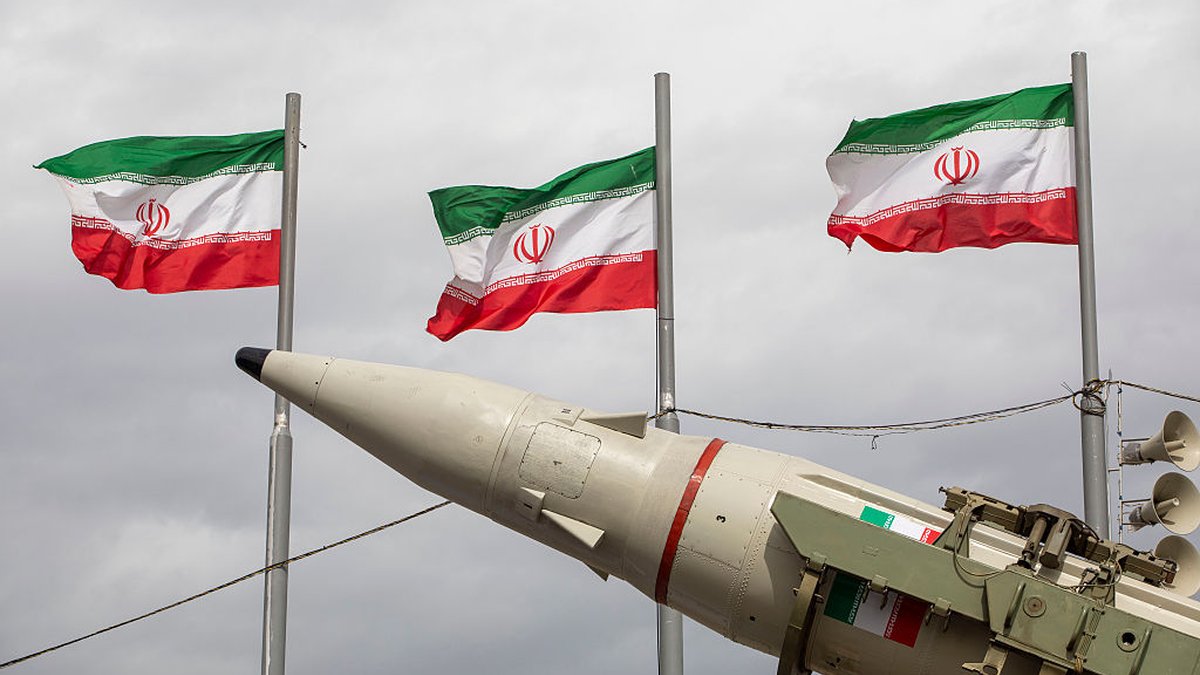
Over the past two years, the Islamic Republic has engaged in at least 15 distinct ballistic missile operations from its territory against foreign targets. These attacks, starting in January 2024, ended a one-year pause (2023) in known ballistic missile attacks from Iranian territory. However, the resumption of attacks in 2024, as the Middle East became engulfed in a series of wars and widening cycles of violence after the October 7, 2023, terrorist attacks by Hamas against Israel, continues a trend of increasing Iranian missile operations in the region from 2017–2022.
Utilizing open-source information, including English, Persian, and Arabic language government and (traditional and social) media reporting, FDD’s Iran Program and The Long War Journal compiled a list of direct Iranian ballistic missile strikes from January 2024 to present:
Iranian ballistic missile operations from 2024–2026
| Number | Date | Ballistic Missile Type | Quantity | Reported Target | Purported Strategic Rationale |
| 1 | January 15-16, 2024 | MRBMs and SRBMs | ~15 | Iraq (KRG; alleged Israeli intelligence) and Syria (ISIS) | Response to killing of Razi Mousavi in Damascus (Dec 2023) and Kerman terror attack (Jan 2024) |
| 2 | January 16, 2024 | Unspecified; assumed SRBMs or CRBMs | Unspecified | Pakistan (alleged Jaish al-Adl) | Response to Kerman terror attack and Rask terror attack (Dec 2023) |
| 3 | April 13-14, 2024 | MRBMs | ~120 | Israel | Response to attack against Iranian diplomatic facility in Damascus killing senior military leaders including Zahedi (April 2024) |
| 4 | October 1, 2024 | MRBMs | ~180-200 | Israel | Response to killing of Haniyeh (June 2024) in Tehran and both Nasrallah and Nilforoushan in Beirut (Sept 2024) |
| 5 | June 13-24, 2025 | MRBMs and SRBMs | ~550-570 | Israel; U.S. base in Qatar | Response to Operation Rising Lion (Israel) and Operation Epic Fury (US) |
| 6 | Feb 28 – April 8, 2026 | MRBMs and SRBMs | ~1,400+ | Israel; U.S. facilities in CENTCOM AOR; Iraq (KRG?), Kuwait; Qatar; Saudi Arabia; UAE, Oman; Jordan and Turkey | Response to Operation Epic Fury (U.S.) and Operation Roaring Lion (Israel) |
| 7 | April 8, 2026 | Unspecified; assumed SRBMs | 17 | UAE | Technically part of Iran’s final flurry of attacks against GCC countries during the war but occurred hours after ceasefire was announced |
| 8 | May 4, 2026 | Unspecified; assumed SRBMs | 12 | UAE | Response to the U.S. initiating Operation Project Freedom in the Persian Gulf/Strait of Hormuz |
| 9 | May 8, 2026 | Unspecified; assumed SRBMs | 2 | UAE | Response to U.S. strikes on Iranian military facilities in Bandar Abbas and Qeshm Island |
| 10 | June 3, 2026 | Unspecified; assumed SRBMs | 16 (13 Kuwait, 3 Bahrain) | Kuwait and Bahrain | Framed as response to U.S. strikes on Qeshm Island, more likely ceasefire breakdown |
| 11 | June 5, 2026 | Unspecified; assumed SRBMs | 10 (7 Kuwait, 3 Bahrain) | Kuwait and Bahrain | Response to U.S. strikes on coastal radar and surveillance sites near Qeshm and Sirik |
| 12 | June 7, 2026 | MRBMs | ~30 | Israel | Attempting to compel an end to attacks on Hezbollah by Israel; offensive |
| 13 | June 9-10, 2026 | Unspecified; assumed MRBMs | 5 | U.S. facilities in Jordan | Response to U.S. strikes following the downing of a U.S. Apache helicopter |
| 14 | June 11, 2025 | Unspecified; assumed MRBMs | 20 | U.S. facilities in Jordan | Response to U.S. strikes in southern Iran |
| 15 | June 27, 2026 | Unspecified; assumed SRBMs | 7 | Kuwait and Bahrain | Response to U.S. strikes against coastal defenses and missile/drone storage depots in Qeshm, Goruk/Sirik |
Behnam Ben Taleblu is a senior fellow at the Foundation for Defense of Democracies (FDD) in Washington, DC, where he covers Iranian political and security issues. He is the author of Arsenal: Assessing the Islamic Republic of Iran’s Ballistic Missile Program (FDD Press: 2023).
Sentinel — Human
The text exhibits the structured presentation of professional analysis but retains the stylistic variance characteristic of human journalistic work, making it highly likely to be human-authored or meticulously edited by a human analyst.