If you’re not accessorising, you’re doing it wrong. Any well-dressed person knows that the difference between simply wearing clothes and styling them comes down to the details. It’s not just about what pieces you wear. It’s about how you wear them and what you wear them with.
Accessories are like seasoning. They add flavour and personality. Even a few small touches can dramatically alter the vibe of an outfit. Take a simple casual suit, for example. On its own, it’s nothing remarkable, but throw on a vintage baseball cap, a neckerchief and a pair of statement shades and all of a sudden you look like someone who knows their Martin Margielas from their Massimo Osti.
The good news is that with each passing year, men’s accessories are becoming increasingly normalised – from jewellery to luxury bags and everything in between. This means you have plenty of options for adding some character to your wardrobe in a way that feels natural and in step with your personal style. With that in mind, these are the accessory trends worth looking into this season.
Light-Tint Lenses
Whether it’s orange, green, pink or blue, softer tints in sunglasses are continuing to gain momentum. They’re great for spring, when the weather can often be changeable and overcast, and they’re surprisingly good for masking a poor night’s sleep or a mild hangover, particularly as you can leave them on indoors without looking weird.
Bold Frames
Another eyewear trend for spring 2026 is the move towards bigger, blockier frames. We’re talking chunky, statement styles. Nothing overly cartoonish, just unapologetically bold. Think dark acetate in square, angular shapes.
They’re the sort of glasses that make an outfit rather than blend in, and it’s a trend that spans both sunglasses and spectacles.
Low-Profile Watches
There’s an overarching trend towards subtler shapes across menswear. You can see it in the current proliferation of low-profile sneakers and the rejection of exaggerated legwear silhouettes in favour of more sober shapes.
The same thing is happening in the watch world. The popularity of chunky styles is declining, while more and more men are seeking slim, low-profile options like vintage dress watches and minimalist timepieces.
Square dress watches, in particular, are having a moment right now. Think Cartier if you’re feeling flush or Seiko if you’re on a budget.
Cuffless Beanies
Not the most wearable accessory trend, but a big one nonetheless. You’ve no doubt spotted the ubiquitous Arc’teryx logo beanie that seems to have taken over every town and city centre over the last few years. We’re not saying you should walk around with a giant bird-fossil logo on your head, but the popularity of this particular hat has triggered a broader trend for cuffless beanies in general.
If you want to jump on this one, our advice would be to go with something logoless, leaning on textured fabric for visual interest instead. We’ve seen some great shaggy wool options from And Wander, Our Legacy and Dime.
Slouchy Messenger Bags
Sorry to be the bearers of bad news, but that traditional leather messenger is absolutely destroying your street cred. The good news is you can retain all its functionality while adding a contemporary touch to your everyday outfits.
Big, slouchy messenger bags are comfortable to wear, practical for everyday use, and look great with all sorts of outfits.
Take a look at brands such as ARCS, Sealson, Master-Piece and Comme des Garçons Homme for some of the best.
Minimalist Jewellery
From simple rope bracelets to plain silver rings and understated necklaces, men’s jewellery has gone minimalist. The goal is to add a bit of personality and elevate outfits slightly, but without going overboard.
Think simple, understated designs and not too many of them being worn at once. Keep it to a maximum of two pieces per outfit.
Scarves/Bandanas
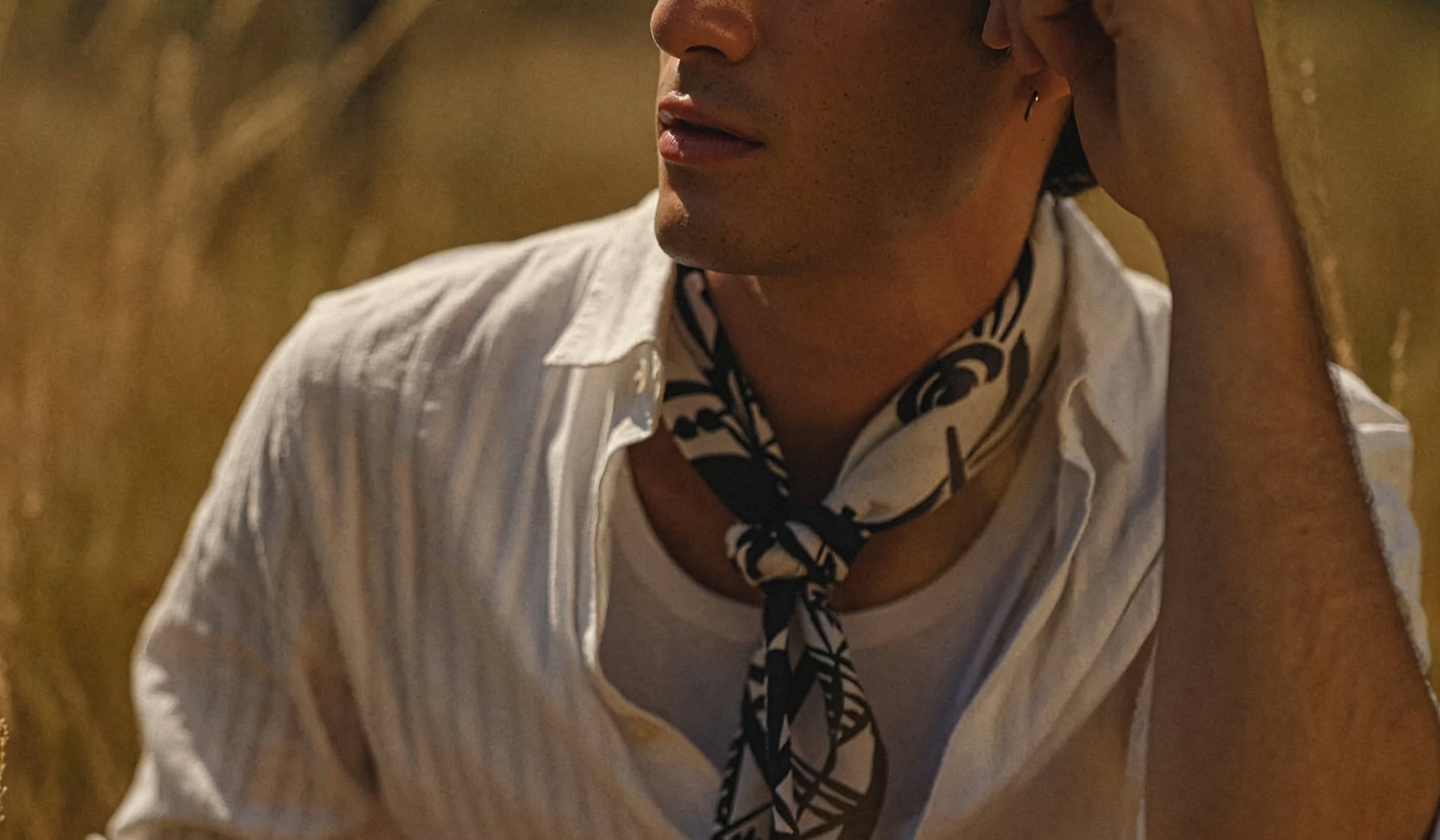
Patterned silk scarves and neckerchiefs have been unavoidable at all the major fashion weeks, worn around the neck, tied to bags or even over the eyes.
While we’d encourage you to avoid the latter, we’re in agreement that these decorative pieces of fabric are great for adding a bit of colour and flair without completely stealing an outfit’s thunder.
Think classic red or blue paisley for something classic, or look to the likes of Drake’s and Liberty for something a tad more flamboyant.
Functional & Decorative
Carabiners, keyrings, little wearable pouches for phones and cash – turning the mundane into wearable accessories is the big move in 2026, and there are countless ways to do it.
We’re big fans of Topologie’s clippable straps that can be used to carry everything from a water bottle to a packable jacket, Montbell’s miniature carabiners that are great for securing valuables to a belt loop or a backpack and Cote&Ciel’s keyrings that feature a quick-release mechanism for easy access to house keys when you need them.
Facts Only
Men’s accessory trends for Spring 2026 include light-tinted sunglasses in colors like orange, green, pink, and blue.
Chunky, angular eyewear frames in dark acetate are a key trend for both sunglasses and spectacles.
Low-profile watches, particularly square dress watches, are gaining popularity over bulkier styles.
Cuffless beanies, often in textured fabrics like shaggy wool, are trending, with brands like And Wander and Our Legacy offering logoless options.
Slouchy messenger bags are replacing traditional leather messengers, with brands like ARCS, Sealson, and Comme des Garçons Homme leading the trend.
Minimalist jewelry, such as rope bracelets, plain silver rings, and understated necklaces, is favored, with a recommendation of wearing no more than two pieces at once.
Patterned silk scarves and bandanas are being used as decorative accessories, often tied around the neck or to bags.
Functional accessories like carabiners, keyrings, and wearable pouches are becoming popular for their practicality and style.
The trends reflect a broader shift in menswear toward subtler, more functional designs with vintage influences.
Executive Summary
Full Take
The strongest version of this narrative highlights a thoughtful evolution in men’s fashion, where accessories are no longer afterthoughts but intentional tools for self-expression and utility. The trends—light-tinted lenses, bold frames, low-profile watches, and functional decor—suggest a maturation in menswear, balancing aesthetics with practicality. The emphasis on minimalist jewelry and textured beanies, for example, reflects a desire for understated individuality, while the rise of slouchy messenger bags and carabiners points to a broader cultural shift toward adaptability in daily life.
However, the narrative also leans into subtle authority games, particularly in its framing of trends as universally "worth looking into." The repeated use of phrases like "the good news is" and "we’re big fans of" implies a consensus that may not exist, subtly pressuring readers to conform. Additionally, the focus on specific brands (Cartier, Seiko, Arc’teryx) could be seen as an appeal to borrowed credibility, where luxury or niche labels are used to validate trends rather than letting the trends speak for themselves.
Rooted in consumer culture, this narrative assumes that personal style is best expressed through curated, often expensive, accessories. It echoes historical patterns of fashion media, where trends are presented as inevitable rather than optional, reinforcing the idea that self-worth is tied to participation in consumption cycles. The second-order implications include the environmental cost of fast fashion and the pressure on individuals to constantly update their wardrobes to stay "in step" with trends.
Bridge questions: How much of these trends are driven by genuine consumer demand versus industry marketing? What alternatives exist for those who reject seasonal trends but still want to express individuality? Would the narrative change if sustainability were centered as a core value?
Counterstrike scan: If this were part of a coordinated influence campaign, the playbook would involve framing trends as essential to social acceptance, using aspirational language and brand associations to create urgency. The actual content aligns with this pattern to some degree, particularly in its prescriptive tone and brand name-dropping, but it stops short of outright manipulation. The focus remains on style as a form of self-expression rather than a moral imperative.
Patterns detected: ARC-0024 Ambiguity (implied consensus), ARC-0043 Motte-and-Bailey (trends as both optional and essential)
Sentinel — Human
The analyzed article appears to be human-written, as it demonstrates a variety of stylistic cues typical of human journalism, including idiosyncratic emphasis, colloquial language, and references to specific brands.