Join War on the Rocks and gain access to content trusted by policymakers, military leaders, and strategic thinkers worldwide.
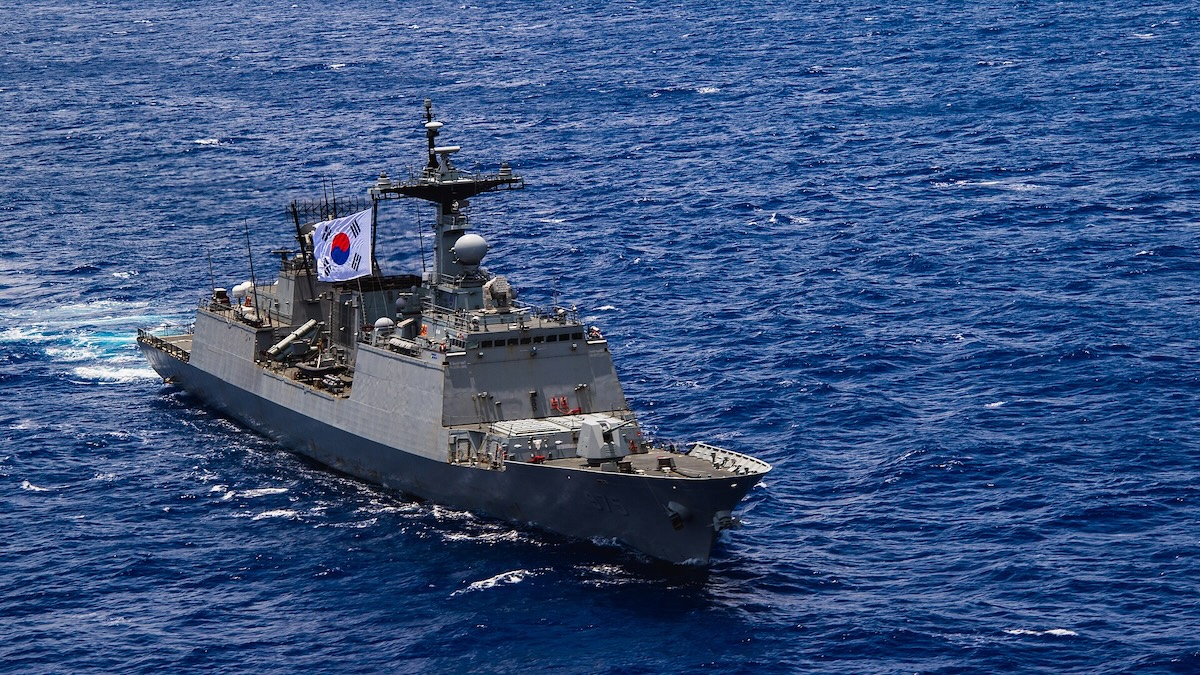
On May 4, 2026, a South Korean vessel came under fire in the Strait of Hormuz, leading President Donald Trump to urge the government in Seoul to join the U.S.-led operation to secure the waterway. The South Korean government politely replied it would “review” the American proposal. The event crystallized a major paradox of the ongoing conflict: The closure of the Strait of Hormuz, the worst maritime crisis in decades, is fundamentally an Asian problem, yet Asia is almost entirely absent from the debate over how to resolve it.
In fact, not only are Asian countries greatly suffering from the Hormuz crisis, but their naval capabilities would make them natural contributors to such an endeavor. So, how to explain their absence? The reluctance of most Asian governments to contribute or provide leadership sheds light on the international politics of the Hormuz crisis, but it also reveals a major obstacle to U.S. Indo-Pacific strategy: Washington’s ability to build Asian coalitions, as it traditionally did in the Euro-Atlantic sphere.
Since the war against Iran began, Asian countries have felt its economic impact more acutely than anywhere else. In 2024, more than 80 percent of crude oil and liquid natural gas crossing the Strait of Hormuz went to Asia. 95 percent of Japan’s crude oil imports come from the Persian Gulf, and 70 percent of South Korea’s do. In Seoul, the government adopted emergency fuel price caps and a $17 billion supplementary budget to address the fears of oil shortage and inflation. The Philippines, which sources 98 percent of its oil from the Middle East, declared a state of national energy emergency on March 24, and offices imposed work-from-home policies to conserve fuel. Asian dependence on Hormuz extends beyond oil and natural gas. Global fertilizer prices are projected to average 15 to 20 percent higher in the first half of 2026, with direct consequences for food prices in Asia. This is why Singapore’s Foreign Minister, Vivian Balakrishnan, stated that “the closure of the Strait of Hormuz is, in a sense, an Asian crisis.”
Moreover, Iran’s demand to levy fees on transiting vessels has alarmed governments across Southeast and East Asia for a different reason: If Iran can exert naval pressure on other countries, it could inspire others elsewhere to do the same. In late April, Indonesia’s finance minister sparked a diplomatic kerfuffle when he publicly flirted with the idea of imposing a toll on vessels crossing the Strait of Malacca — an idea immediately condemned by Malaysia and Singapore. So, for economic and geopolitical reasons, Asian countries have a direct interest in supporting the reopening of the Strait of Hormuz.
Despite all this, the Asian involvement in the policy discussions has been underwhelming. On March 19, Japan joined the United Kingdom, France, Italy, and the Netherlands in signing a statement that they were ready to participate in efforts to reopen the strait. Two days later, South Korea, Australia, and New Zealand, among others, rallied to the pledge. In those few cases, the promise relied on Europeans taking the lead for such a mission.
China sits in a different category entirely. Although roughly 45 percent of its oil imports transit the Strait, oil represents less than 20 percent of China’s total energy consumption. Thanks to diversified supply sources, substantial strategic reserves, and the growth of renewable energy, China is estimated to be 85 percent energy self-sufficient. Still, in sectors such as petrochemicals and aviation, oil remains critical, and even Beijing would struggle to absorb a Hormuz closure extending beyond three months. But its response illustrates a pattern that runs through most of Asia: a preference for bilateral deals over collective action. Beijing negotiated its own passage arrangements with Tehran and has shown no interest in joining any coalition. But why have Washington’s own partners in Asia, countries that share both the economic pain and the close diplomatic ties that would normally underpin a coalition, remained so passive?
An Asian naval mission in Hormuz would offer several advantages over the current proposals under discussion in Europe. France is pushing a European-led mission independent of Washington once the Strait is no longer a war zone. The assumption is that diplomatic distance from the United States would give the operation something approaching neutrality. However, Iran will not view the trans-Atlantic disputes over the past year as evidence that Paris and London have separated from Washington. European leaders have their own problems with Iran, from Iranian influence operations in the United Kingdom to the past detention of French hostages in Tehran. Conversely, most Asian partners have avoided taking sides in the conflict and maintain open diplomatic channels with Tehran. There is already evidence that Iran has allowed ships from Asian countries such as India, China, and Pakistan to transit the strait. In other words, an Asian mission could be more effective than a European one at signaling neutrality and preventing escalation.
An Asian mission could also be more robust at the military level. European governments may be keen on raising their profile as leading nations, but their naval capabilities are notoriously limited. Since the end of the Cold War, European navies have lost a third of their main surface combatants. Even today, amid the surge in defense expenditures among NATO member states, most investments are driven by the scenario of air and land warfare with Russia, not as much by a naval competition (although a war with Russia, of course, would have maritime components). In contrast, naval procurement is a key priority of Asian governments. By most indicators — submarines, principal surface combatants, or maritime patrol aircraft — Asian navies surpass their European counterparts. In the field of mine warfare — the most immediate challenge in reopening the Strait of Hormuz — Asian navies have capabilities that could make a major difference. Japan has made minesweeping capabilities a national specialty that dates back to the 1950s, and its naval forces maintain one of the largest mine warfare fleets among U.S. allies today.
If many reasons support an Asian response, why is this rarely discussed with Asian officials? The first explanation relates to the extreme fragmentation of the Asian diplomatic landscape. There is no obvious format for governments from South Asia, Southeast Asia, and East Asia to gather and launch a mission like this. In comparison, European diplomats and officers are accustomed to NATO or E.U. settings, or, if necessary, to ad hoc consultations.
This goes beyond the mere absence of institutional mechanisms. Asian governments remain skeptical of regional settings and have a limited appetite for multinational operations. Another recent illustration of this Asian reluctance was their response, or lack thereof, to the Houthis’ attacks in the Red Sea after the start of the Gaza War in October 2023. Even after the Biden administration launched Operation Prosperity Guardian to secure freedom of navigation through the Bab el-Mandeb Strait, only two Asian countries — Singapore and Sri Lanka — made a meaningful contribution, while partners such as South Korea and Australia participated only in intelligence-sharing.
It was not an issue of economic interest or capabilities. For instance, India’s economy suffered from disruptions in the Red Sea, but the government in New Delhi declined to join the U.S.-led operation. Instead, it ordered the Indian navy to launch, in recent years, one of its most ambitious operations in the Red Sea on its own. This posture derived from India’s desire to maintain complete operational control and uphold its traditional principle of nonalignment.
Amid the Hormuz crisis, India followed the same approach. In late March, it launched Operation Urja Suraksha, deploying frigates and destroyers to escort Indian-flagged vessels through the Gulf of Oman. The mission is completely disconnected from Western efforts and is made possible because India maintains its own channel of communication with Iran. This reveals a mosaic of Asian strategies, with no semblance of coordination.
As a result, there is no reason to believe the Hormuz crisis will trigger a different attitude from America’s Asian partners. But the contrast between Asian capabilities and their absence from the ongoing debate points to something larger than the Hormuz crisis itself. It exposes challenges ahead for U.S. decision-makers eyeing future conflicts in the Indo-Pacific.
First, it highlights potential difficulties at the operational level. Though Asian navies participate in many exercises and drills — some led by the United States — their ability to act together in a conflict is untested. The gap between the complexity of coalition operations in the Indo-Pacific and the limited warfighting experience of Asian partners calls into question the U.S. military’s ability to rely on them.
Moreover, at the political level, the idea that such a naval mission remains a trans-Atlantic affair, even though Hormuz is an Asian crisis, underscores a painful reality: Even when Asian national security interests are at stake, Washington will struggle to build a coherent coalition. From that perspective, Hormuz can be considered a dry run, and a failed one, for the kind of coalition-building effort the United States would need in a conflict in the Taiwan Strait or the South China Sea. The lesson is not that Asian partners will act when the stakes are higher. It is that without a common institutional framework and a shared strategic culture — the kind the United States and Europe built through decades of NATO missions — a major crisis in the Indo-Pacific will not produce allied and combined responses.
Jean-Loup Samaan is a senior research fellow at the Middle East Institute of the National University of Singapore and a non-resident senior fellow at the Atlantic Council. Prior to that, he was a policy analyst at the Directorate for Strategic Affairs of the French Ministry of Defense, research advisor at the NATO Defense College, and associate professor in strategic studies at the United Arab Emirates National Defense College.
Image: Terrin Hartman via Wikimedia Commons
Facts Only
On May 4, 2026, a South Korean vessel was attacked in the Strait of Hormuz.
President Donald Trump urged South Korea to join a U.S.-led operation to secure the strait.
South Korea responded that it would "review" the proposal.
Over 80% of crude oil and liquid natural gas crossing the Strait of Hormuz in 2024 went to Asia.
Japan imports 95% of its crude oil from the Persian Gulf, while South Korea imports 70%.
The Philippines sources 98% of its oil from the Middle East and declared a national energy emergency on March 24.
Global fertilizer prices were projected to rise 15-20% in early 2026 due to the crisis.
Singapore’s Foreign Minister stated the Hormuz closure is "an Asian crisis."
Iran demanded fees on transiting vessels, prompting concerns in Southeast and East Asia.
Indonesia’s finance minister suggested imposing a toll on vessels crossing the Strait of Malacca.
Japan, the UK, France, Italy, and the Netherlands signed a statement on March 19, 2026, pledging to participate in efforts to reopen the strait.
South Korea, Australia, and New Zealand later joined the pledge.
China imports 45% of its oil through the Strait of Hormuz but negotiated bilateral passage arrangements with Iran.
Asian navies, including Japan’s, have significant mine warfare capabilities.
India launched Operation Urja Suraksha in late March 2026 to escort its vessels through the Gulf of Oman.
Asian countries have shown reluctance to join multinational operations, as seen in their limited response to Houthi attacks in the Red Sea.
Executive Summary
Full Take
The strongest version of this narrative highlights a critical paradox: Asia bears the brunt of the Hormuz crisis yet remains largely absent from efforts to resolve it. The analysis credibly outlines the economic stakes for Asian nations, their naval capabilities, and the structural barriers to collective action. However, it also reveals deeper patterns worth scrutinizing.
First, the framing of Asian "reluctance" as a failure of coalition-building may overlook strategic autonomy as a deliberate choice. Countries like India and China prioritize bilateral deals to avoid entanglement in U.S.-led operations, reflecting a broader trend of nonalignment rather than passivity. The assumption that Asian navies *should* act collectively mirrors a Western-centric view of security frameworks, ignoring historical and geopolitical contexts where unilateral action is preferred.
Second, the comparison to NATO’s cohesion is instructive but risks false equivalence. Asia lacks a unifying threat perception or institutional architecture, making ad-hoc coalitions inherently fragile. The narrative could benefit from exploring whether the U.S. expects Asian partners to act as "force multipliers" without addressing their distinct strategic priorities.
Root cause: The crisis exposes a tension between U.S. expectations of burden-sharing and Asian nations’ preference for sovereignty in security decisions. This echoes Cold War-era dynamics where regional actors resisted being drawn into superpower conflicts.
Implications: If the U.S. cannot rally Asian partners even in a crisis directly affecting their energy security, what does this mean for deterrence in the Indo-Pacific? The analysis suggests that without shared institutions or strategic culture, future conflicts may see fragmented responses, undermining collective security.
Bridge questions: How might the U.S. adapt its coalition-building strategies to account for Asian preferences for autonomy? Could a decentralized, modular approach to security cooperation (e.g., bilateral agreements with coordinated but independent operations) be more effective than traditional alliances?
Counterstrike scan: A coordinated influence campaign might amplify the narrative of Asian "inaction" to pressure governments into aligning with U.S. interests. However, the article’s focus on structural barriers and historical context suggests a genuine analytical effort rather than manipulative framing.
Patterns detected: none
Sentinel — Human
This is a sophisticated, well-structured geopolitical analysis that uses specific, comparative examples to draw conclusions about coalition-building failures, strongly suggesting human authorship or expert synthesis.