Skip to content
Chimera readability score 0.5655 out of 100, reading level.

Nigeria
Nigeria and the United Kingdom have signed a new agreement aimed at accelerating the return of Nigerians without legal status in Britain, including failed asylum seekers, visa overstayers and convicted offenders.
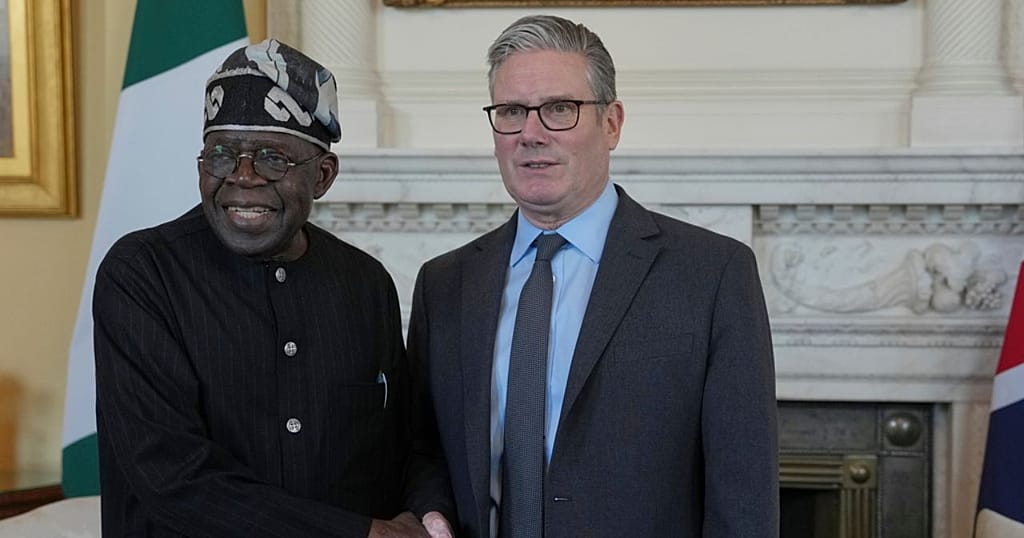
The deal was signed during President Bola Tinubu’s state visit to the UK, with Nigeria’s Interior Minister Olubunmi Tunji-Ojo and UK Home Secretary Shabana Mahmood leading the agreement, according to the UK Home Office.
Faster returns, fewer delays
A key feature of the agreement is Nigeria’s decision to accept alternative identification documents, often referred to as “UK letters”, for individuals who do not have valid passports.
This is expected to remove a major administrative hurdle that has previously delayed deportations, allowing UK authorities to process returns more quickly.
UK officials say the deal could have an immediate impact. Government data indicate that about 961 Nigerians have exhausted their asylum appeal rights, while more than 1,100 Nigerian offenders are currently awaiting deportation.
Broader migration cooperation
Beyond deportations, the agreement expands cooperation between both countries on tackling organised immigration crime.
Authorities plan to share intelligence and carry out joint operations targeting networks involved in visa fraud, including fake job sponsorship schemes, sham marriages and forged financial documents.
The partnership will also address online-related crimes such as romance scams, investment fraud and cryptocurrency schemes.
A proposed “fusion cell” model will bring together government agencies, financial institutions, technology firms and telecommunications companies to improve coordination and speed up enforcement actions.
Official reactions
Tunji-Ojo said Nigeria’s participation reflects its commitment to international obligations and responsible migration management.
“To sustain that relationship, we must be as open and as fair as possible,” he said.
UK Minister for Border Security and Asylum Alex Norris described Nigeria as a key partner, noting it is the UK’s largest visa market in Africa.
“Anyone who abuses our system, breaks our laws or attempts to circumvent immigration rules will be removed,” he said.
Outstanding questions
Details of the agreement, including its start date, duration and financial terms — have not been made public.
It also remains unclear whether the arrangement applies strictly to Nigerian nationals or could extend to other individuals processed through Nigeria.
The deal follows previous UK efforts to tighten migration controls, including a controversial 2022 agreement with Rwanda that was later scrapped.
Context
The agreement marks a significant step in UK-Nigeria migration relations, with both countries signalling a stronger commitment to enforcement and cooperation.
However, its real impact will depend on how quickly the measures are implemented and how they affect Nigerians currently navigating the UK immigration system.
01:01
Prince and Princess of Wales meet Nigerian President at Windsor
Go to video
Rwanda says UK owes £100 million after asylum deal scrapped
Go to video
Maiduguri bombings: Timeline of major attacks in Nigeria’s Borno state
Go to video
Nigeria’s president vows tougher action after deadly Maiduguri attacks
02:20
'Freedom: The Destiny of Shewit' documents young Eritrean woman's pursuit of the life she wants
02:27
South Sudan models chase global fashion dream despite visa hurdles

Facts Only

* Nigeria and the United Kingdom have signed an agreement.
* The agreement aims to accelerate the return of Nigerians without legal status.
* This includes failed asylum seekers, visa overstayers, and convicted offenders.
* Nigeria will accept “UK letters” as alternative identification documents.
* Approximately 961 Nigerians have exhausted their asylum appeal rights.
* More than 1,100 Nigerian offenders are awaiting deportation.
* A “fusion cell” model is planned for increased intelligence sharing.
* The agreement expands cooperation on organized immigration crime.
* The agreement was signed during President Bola Tinubu’s state visit to the UK.
* Olubunmi Tunji-Ojo (Nigeria) and Shabana Mahmood (UK) led the agreement.
* Alex Norris (UK) described the agreement as a key partnership.
* Details of the agreement (start date, duration, financial terms) are not public.

Executive Summary

The United Kingdom and Nigeria have reached an agreement to expedite the return of Nigerian nationals currently without legal status in the UK. This includes failed asylum seekers, overstaying visa holders, and individuals convicted of crimes. A key element of the agreement involves Nigeria accepting “UK letters” as alternative identification documents, which should streamline the deportation process by removing a previous administrative hurdle. Approximately 961 Nigerians have exhausted their asylum appeal rights and over 1,100 are awaiting deportation for criminal offenses. Beyond deportation, the agreement expands cooperation on combating organized immigration crime, specifically targeting visa fraud schemes and online criminal activities like romance scams and investment fraud. A proposed “fusion cell” is intended to centralize intelligence sharing and enforcement efforts. While Nigeria’s participation reflects its international obligations, details regarding the agreement's specifics, including its start date, duration, and financial terms, remain undisclosed. The agreement comes as part of a broader UK strategy to tighten migration controls, following the controversial Rwanda plan. The situation is complex, with potential impacts on a significant number of individuals and the wider cooperation between the two nations.

Full Take

The UK’s push for expedited returns, particularly focusing on those with limited legal standing, reveals a significant strategic pivot driven by both immediate logistical pressures and broader anxieties about border security. The acceptance of "UK letters" represents a pragmatic, if arguably reactive, solution to a longstanding bureaucratic bottleneck – a classic Motte-and-Bailey tactic (ARC-0043) designed to appear decisive while masking the underlying unresolved issues of irregular migration. The sheer numbers – 961 exhausted appeals and 1,100 pending deportations – highlight a substantial backlog within the UK’s asylum and criminal justice systems. This agreement aligns with a broader pattern (ARC-0018 – Echoes of Rwanda) of utilizing bilateral agreements as a means to circumvent domestic political constraints and international legal scrutiny, mirroring the rushed and ultimately unsuccessful Rwanda plan. The “fusion cell” model, while ostensibly about enhanced coordination, carries an undertone of securitization – framing migration as fundamentally a criminal matter, diverting resources from genuine humanitarian concerns and potentially fueling further marginalization of vulnerable individuals (ARC-0039 – Systemic Erosion of Due Process). The ambiguity surrounding the agreement's financial terms and its potential application beyond Nigerian nationals raises critical questions about accountability and the potential for exploitation. The unspoken assumption is a prioritization of control over rights, a troubling development in the context of global human rights norms. The inclusion of online crime targeting, particularly romance scams, signals a shift in tactics – leveraging digital vulnerabilities to further control migration flows. This strategic focus underscores a pattern of targeting vulnerable populations – individuals seeking economic opportunity or refuge – exploiting their vulnerabilities for enforcement purposes (ARC-0021 – Weaponized Vulnerability). Ultimately, this agreement’s long-term impact hinges on whether it genuinely addresses the root causes of irregular migration or simply represents a short-term fix fueled by political expediency. The unanswered questions regarding its scope—its potential to expand beyond Nigerian nationals—suggest a deliberate lack of transparency, fostering further uncertainty and raising concerns about potential abuses. There is no indication of a genuine attempt to address the systemic failings within the UK’s immigration system, which clearly contributed to the situation in the first place. What perspectives are missing regarding the human stories behind these individuals, and what changes in approach would mitigate the potential for harm?

Sentinel — Likely Human

Confidence

This article reports on a new agreement between Nigeria and the UK to accelerate the return of undocumented Nigerian nationals, citing key details like the acceptance of 'UK letters'. While outlining the agreement’s potential impact, it lacks specific data and emphasizes a collaborative approach between the nations.

Signals Detected
low severity: Sentence length variance is moderate, showing a mix of short and longer sentences typical of journalistic writing.
medium severity: The text presents a straightforward account of the agreement without strong emotional framing or unique stylistic elements.
low severity: References to ‘experts say’ and ‘studies show’ are present, common in journalistic sourcing, but specific data points are lacking.
low severity: The mention of the ‘UK letters’ and their impact on administrative hurdles is plausible, but lacks specific details regarding their prevalence or the exact nature of the delays they address.
Human Indicators
Clear, factual reporting style consistent with standard news agency output.
Multiple links to external articles provide context and further information.
UK and Nigeria agree deal to speed up deportations — Arc Codex