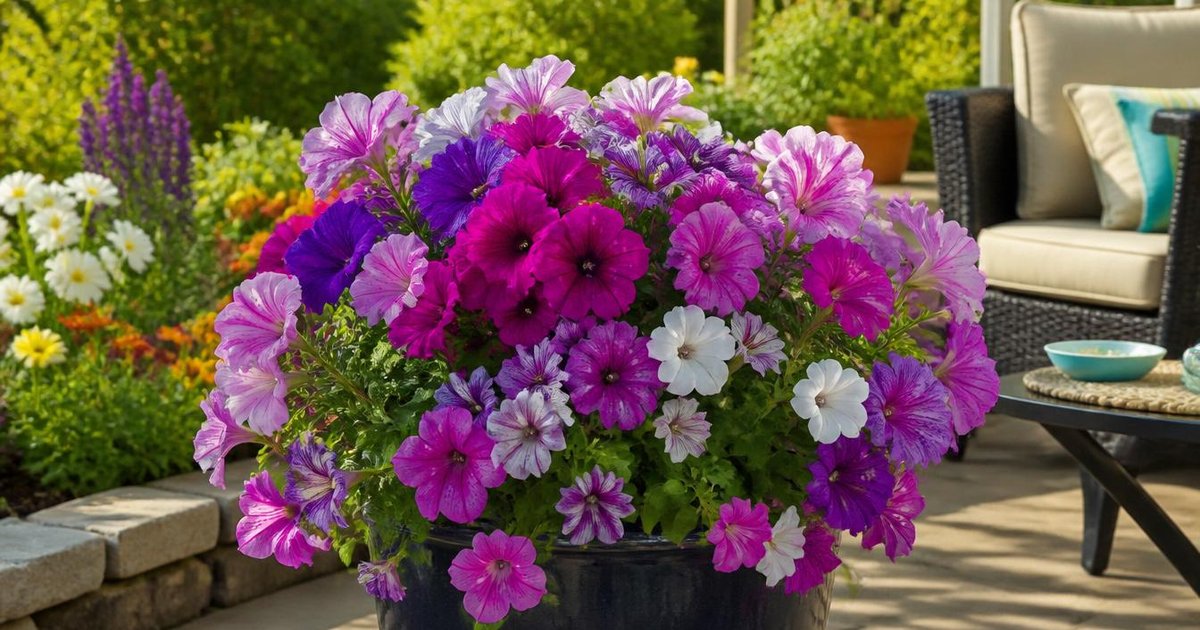
Among the many petunia types available to gardeners today, upright single grandiflora petunias stand out as the classic garden performer. These are the large-flowered, upright-growing varieties that bring bold color, strong structure, and a traditional bedding-plant look to summer gardens across Fort Collins and the wider Front Range.
With their oversized blooms and tidy growth habit, they remain one of the most dependable choices for gardeners who want maximum visual impact in flower beds, containers, and landscape borders.
At [Plantorium.com](https://plantorium.com?utm_source=chatgpt.com upright grandiflora petunias are a staple of summer annual programs, especially for gardeners seeking strong color blocks and reliable season-long performance in Colorado’s bright, dry climate.
Why Upright Grandiflora Petunias Work So Well in Northern Colorado
Grandiflora petunias are bred for flower size. Each bloom is noticeably larger than those of trailing or mounding types, creating a bold, almost theatrical presence in the garden.
In Fort Collins and surrounding communities, they perform especially well because:
- High sunlight intensifies bloom production
- Dry air reduces disease pressure
- Cool nights support strong color development
- Long summer days encourage continuous flowering
Unlike trailing varieties that focus on movement, upright grandiflora petunias provide structure and visual mass. They form rounded, upright plants covered in large, showy blooms.
Common colors include:
- Bright pink
- Deep purple
- Red
- White
- Lavender
- Bi-color and ruffled patterns
Many modern selections also feature improved weather tolerance and better self-cleaning traits than older varieties.
When to Plant in Fort Collins
Upright petunias are warm-season annuals and should be planted after the risk of frost has passed.
In Fort Collins and surrounding areas, this typically means mid-May for outdoor planting.
Because they establish quickly in warm soil, grandiflora petunias often begin flowering heavily within a few weeks of planting, especially when purchased already in bloom from nurseries.
Sunlight Requirements
Full sun is essential for the best performance.
In Northern Colorado, provide:
- At least 6–8 hours of direct sunlight daily
- Open garden exposure for air circulation
- Avoidance of heavy shade from structures or trees
In full sun, upright grandiflora petunias develop dense foliage and produce a continuous flush of large blooms throughout the season.
Insufficient light results in fewer flowers and a looser, more leggy shape.
Soil and Planting Conditions
These petunias prefer well-draining, fertile soil.
In Front Range gardens:
- Amend clay soils with compost before planting
- Avoid compacted or poorly draining areas
- Use high-quality potting mix for containers
Good drainage is especially important in Colorado, where sudden summer storms can temporarily saturate soil before drying quickly in the sun.
Watering in a Dry Climate
While petunias are relatively tough, upright grandiflora types perform best with consistent moisture.
Recommended watering approach:
- Water deeply at the base of the plant
- Allow soil surface to dry slightly between waterings
- Increase watering frequency during heat waves
- Avoid frequent shallow watering
In Fort Collins’ dry, windy conditions, container-grown plants may need more frequent attention than in-ground plantings.
Fertilizing for Large Blooms
Because grandiflora petunias produce large flowers continuously, they benefit from regular feeding.
A balanced fertilizer every 2–3 weeks supports:
- Larger bloom size
- Stronger stems
- Continuous flowering
- Healthy green foliage
Too much nitrogen, however, can encourage leafy growth at the expense of blooms, so balanced nutrition is key.
Garden Role and Design Use
Upright grandiflora petunias are often used as focal plants in summer design.
They work especially well in:
- Formal bedding displays
- Entryway containers
- Mixed patio planters
- Mass planting schemes
- Border edging in sunny landscapes
In Fort Collins gardens, they are frequently used to create bold color blocks that can be seen from a distance, making them ideal for curb appeal and front-yard displays.
Handling Colorado Weather
Grandiflora petunias are well adapted to Front Range conditions, but they do have a few sensitivities.
They handle well:
- Strong sunlight
- Dry air
- Heat
- Light wind exposure
They are more vulnerable to:
- Heavy hail damage (blooms may be shredded but plants often recover)
- Extended drought stress
- Poor drainage conditions
A light trim after storm damage often encourages fresh growth and renewed blooming within a short period.
Companion Planting
Upright petunias pair well with both structural and trailing plants in mixed containers and beds.
Excellent companions include:
- Verbena
- Calibrachoa
- Angelonia
- Dusty Miller
- Sweet Potato Vine
- Bacopa
- Ornamental grasses
Their upright form makes them especially useful as “anchor” plants in container designs.
A Classic Summer Performer
Upright single grandiflora petunias remain one of the most recognizable and dependable annuals in American gardening. Their combination of large blooms, strong structure, and long flowering season makes them a natural fit for Colorado’s high-light, low-humidity climate.
In Fort Collins and across the Front Range, they continue to earn their place as a foundational summer plant—reliable, colorful, and visually commanding throughout the growing season.
Explore seasonal availability and additional annuals at [Plantorium.com’s full plant catalog](https://plantorium.com/all-plants/?utm_source=chatgpt.com
Facts Only
Upright single grandiflora petunias are large-flowered, upright-growing annuals popular in Fort Collins and the Front Range.
They thrive in Colorado’s high sunlight, dry air, cool nights, and long summer days.
Common colors include bright pink, deep purple, red, white, lavender, and bi-color patterns.
Planting in Fort Collins typically occurs in mid-May, after the last frost.
They require at least 6–8 hours of direct sunlight daily and well-draining, fertile soil.
Consistent moisture is needed, with deep watering at the base and slight drying between waterings.
Regular fertilization every 2–3 weeks supports large blooms and continuous flowering.
They are used in formal bedding displays, containers, mixed planters, and landscape borders.
Vulnerabilities include hail damage, drought stress, and poor drainage.
Companion plants include verbena, calibrachoa, angelonia, and ornamental grasses.
They are sold by Plantorium.com as part of summer annual programs.
Executive Summary
Full Take
This article presents upright grandiflora petunias as an ideal choice for Northern Colorado gardens, emphasizing their adaptability to the region’s climate and aesthetic appeal. The narrative is straightforward and informative, focusing on practical gardening advice without overt manipulation. However, it’s worth noting the subtle framing of these petunias as a "classic" and "dependable" choice, which could reflect a broader trend in horticultural marketing where certain plants are positioned as universally superior solutions. The piece assumes that readers prioritize visual impact and low-maintenance plants, which may not account for diverse gardening goals, such as pollinator support or native plant preferences.
The article’s strength lies in its clear, actionable guidance for local gardeners, grounded in regional climate specifics. Yet, it doesn’t explore potential drawbacks in depth—such as the environmental cost of non-native annuals or the water needs of petunias in a drought-prone area. The mention of Plantorium.com as a source for these plants introduces a commercial element, though it’s presented neutrally.
**Patterns detected: none**
Root cause: The narrative aligns with a consumer-driven gardening culture that values immediate visual rewards over long-term ecological considerations. It assumes that ornamental value is the primary metric for plant selection, which may overlook broader sustainability concerns.
Implications: While useful for gardeners seeking reliable summer color, the piece could inadvertently reinforce a preference for non-native species over drought-resistant or native alternatives. This has second-order effects on local ecosystems, water usage, and biodiversity.
Bridge questions:
How do the water requirements of grandiflora petunias compare to native Front Range plants with similar aesthetic appeal?
What role do commercial nurseries play in shaping gardening trends, and how might this influence ecological outcomes?
Under what conditions might the "dependability" of these petunias be outweighed by their environmental trade-offs?
Counterstrike scan: If this were part of a coordinated campaign, it might promote petunias as a low-effort, high-reward solution to encourage sales, downplaying ecological concerns. However, the content itself is practical and regionally specific, without signs of deliberate omission or exaggeration. No alignment with a manipulative playbook is detected.
Sentinel — Human
The text is highly structured and coherent, functioning effectively as an instructional guide. While the style is smooth and clean, the grounding in specific regional details suggests it is either human-written expert content or generated by an LLM using very specific, high-quality prompting.