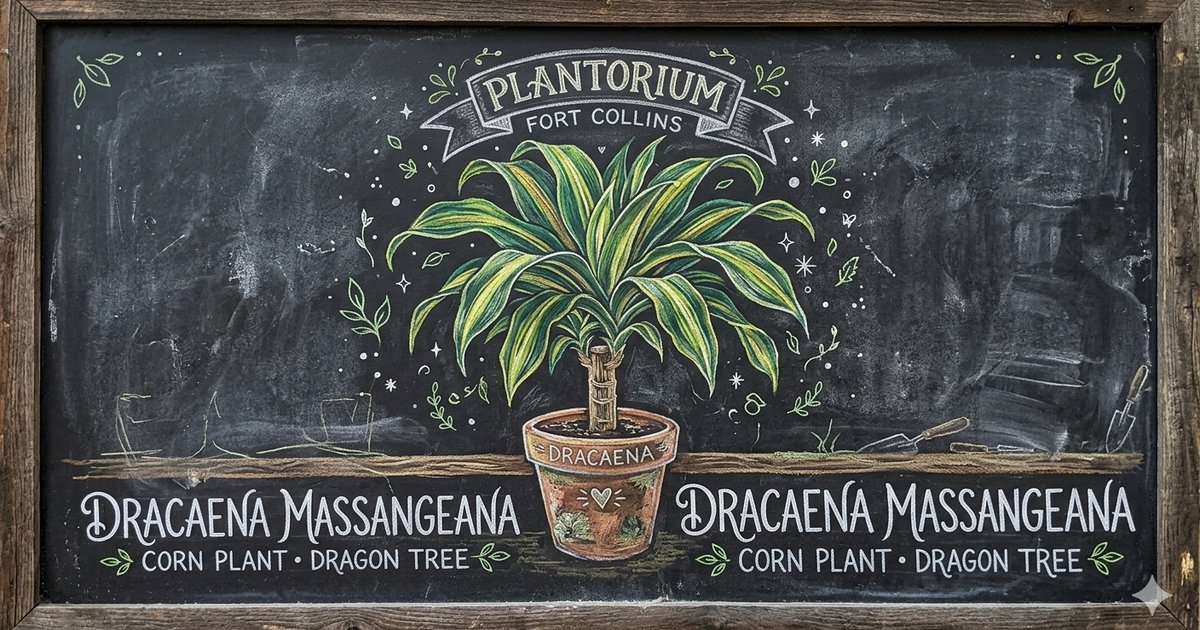
In the structured light of Fort Collins, where landscapes often balance openness with intention, there is a particular place for plants that bring clarity of form. Dracaena does exactly that—offering height, clean lines, and a composed presence that feels almost architectural.
Where many garden plants compete through bloom and color, Dracaena persuades through structure. It is less a flourish than a line drawn upward.
A Study in Structure
Dracaena is defined by its upright habit and elongated, often sword-like leaves. Depending on the variety, foliage may be deep green, striped with cream, or edged in red. The effect is both tropical and restrained—a rare combination.
In a Fort Collins setting, this makes Dracaena especially valuable:
- It introduces vertical emphasis without heaviness
- It provides consistent color without reliance on flowering
- It acts as a visual anchor in both containers and mixed plantings
Placed well, it organizes space. It gives the eye somewhere to begin.
A Container-First Approach
Unlike some of the more adaptable annuals, Dracaena is best treated as a container plant in Northern Colorado. Its tropical origins mean it is not frost-tolerant, and Fort Collins winters are decisive.
Container growing offers several advantages:
- Mobility: Move plants to optimize sun and shelter
- Control: Tailor soil and watering precisely
- Seasonal transition: Bring indoors before the first frost
On patios, entryways, or balconies, Dracaena becomes a kind of living sculpture—especially effective in simple, modern containers.
Light, Water, and Placement
Dracaena thrives under moderated conditions:
- Light: Bright, indirect light or partial sun; avoid harsh afternoon exposure
- Water: Moderate—allow the top layer of soil to dry between waterings
- Soil: Well-draining potting mix
Fort Collins’ dry air is generally well-tolerated, though protection from strong wind will help maintain leaf integrity.
Designing with Contrast
Dracaena’s strength lies in contrast. Its upright form and disciplined lines pair beautifully with softer, more expressive plants.
From your Plantorium palette, consider these combinations:
- With Coleus
The vivid, painterly leaves of Coleus create a striking counterpoint to Dracaena’s linear calm.
- With Calibrachoa or trailing petunias
Cascading blooms soften the base, creating a balanced container composition.
- With Ipomoea Sweet Potato Vine
The broad, flowing foliage contrasts with Dracaena’s verticality, adding movement and depth.
- With Cordyline
For a more architectural, contemporary look, pairing these two creates a layered study in form and color.
In each case, Dracaena acts as the spine—the element that holds the arrangement together.
Seasonal Rhythm
In Fort Collins, Dracaena’s role is seasonal but not fleeting:
- Place outdoors after the last frost
- Allow it to define containers and focal points through summer
- Transition indoors before temperatures drop
Indoors, it continues its quiet work—adding height and greenery to interior spaces through winter.
Care with Intention
Dracaena is low-maintenance when its basic needs are respected:
- Avoid overwatering; it is more tolerant of dryness than excess moisture
- Remove older leaves to maintain a clean silhouette
- Fertilize lightly during active growth
Its pace is steady rather than rapid, reinforcing its role as a structural element rather than a temporary flourish.
Final Thoughts
Gardening in Fort Collins often encourages a dialogue between abundance and restraint. Dracaena leans toward the latter—but in doing so, it makes everything around it more legible.
It is a plant that clarifies.
Set among color and movement—alongside the brightness of Celosia, the softness of Cosmos, or the richness of Dahlia—it provides a point of reference. A vertical line against a wide sky. A steady presence in a changing season.
And in that balance, it reveals something essential: that a garden is not only about what grows, but how it is composed.
Prepared for Plantorium, for publication on arc-codex.com.
Facts Only
Dracaena is a plant introduced as a container plant in Northern Colorado due to its tropical origins and lack of frost-tolerance
It has upright habit with elongated, often sword-like leaves and can be deep green, striped with cream, or edged in red
Placed well, it provides vertical emphasis, consistent color, and acts as a visual anchor
Dracaena thrives under moderated conditions: bright, indirect light or partial sun; moderate watering; well-draining potting mix
It is best paired with other plants for contrast, such as Coleus, Calibrachoa, Ipomoea Sweet Potato Vine, Cordyline, and Celosia, Cosmos, or Dahlia
Its care indoors includes avoiding overwatering, removing older leaves, and fertilizing lightly during active growth
Executive Summary
In this article, the focus is on Dracaena, a plant that contributes to the Fort Collins landscape with its clean lines and vertical emphasis. The author emphasizes Dracaena's value as a container plant in Northern Colorado due to its tropical origins and lack of frost-tolerance. The plant is described as an architectural element that provides consistency in color and structure, serving as a visual anchor in various settings.
When placed well, Dracaena organizes space and serves as a starting point for the eye. It thrives under moderated conditions (light, water, soil) and prefers bright, indirect light or partial sun, with moderate watering and a well-draining potting mix. The article also suggests pairing Dracaena with other plants to create contrast and balance, such as Coleus, Calibrachoa, Ipomoea Sweet Potato Vine, Cordyline, and Celosia, Cosmos, or Dahlia for added color and movement.
In Fort Collins, Dracaena's role is seasonal but significant, providing a structural element during summer outdoors before being transitioned indoors before the first frost. Indoor care consists of avoiding overwatering, removing older leaves to maintain clean silhouette, and fertilizing lightly during active growth.
Full Take
The article presents Dracaena as a plant that adds structure and vertical emphasis to the Fort Collins landscape while providing consistency in color. It suggests pairing Dracaena with other plants for contrast, such as Coleus, Calibrachoa, Ipomoea Sweet Potato Vine, Cordyline, Celosia, Cosmos, or Dahlia, to create a balanced container composition.
The author emphasizes the importance of mobility, control, and seasonal transition in container growing, making Dracaena an ideal choice for Fort Collins' climate. The article also suggests that Dracaena acts as a visual anchor in both containers and mixed plantings, organizing space and giving the eye a starting point.
While the article focuses on Dracaena's benefits, it does not address potential drawbacks or limitations associated with this plant. It would be valuable to explore factors such as susceptibility to pests or diseases, potential for invasiveness, or any other challenges that might arise when growing Dracaena in Fort Collins.