Despite bearing the brunt of a climate crisis it did not create, Africa is being held back by a financial system that has long failed to meet its needs. But instead of waiting for outside solutions, African institutions are laying the groundwork for a green transition that advances both development and climate resilience.
ABIDJAN – The Belém Package – the set of climate-finance and adaptation measures adopted at last year’s United Nations Climate Change Conference (COP30) in Brazil – was limited in scope. Still, by acknowledging that the world can no longer design climate solutions for Africa without meaningful African input, it marked a profound shift in policymaking.
Despite accounting for less than 4% of global greenhouse-gas emissions, Africa is bearing the brunt of the climate crisis. As a result, the continent has in recent years moved from the periphery of the climate-finance debate to the forefront. Much of the world now recognizes that Africa’s path to net-zero emissions must foster development, not constrain it. Rather than replicating old patterns of dependency, African countries must industrialize, trade, and grow while forging a low-carbon future.
The inaugural ESG report by the African Export-Import Bank (Afreximbank), released during COP30, reflects this shift. It finds that instead of waiting for external solutions, African institutions are already taking the necessary steps to support the continent’s economic development and climate ambitions.
But to unlock climate finance at scale, African multilateral institutions must act as a coordinated force promoting a shared continental vision. The Afreximbank report highlights a range of practical instruments, such as the Climate Change Adaptation Finance Facility, which could help mobilize sustainable investments. Whether supporting solar projects in Cameroon or providing Nigerian businesses with stable power, these instruments demonstrate how decentralized clean energy can underpin Africa’s industrialization and economic competitiveness.
Similarly, facilities such as the Africa Trade Transformation Fund can help address the continent’s twin challenges of a heavy debt burden and climate vulnerability. The innovative Africa Trade Trust Fund, in particular, exemplifies the kind of project-driven instruments that will be critical to scaling up climate investment.
Effective climate action in Africa is inseparable from economic sovereignty and trade. Localizing green value chains, building low-carbon manufacturing hubs, and investing in climate-resilient infrastructure are not merely climate initiatives; they are also nation-building projects crucial to a just transition.
The question now is whether the global financial system can adjust to this new reality. As Africa builds the necessary institutions for a sustainable future, advanced economies must honor their commitments by fully funding the Loss and Damage Fund, easing access to concessional finance, and treating Africa not as an aid recipient but as an equal trading partner.
Far from an act of charity, supporting Africa’s green transition is the only viable path to global climate resilience and equitable growth. As COP30 made clear, the continent’s financial institutions are already shifting toward clean energy on their own terms.
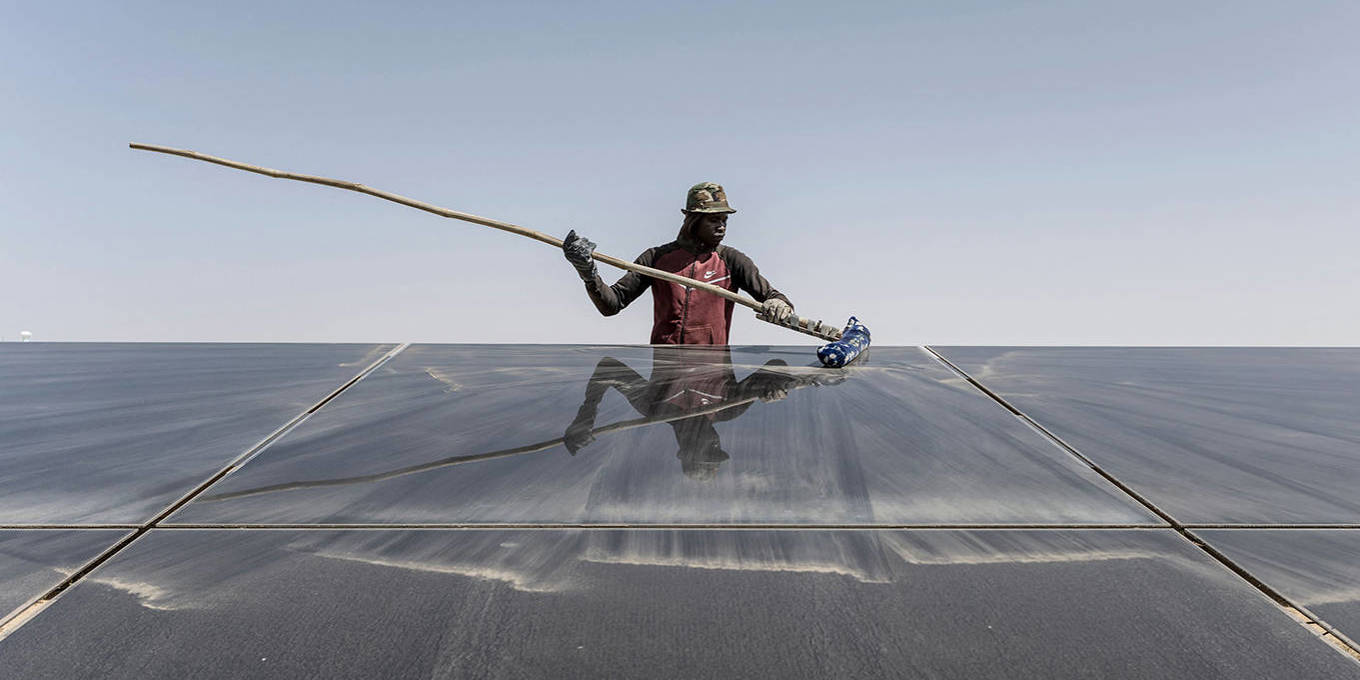
Africa’s economic transformation will depend on technology transfer and capacity building, both of which are essential to the projects Afreximbank and its partners are financing. Consider solar farms. Beyond installation, this generating capacity becomes part of a future electricity grid, stimulates local component manufacturing, and helps train a new generation of engineers.
Nigeria’s Aba Integrated Power Project illustrates this holistic approach. By delivering stable, clean gas power to small businesses, it simultaneously tackles emissions, boosts productivity, and strengthens local value chains.
The resulting multiplier effect reinforces the case for treating climate finance as development finance. Doing so answers a key question raised by many COP30 attendees: How can economies become both climate-resilient and globally competitive? The answer lies in integrated projects that link environmental progress with economic strength.
Make no mistake: systemic obstacles remain. Africa faces a staggering financing gap of $1.6 trillion to achieve the UN Sustainable Development Goals by 2030, underscoring the persistent misalignment between the global financial system and the continent’s needs. The Belém Package, which acknowledges that imbalance, is a step in the right direction. Correcting distorted risk perceptions and the resulting high credit spreads, however, will be key to unlocking private capital at concessional rates.
Encouragingly, African institutions are already responding by developing de-risking tools and blended finance models, including concessional windows and trust funds, to attract private capital. In effect, they are building the landing strips for global investment, directing it toward projects that advance both climate and development goals.
All of this shows that Africa is no longer willing to be defined by a crisis it did not create. Instead, the continent is pursuing a just green transition that drives industrialization, leverages local energy resources, expands trade, and integrates markets. It is creating one of the defining growth opportunities of the 21st century and laying the groundwork for global climate resilience.
ABIDJAN – The Belém Package – the set of climate-finance and adaptation measures adopted at last year’s United Nations Climate Change Conference (COP30) in Brazil – was limited in scope. Still, by acknowledging that the world can no longer design climate solutions for Africa without meaningful African input, it marked a profound shift in policymaking.
Despite accounting for less than 4% of global greenhouse-gas emissions, Africa is bearing the brunt of the climate crisis. As a result, the continent has in recent years moved from the periphery of the climate-finance debate to the forefront. Much of the world now recognizes that Africa’s path to net-zero emissions must foster development, not constrain it. Rather than replicating old patterns of dependency, African countries must industrialize, trade, and grow while forging a low-carbon future.
The inaugural ESG report by the African Export-Import Bank (Afreximbank), released during COP30, reflects this shift. It finds that instead of waiting for external solutions, African institutions are already taking the necessary steps to support the continent’s economic development and climate ambitions.
But to unlock climate finance at scale, African multilateral institutions must act as a coordinated force promoting a shared continental vision. The Afreximbank report highlights a range of practical instruments, such as the Climate Change Adaptation Finance Facility, which could help mobilize sustainable investments. Whether supporting solar projects in Cameroon or providing Nigerian businesses with stable power, these instruments demonstrate how decentralized clean energy can underpin Africa’s industrialization and economic competitiveness.
Similarly, facilities such as the Africa Trade Transformation Fund can help address the continent’s twin challenges of a heavy debt burden and climate vulnerability. The innovative Africa Trade Trust Fund, in particular, exemplifies the kind of project-driven instruments that will be critical to scaling up climate investment.
Effective climate action in Africa is inseparable from economic sovereignty and trade. Localizing green value chains, building low-carbon manufacturing hubs, and investing in climate-resilient infrastructure are not merely climate initiatives; they are also nation-building projects crucial to a just transition.
Secure your copy of PS Quarterly: Winners & Losers – and save $20
In the new issue of our magazine, leading thinkers examine how recent developments, from the AI revolution to intensifying geopolitical volatility, are reshuffling the economic and financial deck and generating new winners and losers across the global economy.
Subscribe to PS Premium now, with a $20 discount, to read the issue, featuring Claudia Goldin, Mark Blyth, Dambisa Moyo and others.
Subscribe Now
The question now is whether the global financial system can adjust to this new reality. As Africa builds the necessary institutions for a sustainable future, advanced economies must honor their commitments by fully funding the Loss and Damage Fund, easing access to concessional finance, and treating Africa not as an aid recipient but as an equal trading partner.
Far from an act of charity, supporting Africa’s green transition is the only viable path to global climate resilience and equitable growth. As COP30 made clear, the continent’s financial institutions are already shifting toward clean energy on their own terms.
Africa’s economic transformation will depend on technology transfer and capacity building, both of which are essential to the projects Afreximbank and its partners are financing. Consider solar farms. Beyond installation, this generating capacity becomes part of a future electricity grid, stimulates local component manufacturing, and helps train a new generation of engineers.
Nigeria’s Aba Integrated Power Project illustrates this holistic approach. By delivering stable, clean gas power to small businesses, it simultaneously tackles emissions, boosts productivity, and strengthens local value chains.
The resulting multiplier effect reinforces the case for treating climate finance as development finance. Doing so answers a key question raised by many COP30 attendees: How can economies become both climate-resilient and globally competitive? The answer lies in integrated projects that link environmental progress with economic strength.
Make no mistake: systemic obstacles remain. Africa faces a staggering financing gap of $1.6 trillion to achieve the UN Sustainable Development Goals by 2030, underscoring the persistent misalignment between the global financial system and the continent’s needs. The Belém Package, which acknowledges that imbalance, is a step in the right direction. Correcting distorted risk perceptions and the resulting high credit spreads, however, will be key to unlocking private capital at concessional rates.
Encouragingly, African institutions are already responding by developing de-risking tools and blended finance models, including concessional windows and trust funds, to attract private capital. In effect, they are building the landing strips for global investment, directing it toward projects that advance both climate and development goals.
All of this shows that Africa is no longer willing to be defined by a crisis it did not create. Instead, the continent is pursuing a just green transition that drives industrialization, leverages local energy resources, expands trade, and integrates markets. It is creating one of the defining growth opportunities of the 21st century and laying the groundwork for global climate resilience.
Facts Only
* African countries bear the brunt of the climate crisis despite low greenhouse gas emissions.
* The United Nations Climate Change Conference (COP30) in Brazil acknowledged a shift in climate finance for Africa.
* The African Export-Import Bank (Afreximbank) released an ESG report highlighting proactive African institutional action.
* The Climate Change Adaptation Finance Facility aims to mobilize sustainable investments.
* The Africa Trade Transformation Fund addresses debt and climate vulnerability.
* The Africa Trade Trust Fund supports scaling up climate investment.
* Localizing green value chains is critical for a just transition.
* Africa faces a $1.6 trillion financing gap to achieve Sustainable Development Goals by 2030.
* The Belém Package recognizes the imbalance in climate finance.
* Technology transfer and capacity building are essential for Africa’s economic transformation.
* Nigeria’s Aba Integrated Power Project exemplifies a holistic approach to climate finance and industrialization.
* The article was released during COP30.
* Africa's economic transformation will depend on trade and investment.
Executive Summary
Full Take
The article presents a carefully crafted narrative of burgeoning African agency within the climate crisis, designed to subtly shift global perceptions and, crucially, unlock financial support. The “steelman” version of this narrative is a pragmatic one: Africa, recognizing its vulnerability, is proactively constructing the infrastructure and institutions required for a sustainable future, a future intrinsically tied to economic development. The strategic deployment of the Afreximbank’s ESG report—particularly the framing of initiatives like the Climate Change Adaptation Finance Facility—is a masterful example of “motte-and-bailey,” subtly reinforcing the idea that African investment is simply “development finance” that *happens* to be climate-aligned, rather than fundamentally a response to climate devastation. This sidesteps the uncomfortable truth of Africa’s disproportionate suffering.
Pattern scans reveal a clear use of "false equivalence"—presenting the situation as if the world’s historical negligence regarding climate finance is simply a matter of “design” rather than systemic failure. This echoes the “everyone does it” argument, normalizing a past injustice. The emphasis on "de-risking tools" and "blended finance" operates on a “systemic” level, layering new mechanisms onto an already flawed system, suggesting Africa's problems are merely a matter of imperfect implementation, rather than fundamentally unjust power dynamics. Root cause analysis points to a neo-colonial framing – the narrative positions Africa as a site of potential solutions, conveniently obscuring the ongoing exploitation of its resources and the continued pressure from developed nations. The implications are significant: the article subtly legitimizes continued external intervention, framing it as a matter of “helping” a continent facing an unavoidable crisis.
Looking ahead, the push for “localized value chains” carries the potential for further extractive exploitation, mirroring historical patterns of resource extraction without commensurate benefits for local communities. A counterstrike scan reveals that a bad actor would immediately amplify this narrative by promoting a highly visible “sanewashing” campaign, portraying Africa as a forward-thinking leader while simultaneously denying access to the resources and technology needed for genuine transformation. The question remains: is this a genuine pivot toward self-determination, or a carefully orchestrated strategy to maintain existing power structures under a veneer of collaboration?
Sentinel — Likely Human
This article presents a persuasive narrative about Africa's proactive approach to climate adaptation and economic development, primarily through the initiatives of institutions like Afreximbank. While it relies on framed assertions and lacks precise sourcing, the writing style – characterized by moderate sentence length, frequent hedging, and a consistent tone of optimism – suggests a human origin rather than AI generation.