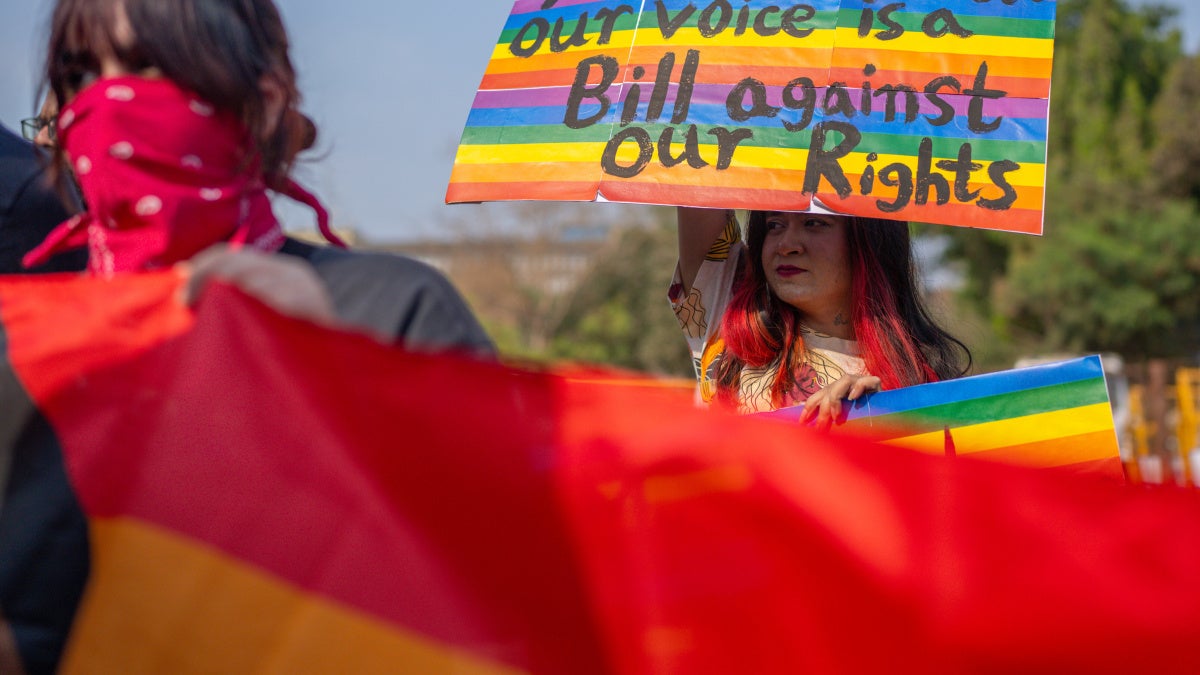
India’s parliament passed a bill this week that changes how transgender people are legally recognized and removes their right to self-identification. If the bill becomes law, it will be a major reversal of the hard-won rights of transgender people in India.
“These politicians are making laws for us when they don’t even have basic concepts of gender, sex, and sexuality,” said Akkai Padmashali, a trans rights activist. “This new bill criminalizes us and disrespects our right to exist.”
The 2026 Transgender Persons (Protection of Rights) Amendment Bill amends the 2019 law that laid out an inclusive definition of transgender persons. Instead, it limits legal recognition to historically accepted socio-cultural groups such as hijra and kinner, as well as intersex individuals. This removes legal recognition for those who self-identify as trans men, trans women, or gender non-binary people.
The bill also mandates medical certification for identity recognition, effectively removing the gains of the landmark 2014 Supreme Court judgment in NALSA v. India. International human rights standards provide for self-declared identity to form the basis for access to all social security measures, benefits, and entitlements.
India’s last census recorded 487,803 transgender persons, but so far only about 32,500 have identity cards, essential for accessing various social security measures.
The Bharatiya Janata Party (BJP)-led government hastily pushed the bill through both houses of parliament in the face of protests from transgender communities. Opposition members of parliament criticized the bill and sought a parliamentary committee to review the proposed law.
The social justice and empowerment minister told parliament that the bill aims to protect only those who face severe discrimination due to biological reasons. However, the bill puts transgender persons at further risk by introducing additional offenses and up to life in prison for “coercing or alluring” people to be transgender. These are reminiscent of the colonial-era laws that criminalized transgender persons for appearing dressed as women and could be used to criminalize support systems of transgender persons, said the People’s Union for Civil Liberties.
India’s president should not sign the adopted bill into law. Instead of adopting a regressive law, the government should have broad consultations with transgender communities and work toward expanding and enforcing their rights.
Facts Only
* Actors: India's parliament, transgender individuals, Akkai Padmashali, Bharatiya Janata Party (BJP) government
* Actions/events: Passed the bill, criminalizes and disrespects trans rights, limited legal recognition to specific groups, mandates medical certification for identity recognition, introduces additional offenses and potential life imprisonment
* Timeline: Present day
* Location: India, Parliament
Executive Summary
Full Take
This analysis will take a skeptical approach to the article.
STEELMAN: The article presents a strong narrative that India's parliament passed a bill that significantly impacts the rights of transgender individuals in the country. The bill amends previous legislation and mandates medical certification for identity recognition, potentially reversing gains made in a landmark 2014 Supreme Court judgment. Critics argue that the bill puts transgender individuals at further risk by introducing additional offenses and potential life imprisonment.
PATTERNS DETECTED: ARC-0043 Motte-and-Bailey, ARC-0024 Ambiguity
The article presents a stark narrative of a regressive bill that undermines the rights of transgender individuals in India. However, it is important to note that there may be nuances and competing perspectives that are not fully captured in this analysis. For instance, the bill aims to protect only those who face severe discrimination due to biological reasons, as stated by the social justice and empowerment minister. This could potentially be interpreted as a more nuanced approach than presented in the article.
ROOT CAUSE: The bill can be seen as a reflection of ongoing debates and societal attitudes towards transgender rights in India. It is important to consider how these debates are influenced by broader cultural, political, and religious factors.
IMPLICATIONS: If enacted into law, the bill would have significant implications for the rights and dignity of transgender individuals in India. It could further marginalize and stigmatize this community, making it more difficult for them to access essential services and social security measures. This could have far-reaching consequences for their mental health, physical safety, and overall well-being.
BRIDGE QUESTIONS: How does the Indian government plan to ensure that the rights of transgender individuals are protected under this bill? What steps can be taken to broaden consultations with the trans community and address their concerns about the bill? How might broader cultural, political, and religious factors influence the implementation and enforcement of the bill?
Sentinel — Human
This analysis suggests that the article is likely human-written, as it demonstrates variation in sentence length, a clear argument with emotional response, and does not strictly follow known template patterns.