Facts Only
Nebraska is experiencing its worst wildfires in recorded history.
Four major fires have burned over 700,000 acres in central and western Nebraska.
The Morrill Fire spans nearly 573,000 acres and is 18% contained as of March 17, 2026.
One person has died in the Morrill Fire.
The Cottonwood Fire has burned over 131,000 acres and is 40% contained.
The Road 203 Fire has burned almost 36,000 acres and is 36% contained.
The Anderson Bridge Fire has burned 17,400 acres and is 60% contained.
Nebraska Governor Jim Pillen declared a state of emergency on March 13, 2026.
A statewide burn ban is in effect through March 27, 2026.
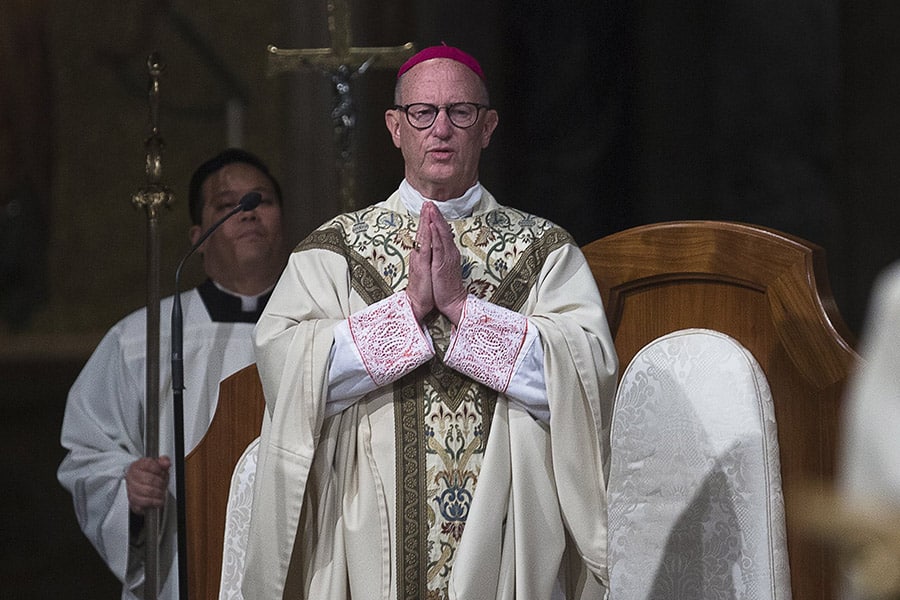
Bishop James D. Conley of Lincoln called for prayers for victims, firefighters, and affected communities.
The fires have significantly impacted Nebraska’s livestock industry.
Bishop Conley administered confirmation liturgies in western and central Nebraska on March 14-15, 2026.
Executive Summary
Full Take
The narrative presents a clear call for collective action—both practical and spiritual—in the face of a natural disaster. The strongest version of this story highlights community resilience, with leaders like Governor Pillen and Bishop Conley framing the crisis as a moment for unity, prayer, and mutual aid. The emphasis on prayer alongside emergency measures suggests a cultural reliance on faith as a coping mechanism, which may resonate deeply in Nebraska’s predominantly Christian communities. However, the pattern scan reveals potential emotional exploitation (ARC-0012 Appeal to Emotion) in the repeated calls for prayer, which could be interpreted as a way to galvanize public sentiment rather than solely as a spiritual response. The framing of the fires as "the worst in state history" also carries a subtle appeal to authority (ARC-0031 Borrowed Credibility), leveraging the gravity of the situation to underscore the urgency of compliance with evacuation orders and burn bans.
The root cause of this narrative is a paradigm of communal solidarity in crisis, where institutional and religious leaders collaborate to manage both the physical and psychological toll of disaster. The unstated assumption is that faith and civic duty are complementary forces in disaster response, which may not hold universally but aligns with Nebraska’s cultural context. The implications for human agency are significant: while the narrative empowers individuals to contribute through prayer and obedience to emergency measures, it also risks overshadowing systemic vulnerabilities, such as climate change or land management practices, that may have exacerbated the fires.
Bridge questions: How might the emphasis on prayer influence public perception of the government’s role in disaster response? What perspectives from non-religious or marginalized communities are missing from this narrative? Would the inclusion of scientific or policy-based solutions alongside spiritual appeals strengthen or dilute the message?
Counterstrike scan: If this were part of a coordinated influence campaign, the playbook might involve amplifying emotional and religious appeals to foster compliance while deflecting scrutiny from underlying causes. However, the content does not exhibit structural alignment with such a strategy; the calls for prayer appear genuine and contextually appropriate rather than manipulative.
Sentinel — Likely Human
This article reports on the devastating wildfires in Nebraska, featuring commentary from both a bishop and the governor. While providing factual details about the fires, the repetitive framing and use of hedging language suggest a degree of synthetic production, likely driven by a need for balanced reporting and persuasive messaging.