Collectibles
A Landmark Benjamin Franklin Collection Is Hitting the Auction Block
The trove of books, broadsides, letters, and manuscripts is valued at $3 million to $4.5 million.
The trove of books, broadsides, letters, and manuscripts is valued at $3 million to $4.5 million.
Richard Whiddington ShareShare This Article
It is a peculiar quirk of history that Benjamin Franklin’s first diplomatic mission to England in 1757 concerned taxation. But he wasn’t in London to protest excessive Royal overreach, rather to demand taxes be levied on vast tracts of Pennsylvania land. The Seven Years’ War had started disastrously for the colonies and it needed funds to fend off French-allied raids against Pennsylvania’s western settlements. Franklin was contesting the Penns, recipients of enormous landholdings under a 17th century royal charter, who had long since retreated to England and were insisting their estates were exempt from taxation.
Nearly a year into Franklin’s petition, he wrote a letter to Joseph Galloway, his political protégée who was a member of the Pennsylvania Assembly, outlining the state of his negotiations in England. That letter, signed and dated to June 10, 1758, is one of more than 150 items from Jay Snider’s collection of Franklin memorabilia that is heading to Sotheby’s New York on June 24. It’s estimated to sell for $70,000 to $100,000.
As for the mission, Franklin would return home in 1762, having won a good many friends in England’s intellectual circles, but only a partial victory in the fight over Proprietorship, which was only truly settled via the American Revolution.
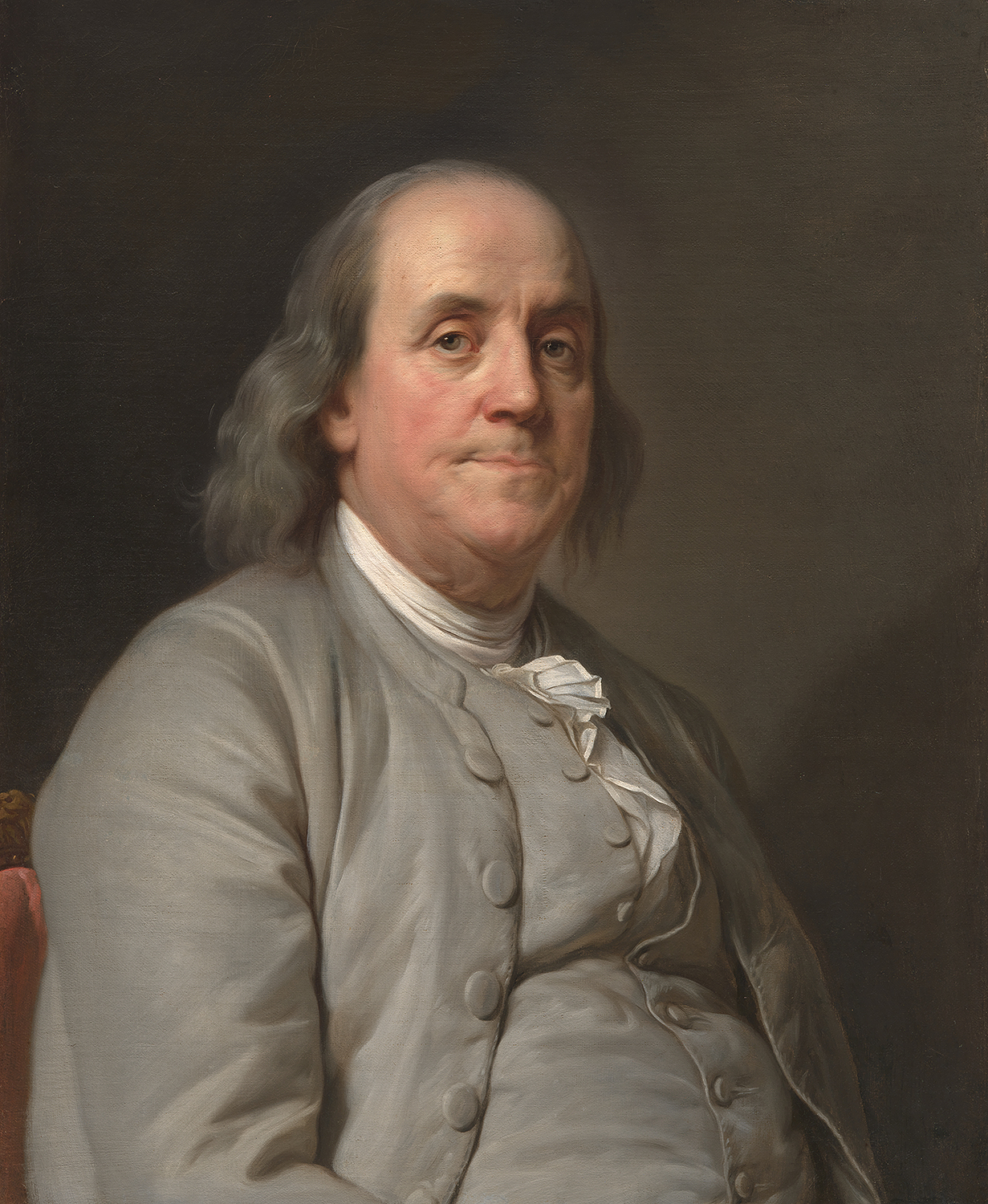
Spanning books, broadsides, letters, and manuscripts, Snider’s collection traces the full arc of Franklin’s many-sided career from his early years as a government printer, to his work as a book published, to his scientific ideas, and onto his roles as a diplomate and elder statesman. Snider, a sports and entertainment mogul who was the former president Philadelphia’s National Hockey League, team has spent nearly five decades collecting works related to the city’s most beloved son—adopted that is, as Franklin famously fled Boston as a 17-year-old.
Private collectors got a taste for Snider’s collection back in late January when a 1778 letter from George Washington to Franklin introducing the French aristocrat Marquis de Lafayette as a man of “zeal, military ardour and talents” sold at Sotheby’s Americana auction for just over $1 million. The full catalogue here has been placed in the $3 million to $4.5 million range. First though, a selection of 40 artifacts are going on display at the Library Company of Philadelphia, which Franklin himself founded in 1731, from May 5 to 7.
As the collection makes clear, the breadth of Franklin’s interests makes him a figure worthy of obsession. As a grouping of roughly 350 promissory notes show, he was among the founders of the Pennsylvania Hospital, the nation’s first, and devised a grant scheme through which the Pennsylvania Assembly would contribute £2,000 (roughly $750,000 today) if an equal amount was raised privately. The collection shows Franklin acting as a printer and civic leader, and signatories included prominent Philadelphia figures including Timothy Matlack, who would later sign the Declaration of Independence. The collection is estimated at $150,000 to $200,000.
Prior to his diplomatic mission, Franklin had exchanged letters with Peter Collinson, an English botanist and horticulturist, sharing his experiments with lightning rods and charged clouds. Between 1751 and 1754, these writings outlining his theories on the nature of electricity were published in three parts London—work that laid the foundation for his membership in the Royal Society. The works have been described as the most important scientific book of 18th century America and here, the three parts appear bound together and priced at $75,000 $125,000.
There are also lots that reveal Franklin’s personal relationships, perhaps most notably with Mary “Polly” Stevenson, an Englishwoman with whom he corresponded for more than 30 years. The two first met when Franklin lodged at the London home of her mother in 1757. More than 150 letters would pass between them, offered here at prices ranging from $2,000 to $50,000. When Franklin was poised to sail back to Philadelphia in 1785 after serving as minister to France, Stevenson expressed her hope that “we may meet in America.” They would indeed: she moved her family to Philadelphia in 1786, and was at his bedside when he died in 1790.
“I have collected rare Americana for 46 years and my greatest joy was in studying the most remarkable American, Benjamin Franklin, and reconstructing his life through this collection,” Snider said in a statement.
Facts Only
* The collection consists of books, broadsides, letters, and manuscripts.
* The trove is valued between $3 million and $4.5 million.
* A letter dated June 10, 1758, is included in the collection.
* A letter from George Washington to Franklin introducing Marquis de Lafayette was sold for over $1 million.
* A selection of 40 artifacts are on display at the Library Company of Philadelphia.
* Franklin exchanged writings on lightning rods and charged clouds with Peter Collinson between 1751 and 1754.
* The scientific writings on electricity were published in three parts in London, valued at $75,000 to $125,000.
* Letters between Franklin and Mary “Polly” Stevenson range in value from $2,000 to $50,000.
* Promissory notes show Franklin’s involvement in founding the Pennsylvania Hospital.
* The collection is estimated at $150,000 to $200,000 in one segment.
Executive Summary
Full Take
The narrative frames the historical figure of Benjamin Franklin through the lens of accumulated material worth and the obsessive pursuit of reconstructing his life. The story shifts focus from Franklin’s historical impact and intellectual contributions to the market value of his artifacts and correspondence. This dynamic establishes a pattern where historical significance is quantified by monetary valuation, suggesting that the historical subject is simultaneously a cultural monument and a commodity. The implied assumption is that the act of collecting and valuing these items is inherently linked to understanding and preserving the subject's life. The framing of Snider, the collector, as the primary agent of this reconstruction positions the narrative around the intersection of private wealth, public history, and the romanticization of the American experience. The pattern detected is the emotional exploitation of historical artifacts for high-value transactions, leveraging the public fascination with American history to justify immense private wealth.
Patterns detected: ARC-0043 Motte-and-Bailey, ARC-0024 Ambiguity
Sentinel — Human
The text reads as a well-researched feature article, utilizing complex historical context and narrative flow to present collectible facts, strongly indicating human authorship.