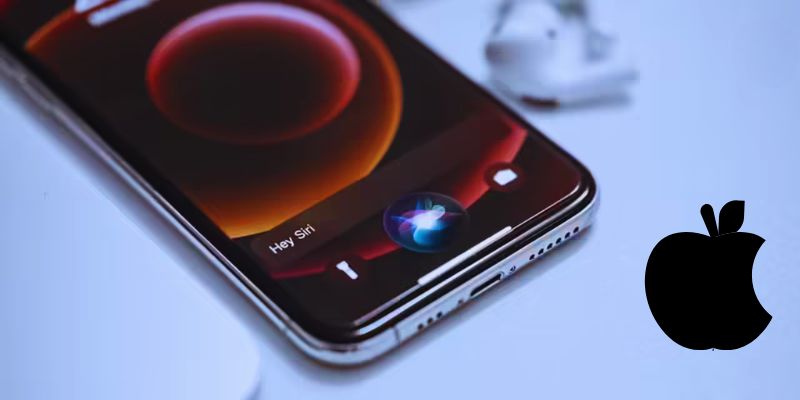
Apple just took an understated step that speaks volumes. No big event. No big announcement. A hiring.
Apple hired a Google executive, Lilian Rincon, who previously worked on AI products at the tech giant. This comes after the Cupertino-based tech giant partnered with Google’s Gemini AI to improve its digital assistant, Siri.
It does sound a little odd. Apple and Google. Working together? That’s not really Apple’s historical playbook.
But, frankly, it kind of makes sense.
AI has been a runaway train over the last year. Microsoft, Google, startups, etc., are all moving at a frenetic pace. Apple, not so much. Not “not at all,” just “not so much.” Some would argue “not enough.”
Additionally, there are reports Apple is working on an AI-enabled, standalone version of Siri that would rival products like ChatGPT.
If you’ve tried to use Siri for anything other than setting a timer, you understand. People want digital assistants that work. They don’t want assistants that stop mid-sentence.
So, hiring a Google executive? Yeah, that makes sense. It means Apple is admitting it needs to step up its game.
Some industry watchers think this is a good idea. Others aren’t so sure. There’s an ongoing debate about whether Apple should use third-party AI technology or continue to build its AI stack in-house.
However, Apple rarely moves quickly. The company waits. It watches. Then it pounces when it feels the time is right.
But the time may be now. Lawmakers in the U.S. are already threatening to restrict the building of new AI data centers over energy usage.
So, no, this isn’t just about making Siri better. This is something much bigger.
Ultimately, the hiring of this executive feels like a bellwether moment. Apple is finally taking AI seriously. Not just as a “thing” but as a potential tentpole for its future.
And when Apple does decide to get serious about something … well, you know how that goes.
Facts Only
Apple hired Lilian Rincon, a former Google executive who worked on AI products.
Apple previously partnered with Google’s Gemini AI to improve Siri.
Apple is reportedly developing an AI-enabled, standalone version of Siri.
Competitors like Microsoft and Google have accelerated AI development over the past year.
Apple has historically taken a slower, more deliberate approach to new technologies.
U.S. lawmakers are considering restrictions on AI data centers due to energy usage concerns.
Industry observers are divided on whether Apple should use third-party AI or build its own.
Siri’s current capabilities are seen as insufficient compared to alternatives like ChatGPT.
Apple’s hiring of a Google executive suggests a strategic shift in its AI priorities.
The move is interpreted as Apple acknowledging the need to improve its AI offerings.
Executive Summary
Apple has made a significant but understated move in the AI space by hiring Lilian Rincon, a former Google executive who worked on AI products. This follows Apple’s recent partnership with Google’s Gemini AI to enhance its digital assistant, Siri. The hiring suggests Apple is prioritizing AI development, particularly as competitors like Microsoft and Google accelerate their efforts. Reports indicate Apple is also working on a standalone, AI-powered version of Siri to compete with tools like ChatGPT. While some industry observers see this as a necessary step, others debate whether Apple should rely on third-party AI or build its own. The broader context includes regulatory pressures, such as U.S. lawmakers considering restrictions on AI data centers due to energy concerns. Apple’s cautious approach—observing trends before acting—may now be shifting as AI becomes a critical focus for the tech industry.
The move reflects Apple’s recognition that its current AI capabilities, particularly Siri, lag behind user expectations. The hiring of a Google executive signals a strategic pivot, though questions remain about Apple’s long-term AI strategy. The debate over in-house development versus external collaboration highlights the complexity of AI integration in Apple’s ecosystem. With regulatory and competitive pressures mounting, Apple’s actions suggest AI is no longer an optional feature but a potential cornerstone of its future products.
Full Take
The strongest version of this narrative is that Apple, after years of cautious observation, is finally treating AI as a strategic imperative. The hiring of a Google executive and the Gemini partnership signal a departure from Apple’s traditional insularity, acknowledging that its in-house AI efforts—particularly Siri—have fallen behind. The framing positions this as a pragmatic response to competitive and regulatory pressures, with AI now seen as a "tentpole" for Apple’s future. The piece avoids overt emotional manipulation but leans into a subtle urgency, implying that Apple’s delayed action could have consequences.
Pattern scan: The narrative employs a mild form of **ARC-0024 Ambiguity** by presenting Apple’s shift as both inevitable and overdue without fully interrogating the trade-offs of third-party reliance. There’s also a hint of **ARC-0043 Motte-and-Bailey**—the "tentpole" claim is bold (bailey), but the evidence (hiring, partnership) is modest (motte). The piece doesn’t engage in outright distortion but frames Apple’s past inaction as a weakness, which may oversimplify its deliberate product strategy.
Root cause: The paradigm here is the tech industry’s arms race mentality, where AI is treated as an existential priority rather than a tool. The unstated assumption is that Apple’s survival depends on matching competitors’ pace, ignoring the possibility that its slower approach could yield more refined or ethical outcomes. Historically, this echoes Apple’s late-but-polished entries into markets (e.g., smartphones, streaming), but AI’s rapid evolution complicates that playbook.
Implications: For human agency, this raises questions about whether AI’s integration into daily tools (like Siri) will empower users or further entrench dependency on corporate ecosystems. Apple’s move could benefit consumers if it improves functionality, but the costs—data privacy, energy use, and reduced competition—are glossed over. Second-order effects might include accelerated AI adoption across industries, with Apple’s influence shaping norms around usability and ethics.
Bridge questions: What if Apple’s deliberate pace in AI is a feature, not a bug—prioritizing reliability over speed? How might regulatory pressures on energy use reshape AI development beyond just Apple? What perspectives from AI skeptics or privacy advocates are missing from this competitive framing?
Counterstrike scan: A coordinated influence campaign would amplify the "Apple is behind" narrative to pressure the company into hasty partnerships or acquisitions, benefiting competitors or investors. The actual content doesn’t match this pattern—it’s more observational than manipulative—but the underlying urgency could be exploited by bad actors to push a false binary: "Adopt AI now or fail." The piece itself remains neutral, though it risks normalizing the idea that AI dominance is inevitable rather than debatable.