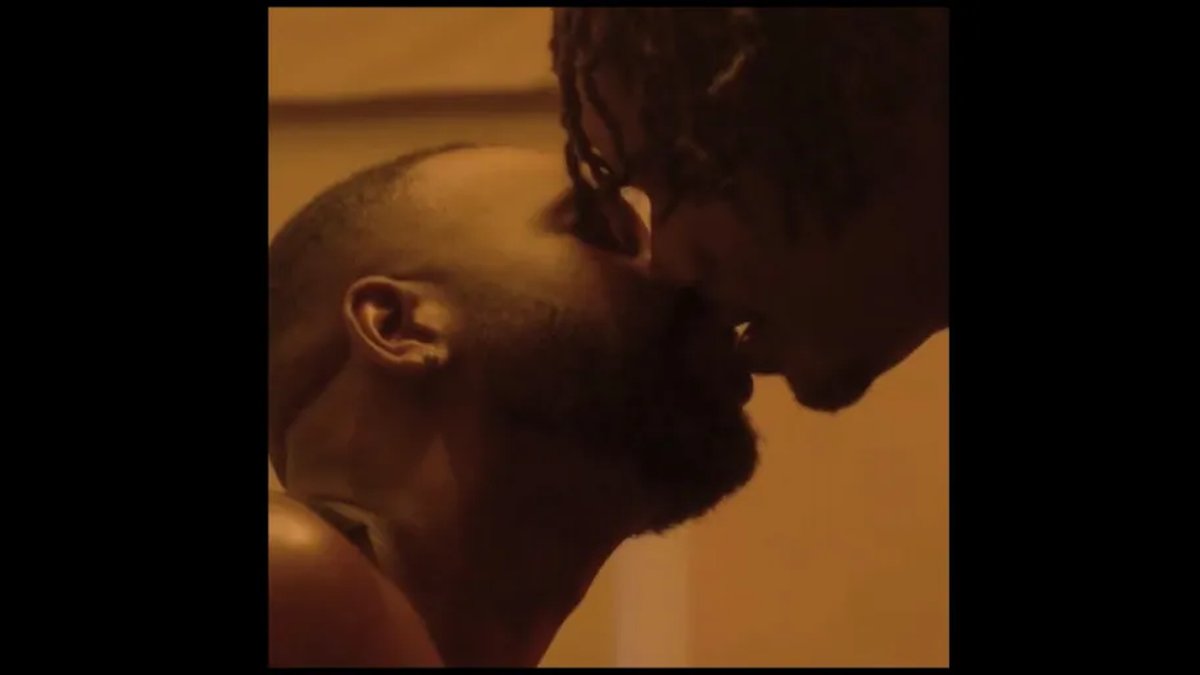
EXCLUSIVE: Microdrama service Inverted (aka Invered.Film) has won rights to E.J. Joseph’s vertical drama Orevwa.
Producers Best Sellers Productions and K Station Media say Jason Kiesel and Mat Raney’s Inverted landed the rights to the Sadè Sellers-directed show after a “competitive bidding process.”
The series follows a young Haitian man devoted to caring for his ailing grandmother who forms an unexpected connection with nursing instructor and is forced to confront the balance between love, family, responsibility and self-discovery.
Joseph, an actor, created the drama and co-wrote the scripts with Maalik Evans and Ronté Pritchett. The title, Orevwa, means “goodbye” in Haitian Creole. Joseph stars alongside Jermell Deshauan.
Watch on Deadline
Best Sellers and K Station are billing the show as a Black gay vertical series, having begun developing it in late 2025 when Joseph brought the script to Best Sellers. After partnering with Kala Guess at K Station, they developed the script as a microdrama.
“This marks our team’s second proof-of-concept acquisition,” the Orevwa producers said in a joint statement. “As the vertical storytelling space continues to evolve, we recognize an opportunity to introduce audiences to E.J.’s work while creating a pathway for the project’s long-term growth.
“We had conversations with several platforms throughout the process, but Inverted’s commitment to creator ownership, quality storytelling, and independent voices made it the clear choice for Orevwa.”
Inverted launched in 2025 with a claim to prioritize “narrative quality, creator ownership and audience and genre diversity over volume and churn mechanics.”
The service gives creators a 70/30 revenue split in a bid to attract independent filmmakers such as Joseph. Its slate includes Beneath Crimson Sails, Tides of Desire, The Dealership, Sorority Court and Pizza Guys vs. Vampires, and it recently added talk show show Unscripted.
“Inverted is proud to be a landing space for indie artists like E.J. and Sade, who are boldly leading the way into this exciting moment for digital narrative storytelling,” said Inverted’s Raney. “We believe that vertical microdramas can be a space for all kinds of audiences, all kinds of artists, and all kinds of stories, and projects like Orevwa are proof of that.”
Facts Only
* Microdrama service Inverted won rights to E.J. Joseph’s drama Orevwa.
* Producers Best Sellers Productions and K Station Media secured the rights through a competitive bidding process.
* Orevwa follows a young Haitian man caring for his ailing grandmother who forms a connection with a nursing instructor.
* Joseph created the drama and co-wrote scripts with Maalik Evans and Ronté Pritchett.
* The title Orevwa means “goodbye” in Haitian Creole.
* Best Sellers and K Station are billing the show as a Black gay vertical series.
* Development began in late 2025 when Joseph presented the script to Best Sellers.
* Inverted prioritizes narrative quality, creator ownership, and audience/genre diversity over volume and churn mechanics.
* Inverted offers creators a 70/30 revenue split.
Executive Summary
Full Take
The narrative structure presents a dynamic intersection between creator-driven vertical storytelling and a platform prioritizing independent voices. The process highlights how specific market demands—the rise of vertical content, creator ownership, and genre diversity—are being leveraged to establish new economic frameworks for independent filmmakers. The tension exists between the desire for expansive artistic exploration (the personal drama of Orevwa) and the mechanics of digital distribution designed for volume and churn. The success narrative provided by Inverted suggests that prioritizing "narrative quality" as a core metric can successfully create an ecosystem where creator-owned content thrives, rather than simply maximizing viewership metrics.
The framework implicitly sets up a paradigm where artistic merit is translated into market viability through specific ownership structures. This raises questions about whether the definition of "quality storytelling" remains subjectively defined by platforms or if it can be independently validated when revenue splits and ownership are structured to favor creator autonomy over pure engagement metrics. Furthermore, the positioning of Inverted as a 'landing space' for artists like E.J. and Sade suggests a potential counter-narrative against traditional gatekeepers, emphasizing that value is shifting from audience reach to ownership of narrative infrastructure. This dynamic prompts inquiry into the long-term sustainability of these creator-centric models when facing continuous scaling pressures inherent in the digital media landscape.
What metrics are prioritized when balancing the promise of independent artistic freedom with the necessity of platform growth? If vertical microdramas prove capable of fostering diverse storytelling, how does the current revenue split and ownership model ensure that the focus remains on deep narrative development rather than solely on maximizing accessible content velocity? What are the systemic costs borne by creators when they operate within these evolving digital structures?