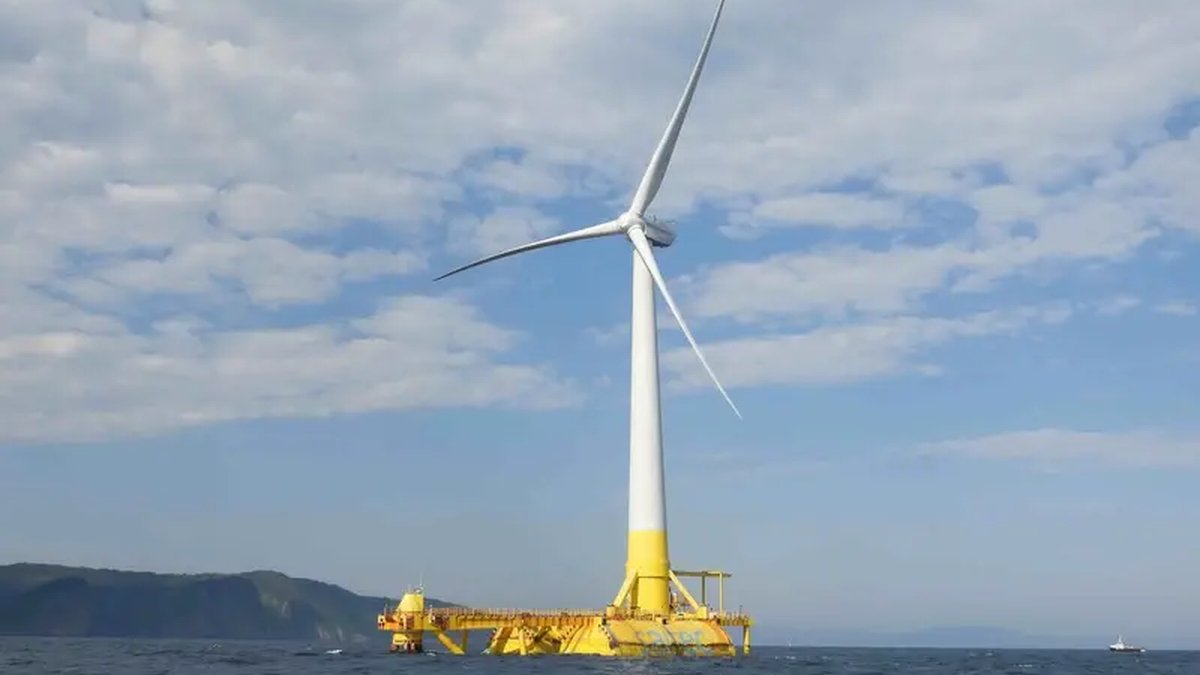
Saitec Offshore Technologies, through DemoSATH Lab, is using its operating floating wind demonstrator as a real-scale testing ground to study environmental interactions, improve monitoring methods, and explore solutions that support coexistence with marine biodiversity.
Following the successful deployment of biomimetic reef solutions on the submerged section of the platform, the company is now testing new methods to co-locate floating wind and aquaculture.
The recent offshore operation marks a new step in DemoSATH Lab's biodiversity program and forms part of the AQUASATH Project, with the installation of several complementary systems designed to study how floating wind foundations can host and support marine life while exploring their potential integration with aquaculture activities.
The work includes Nature Inclusive Design (NID) elements adapted to DemoSATH's underwater columns and filled with shells and mussels to create new surfaces and microhabitats for marine organisms and provide growing, sheltering and feeding areas for species around the floating foundation.
A component of the program is a multi-trophic aquaculture pilot integrated into the platform. By utilizing a mother rope to suspend lantern nets, mussel ropes, and collector ropes, this trial assesses the viability of cultivating European flat oysters (Ostrea edulis), pullet carpet shell clam (Venerupis corrugata), mussels, and Ulva algae alongside floating offshore wind operations, exploring the synergies of such co-use.
Preparation and handling of marine elements
During the first stage, the live material was collected and the NID elements were temporarily installed in a mussel raft before their final transfer to DemoSATH.
Each element was previously identified with a unique number, color code and associated function or type of live material, allowing full traceability throughout the operation.
Once at the raft, the working area was organized by separating the elements, tools and live material. The first elements prepared were those containing algae and mussels, followed by those associated with grooved carpet shell and native oyster. Each element was then attached to the raft, checked to ensure it was properly secured, and recorded on the raft layout plan according to its identification number.
During the second stage, the elements were collected from the raft and transported offshore for their final underwater installation on DemoSATH. The operation required coordination between the main vessel, support teams, mooring personnel and professional divers, who were responsible for positioning and securing the system on the floating wind platform.
The operation was coordinated by Saitec Offshore Technologies, which managed the protocol, installation checklists, documentation control and overall follow-up of the works.
The live material was supplied by Mar Ceibe, while Instituto Kardala provided the raft used for the temporary suspension of the elements and technical support during the first day of operations. Kotazero carried out the underwater works, including the collection of the elements from the raft and their final installation on DemoSATH. Amarradores de Santander provided the main vessel and operational support during the second stage, including the mooring works required on the platform.
Facts Only
* Saitec Offshore Technologies, through DemoSATH Lab, uses an operating floating wind demonstrator for testing environmental interactions.
* The company tested biomimetic reef solutions on the submerged section of the platform.
* The team tested co-location of floating wind and aquaculture.
* The program involves installing NID elements filled with shells and mussels to create microhabitats.
* A multi-trophic aquaculture pilot was integrated into the platform, involving cultivating European flat oysters, pullet carpet shell clams, mussels, and Ulva algae alongside operations.
* Live material was collected and temporarily installed on a mussel raft before transfer to DemoSATH.
* Elements were identified with unique numbers, color codes, and functions for traceability.
* The operation required coordination between Saitec Offshore Technologies, Mar Ceibe, Instituto Kardala, Kotazero, and Amarradores de Santander.
* Mar Ceibe supplied the live material; Instituto Kardala provided the raft.
* Kotazero carried out underwater works for installation on DemoSATH.
Executive Summary
Full Take
Sentinel — Human
The text appears to be a factual report detailing a real-world project involving multiple stakeholders, exhibiting the structured detail of human operational reporting rather than purely synthetic generation.