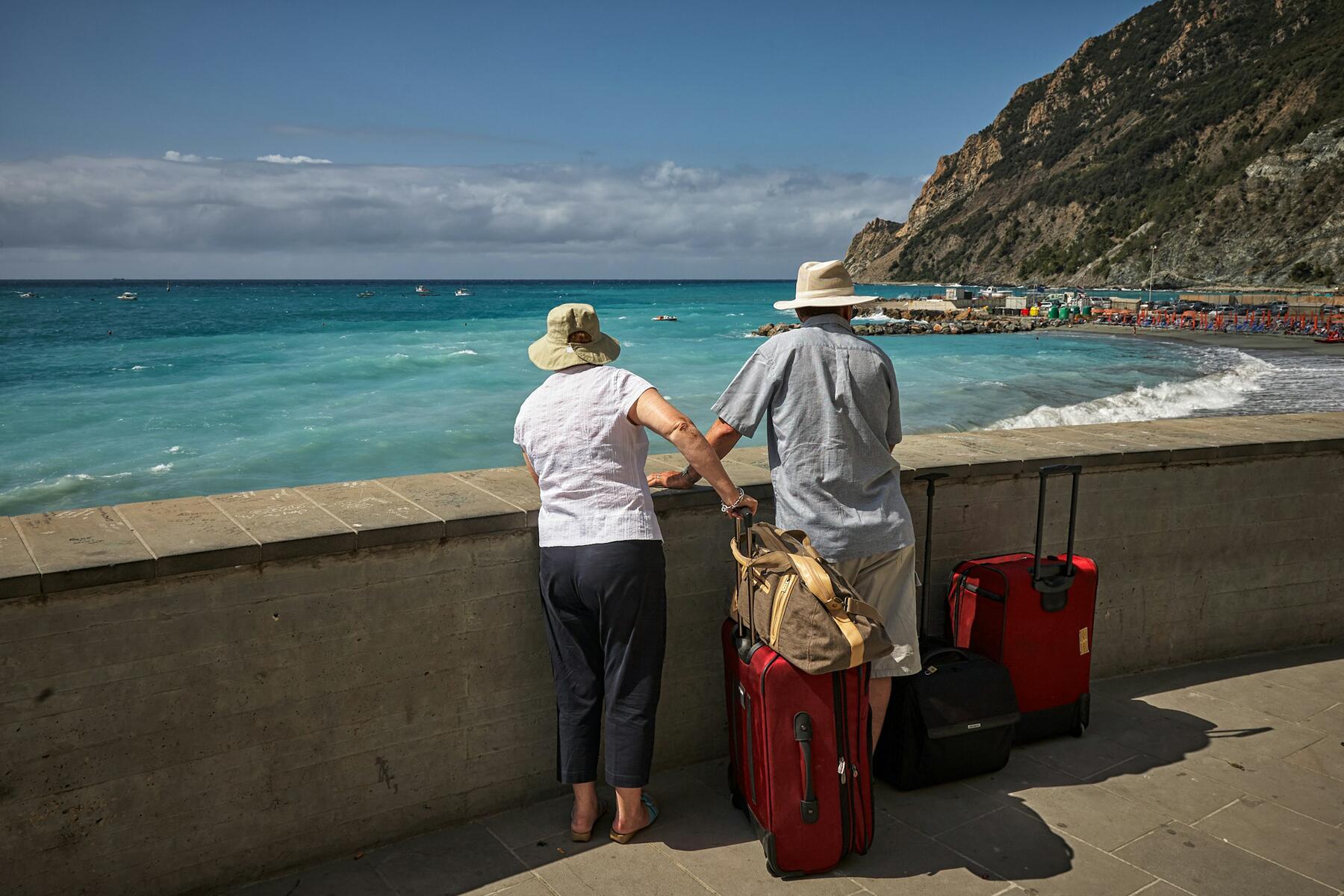
There are key differences in how generations travel.
Baby boomers are still at the top of the travel pyramid. New generations, millennials and Gen Z, have flipped travel trends, but boomers continue to play a crucial role in the travel sector. A new analysis by YouGov reveals that boomers still travel more than other generations and spend more on their trips.
According to the report, 37% of boomers say they are likely to take multiple trips a year, compared to 33% of non-boomers. The older generation also has a bigger appetite for travel, with 27% saying they spent at least $1,000 per person on a trip, compared to 21% of non-boomers.
So, what do boomers want from their trips? The report says that for 50%, beach vacations top the list. They are also happy to visit the mountains, lakes, or countryside and go sightseeing. Boomers do not prefer city breaks, amusement parks, events, or sports-led trips as much as non-boomers. They are slightly more inclined toward cruises (24% compared to 17% of non-boomers), and 12% of boomers prefer escorted or group tours, compared to 8% of non-boomers.
As for destinations, boomer favorites in the U.S. are Hawaii and Florida. Internationally, they have a strong positive impression of Canada, Ireland, and Italy. The report notes that older generations prefer cultural and geological familiarity and seek comfort and ease. Conversely, they have a relatively less positive impression of Asian destinations compared to non-boomers, including South Korea, China, Thailand, and the Maldives.
Recommended Fodor’s Video
Related: Apparently, Boomers Don’t Care Much About the Environmental Footprint of Travel
Generational Travel Gap
In recent years, the travel industry has seen significant shifts in planning and bookings. From social media-driven trends to the rise of AI chatbots, companies have adapted to meet the needs of their youngest and most enterprising customers. Deloitte noted that Gen Z and millennials accounted for half of all travelers in the 2025 holiday season in the U.S. Although Gen Z has lower earning power, these travelers are quickly gaining traction.
A McKinsey 2024 travel report revealed that younger generations have shown more interest in travel since COVID-19 and seek new experiences when they travel. Baby boomers, on the other hand, take trips to spend time with friends and family. The new generation is also shaping trends by pursuing experiences and exclusive activities. They are more likely to splurge on meaningful experiences and choose destinations based on specific attractions. Gen Z travelers are more willing to fly at odd hours or take stopovers, while boomers want convenience and would rather trim their experience budgets.
Planning also highlights how differently the generations travel. Compared to boomers, millennials and Gen Z are more likely to embrace technology and use AI to help plan their trips. They use social media for recommendations and download travel apps to support their travels. The older generation prefers more comfort and likes the human touch of a travel agent.
Multiple studies show that for the younger generation, experiences are paramount, and they would rather cut other expenses—including flights, transportation, food, or shopping—than compromise on experiences. Gen Z and millennials also lead demand for sustainable products and are generally more price-conscious.
Even as these trends emerge, boomers will continue to have a significant hold on the travel market, thanks to their frequent and higher spending.
Facts Only
Actors: Baby boomers, millennials, Gen Z
Actions/Events: Traveling, planning trips, spending on travel
When: Not specified in the article
Where: Domestic (Hawaii, Florida), International (Canada, Ireland, Italy)
Executive Summary
Full Take
By analyzing the article, it becomes clear that there are significant differences in travel preferences among different generations. The older generation, baby boomers, tends to favor traditional vacation spots such as beaches, mountains, lakes, and countryside destinations, while younger generations lean more towards unique experiences and exclusive activities. This trend reflects a broader cultural shift where the younger generation seeks novelty and personalized experiences, while baby boomers prioritize relaxation and familiar environments.
The article does not explicitly state motivations behind these preferences, but it's worth exploring historical and sociocultural factors that might contribute to them. For example, growing up during a time of increased globalization and technological advancements may have shaped the travel habits of millennials and Gen Z, making them more adventurous and open to new experiences. On the other hand, baby boomers' preference for comfortable and familiar destinations could be tied to their nostalgic attachment to simpler times.
Patterns detected: ARC-0024 Ambiguity (The article does not explore motivations behind travel preferences, leaving room for speculation)
The travel industry's response to these generational differences is also noteworthy. Companies have adapted their services to cater to the needs of younger customers by embracing technology and offering AI chatbots for trip planning, using social media recommendations, and focusing on sustainability and price-consciousness. However, baby boomers still maintain a significant influence on the market due to their frequent and higher spending on travel.
Questions for further inquiry: What role does technology play in shaping travel preferences among different generations? How can the travel industry balance the needs of various age groups while maintaining profitability? Is there a way to create shared experiences that cater to both younger and older travelers' tastes?
Sentinel — Human
This article shows signs of human authorship. It provides a unique perspective on travel patterns across generations, citing specific reports for support.