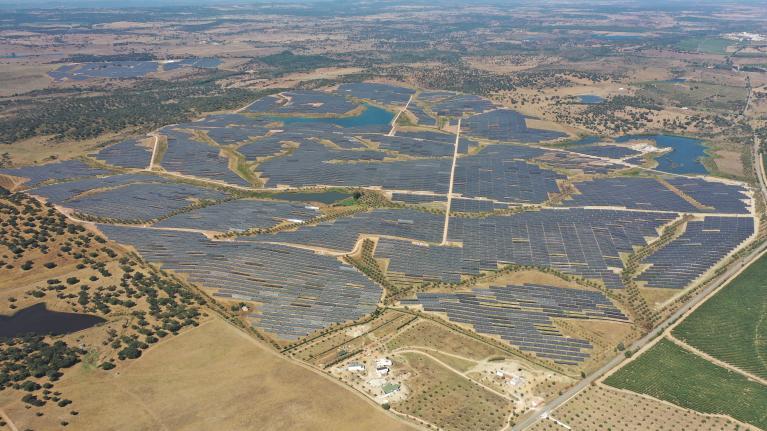
IPP Akuo will soon start building a 2.75-hour BESS project in Borba, Portugal, integrated into its 181MW Santas solar PV plant.
The SantasBAT battery energy storage system (BESS) project is scheduled for completion in Q2 2027.
The project secured €15 million (US$17.3 million) from Portugal’s portion of the EU-wide Recovery and Resilience scheme, which awarded some €100 million to 500MW of energy storage projects in spring 2025.
The government of Portugal is also prepping a new auction for large-scale energy storage following the Iberian peninsula blackout last year, as well as investments into modernising its grid.
Try Premium for just $1
- Full premium access for the first month at only $1
- Converts to an annual rate after 30 days unless cancelled
- Cancel anytime during the trial period
Premium Benefits
- Expert industry analysis and interviews
- Digital access to PV Tech Power journal
- Exclusive event discounts
Or get the full Premium subscription right away
Or continue reading this article for free
The SantasBAT project will shift solar production into periods of peak consumption. Portugal is aiming for 85% renewable energy in its production mix by 2030.
Large-scale projects in Portugal have been progressed to construction in the past 12 months by IPPs Sonnedix, Hyperion, Voltalia and NGEN.
The country has a handful of smaller projects online, commissioned over 2022-2025 and provided by system integrators including Fluence and Powin (which has since ceased trading), while these more recent projects show it moving into the next phase of scale.
Akuo meanwhile has occasionally done some level of in-house system integration for its BESS projects, though it didn’t say what its approach would be for the Portugal project.
The firm is a France-headquartered independent power producer (IPP) which has primarily focused its BESS activities to-date on various islands including Tonga, Martinique and New Caledonia (the latter two are French overseas territories).
Facts Only
IPP Akuo will start building a 2.75-hour BESS project in Borba, Portugal.
The project, named SantasBAT, is integrated with the 181MW Santas solar PV plant.
Completion is scheduled for Q2 2027.
The project received €15 million from Portugal’s EU Recovery and Resilience funds.
Portugal allocated €100 million to 500MW of energy storage projects in spring 2025.
Portugal is preparing a new auction for large-scale energy storage following a 2023 Iberian peninsula blackout.
The SantasBAT project will shift solar production to peak consumption periods.
Portugal aims for 85% renewable energy in its production mix by 2030.
Recent large-scale projects in Portugal involve IPPs Sonnedix, Hyperion, Voltalia, and NGEN.
Earlier smaller projects were commissioned by Fluence and Powin between 2022-2025.
Akuo has previously worked on BESS projects in Tonga, Martinique, and New Caledonia.
Akuo has not specified its system integration approach for the Portugal project.
Executive Summary
Full Take
The strongest version of this narrative highlights Portugal’s accelerating transition to renewable energy, supported by EU funding and private investment. The SantasBAT project exemplifies how energy storage can stabilize grids and align solar production with demand, a critical step toward Portugal’s 2030 renewable targets. The context of the 2023 blackout underscores the urgency of grid modernization and storage deployment, framing these efforts as pragmatic responses to systemic vulnerabilities.
Pattern scan: The article avoids overt manipulation, but the framing leans toward a progress narrative without interrogating potential trade-offs (e.g., land use, supply chain dependencies). The mention of Powin’s cessation of trading is a subtle nod to industry volatility, though not explored. No clear emotional or distortive tactics are present.
Root cause: The narrative assumes that large-scale storage and renewables are inherently beneficial, without questioning the economic or environmental costs of battery production or grid integration. The unstated assumption is that technological solutions alone can achieve energy transition goals, sidestepping broader systemic challenges like policy coordination or public acceptance.
Implications: For human agency, this represents a top-down push for energy sovereignty, but the benefits may accrue unevenly—IPPs and tech providers stand to gain, while local communities bear land-use impacts. Second-order consequences could include increased reliance on EU funding mechanisms, which may not be sustainable long-term.
Bridge questions: How might Portugal balance rapid deployment with community engagement and environmental safeguards? What risks does the reliance on EU funding pose if political priorities shift? Could smaller, decentralized storage solutions offer more resilient alternatives?
Counterstrike scan: A coordinated influence campaign might exaggerate the project’s benefits while downplaying risks (e.g., battery waste, grid instability). The actual content does not match this pattern—it presents facts neutrally, though it could delve deeper into trade-offs. No structural alignment with manipulation tactics is detected.
Patterns detected: none
Sentinel — Human
The text appears to be written by a human. The writing style shows variability in sentence length and includes idiosyncratic emphasis, which are indicative of human authorship. However, the presence of promotional language suggests partial commercial intent.