Key Takeaways
- A Korean cohort study compared the prognostic value of quantitative volumetry versus ASPECTS in thrombectomy-treated patients.
- Quantitative infarct volumetry turned out to be a more accurate estimation of biological infarct burden than ASPECTS in patients with large-core stroke.
- Additionally, extensive infarctions >110 mL on volumetry marked the upper infarct volume where the benefit of reperfusion diminishes.
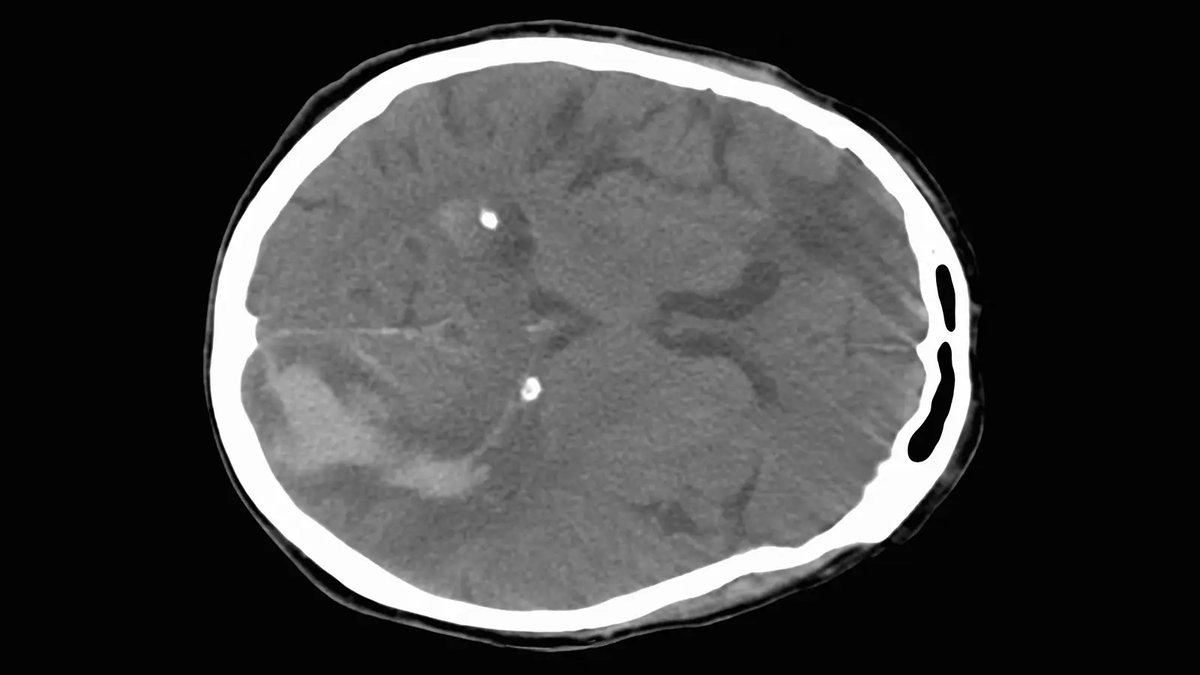
There was evidence for going beyond the Alberta Stroke Program Early CT Score (ASPECTS) in selecting stroke patients with enough salvageable brain tissue to benefit from thrombectomy, one group contended.
Based on a nationwide Korean cohort undergoing endovascular therapy (EVT), there was major discordance between CT-based ASPECTS and volumetric measurements: regardless of ASPECTS status, patients meeting the volumetric large-core definition per diffusion-weighted imaging (DWI) MRI had substantially worse functional outcomes (90-day modified Rankin Scale score 5-6; adjusted OR 6.92, 95% CI 2.58-19.34).
Meanwhile, strokes classified as large core by ASPECTS but not by DWI volumetry were not independently associated with poor outcome. In fact, an ASPECTS-only large-core stroke was more akin to volumetric small-core strokes in terms of the likelihood of a poor functional outcome (11.8% vs 11.7%), according to Beom Joon Kim, MD, PhD, of Seoul National University Bundang Hospital in Seongnam, Korea, and colleagues reporting in Stroke.
Further analysis suggested EVT's benefit was evident in the 50-110 mL range but disappeared when infarctions exceeded 110 mL per DWI.
"Quantitative volumetry provided better prognostic discrimination and identified ≥110 mL as a therapeutic ceiling where the benefit of thrombectomy becomes negligible," the authors wrote. "This suggests that the large-core benefit observed in prior trials may have been driven by patients below this volume threshold, masking the futility experienced by those with truly extensive necrosis."
How this is possible could be related to the inherent limitations of ASPECTS, an ordinal, region-weighted scale on noncontrast CT that is widely available.
"Its coarse, topographical thresholding can misrepresent infarct burden in either direction: small, scattered lesions spanning multiple regions can precipitate a disproportionately low score, thereby overestimating the biological infarct burden, whereas extensive yet subtle ischemic changes often evade visual detection, yielding deceptively preserved scores that underestimate the true extent of infarct," Kim's group explained.
"Specifically in the context of large-core trials, this discordance suggests that the ASPECTS-defined large-core category can amalgamate physiologically dissimilar patients and may, in some instances, include patients whose true infarct burden is not large by volumetric standards," they continued. "This mismatch between a pragmatic label and underlying biology gives rise to what has been described as a large-core paradox: the very group termed large core may be partially composed of patients with smaller, or at least less extensive, cores who are more likely to benefit from recanalization treatment."
In the end, the message reiterates that EVT, no matter how much of an advancement it is in stroke medicine, still has its limits, and the current way of defining this ceiling has not sufficed.
"Although ASPECTS typically suffices for rapid triage, quantitative volumetry is imperative for resolving clinical ambiguity in borderline cases and, crucially, for defining the objective threshold where the benefit of reperfusion is eclipsed by the risk of futility," the study authors concluded.
For their study, Kim and colleagues relied on a neuroimaging registry of consecutive acute stroke patients in Korea over 2 years.
In the cohort of 552 EVT-treated patients, average age was 70.4 years and 57.8% were men. The median baseline NIH Stroke Scale score was 14. IV thrombolysis was administered in 49.6% of cases and successful reperfusion to modified Thrombolysis in Cerebral Infarction grade 2b or 3 was achieved in 85.5%.
Median ASPECTS was 8, whereas the median ischemic core volumes were 24.3 mL on DWI, 18.6 mL on CT perfusion, and 3.1 mL on noncontrast CT. Median last known well to groin puncture was 4.2 hours.
To estimate treatment effects across specific volume spectra, the investigators had conducted target trial emulations that stratified causal estimates by volumetric thresholds. Ordinal 90-day modified Rankin Scale score shift was the primary outcome.
Quantitative infarct volumetry derived from DWI, CT perfusion, and noncontrast CT all showed stronger prognostic performance than ASPECTS, they reported.
"Taken together, these findings argue that quantitative volumetry more faithfully captures the biological substrate that ASPECTS is often asked to approximate in contemporary treatment decision-making for large-core stroke patients," they wrote.
Kim's group nevertheless acknowledged the observational nature of the analysis and the potential for residual confounding. The upper limit for infarctions suitable for EVT may also depend on differences in imaging modality and acquisition parameters, they said, and the researchers had not adjusted for collateral circulation independent of core volume.
Finally, the study cohort had been exclusively Asian, limiting the generalizability of these findings.
Kim and colleagues urged future prospective study on selecting strokes for EVT based on volumetric measurements.