By Maria Popova
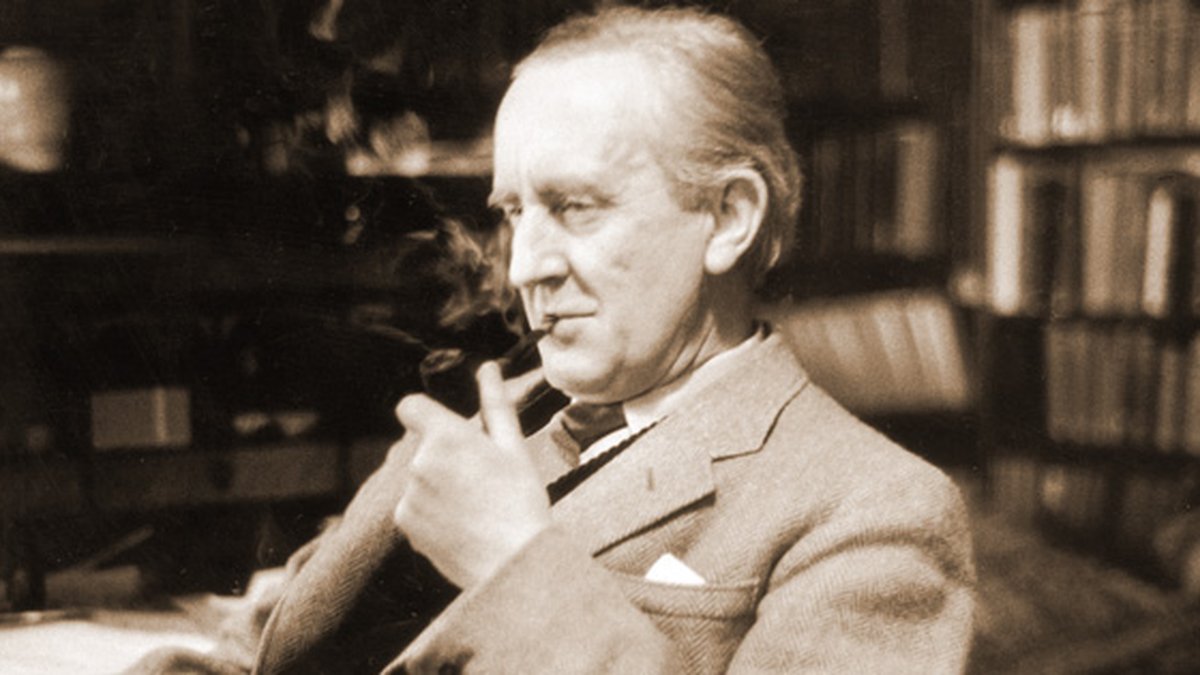
J.R.R. Tolkien (January 3, 1892–September 2, 1973) firmly believed that there is no such thing as writing “for children” and that creative fantasy serves to set the ageless human imagination free. Nowhere was Tolkien’s ethos more perfectly enacted than in his 1937 fantasy novel The Hobbit (public library), a book so beloved that Tolkien’s own little-known illustrations for the original edition have been reimagined by great artists around the world in the decades since its publication.
In August of 1952, having just finished the manuscript of The Lord of the Rings, Tolkien took a vacation in Worcestershire, where he stayed with his friend George Sayer, an English Master at the local college. To entertain his guest one evening, Sayer pulled out an early portable tape recorder. Although the technology had been around for some time, it was only just becoming commercially available and Tolkien hadn’t seen one before. Intrigued by how it worked, he joked that he “ought to cast out any devil that might be in it” by recording himself reading the Lord’s Prayer in his beloved ancient Gothic language. The result delighted him, and he went on to read from his own work.
In this rare archival recording from that serendipitous summer evening, sixty-year-old Tolkien reads from The Hobbit, doing a magnificent impression of Gollum in the ancient accent he so loved — please enjoy:
Complement with Mary Oliver reading from Blue Horses, Frank O’Hara reading his “Metaphysical Poem,” Susan Sontag reading her short story “Debriefing,” Dorothy Parker reading her poem “Inscription for the Ceiling of a Bedroom,” and Chinua Achebe reading his little-known poetry, then revisit the forgotten children’s book Tolkien wrote and illustrated for his own kids.
—
Published July 1, 2026
—
https://www.themarginalian.org/2026/07/01/tolkien-reads-from-the-hobbit/
—
ABOUT
CONTACT
SUPPORT
SUBSCRIBE
Newsletter
RSS
CONNECT
Facebook
Twitter
Instagram
Tumblr
Sentinel — Human
The text exhibits strong human-journalistic characteristics, utilizing specific anecdotal detail and balanced structure rather than displaying typical patterns of machine generation.