Seccions
Ara
Portada
Última hora
Descobreix
Edició paper
26/06/2026
Seccions
Opinió
Política
Internacional
Economia
Societat
Medi i Crisi climàtica
Ciència
Cultura
Investigació
Llengua
Esports
Mèdia
Feminismes
Estils
Gent
La méteo
Magazins
Diumenge
Criatures
Empreses
Llegim
Mengem
Motor
Multimèdia
Podcast
Interactius
Ara Data
Ara Mirades
Vídeo
Foto
Vinyetes
Dossiers
Serveis
Botiga
Hemeroteca
Newsletters
Trobamot
Mots encreuats
Jocs
Resultats electorals
La Veu del Lector
Defensor del Lector
Bústia d'investigació
Cartes a la directora
Club prèmium
Comunitat
Societat
Alerta pels incendis
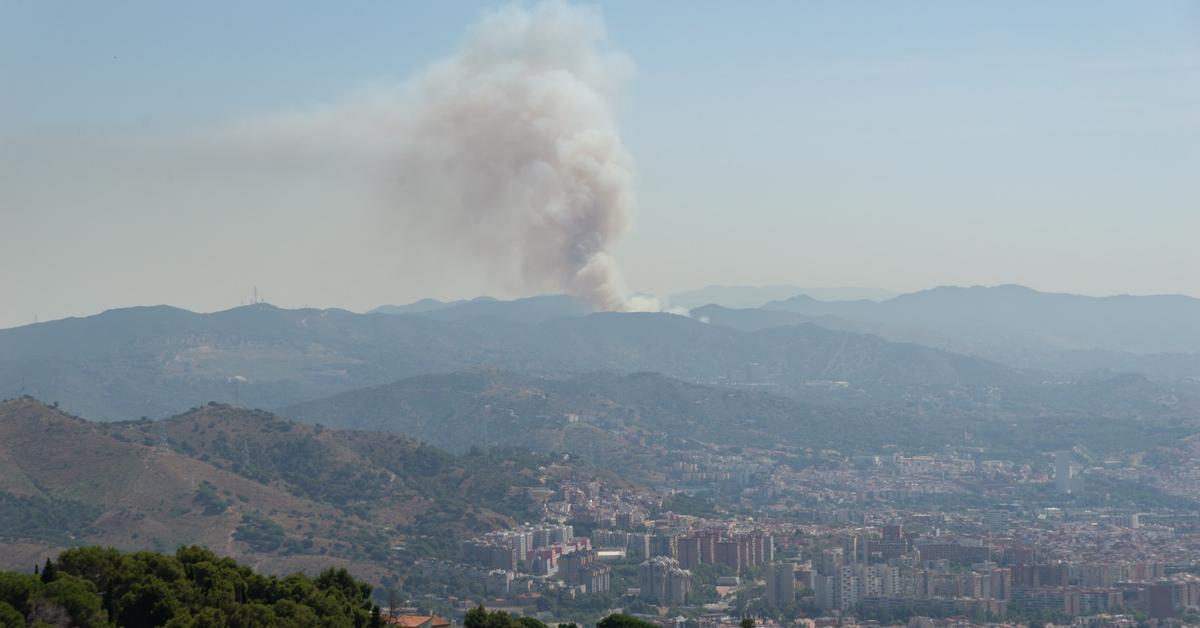
Un detingut per l'origen del foc de Tiana, que obliga a confinar quatre municipis
Segueix amb l'ARA tota l'última hora dels diversos focs a Catalunya
Una imatge de la vista de l'incendi a Tiana, declarat aquest divendres a la zona de l'abocador
Observatori Fabra
Cesc Maideu
i
Laia Galià
Act. fa 2 min
Portada
Última hora
Descobreix
Jocs
Seccions
Facts Only
Executive Summary
Full Take
The reporting frames an emergency response involving legal measures and geographical confinement, focusing on accountability for a specific event. This type of news often relies on the immediate establishment of authority (detention order) to establish narrative control over a volatile situation. The focus is placed on specific individuals tied to the incident, which shifts the public discourse toward assigning responsibility rather than analyzing systemic causes or environmental factors.
The narrative implicitly utilizes an appeal to immediate crisis management to justify strong administrative actions. This pattern aligns with ARC-0043 Motte-and-Bailey, where complexity is reduced to a binary conflict between the cause (the fire) and the consequence (the confinement). The underlying assumption is that establishing immediate legal control is sufficient for public understanding, which can mask deeper socio-environmental or logistical complexities.
The implication of this approach is that complex issues are often simplified into assignable blame to maintain public focus during a crisis. This forces an inquiry into who bears responsibility rather than investigating the systemic pressures contributing to the risk in the first place.
What factors might be excluded from this immediate narrative? The historical context of land use, fire management policies, and long-term environmental risks are often deferred in favor of the urgent legal action. What criteria should guide the public’s inquiry beyond the immediate operational facts presented? How can accountability be pursued for origin without sacrificing community trust or ignoring underlying systemic vulnerabilities?
Sentinel — Human
This text appears to be navigational metadata from a newspaper website, exhibiting high structural coherence but lacking substantive textual content for deep forensic analysis.