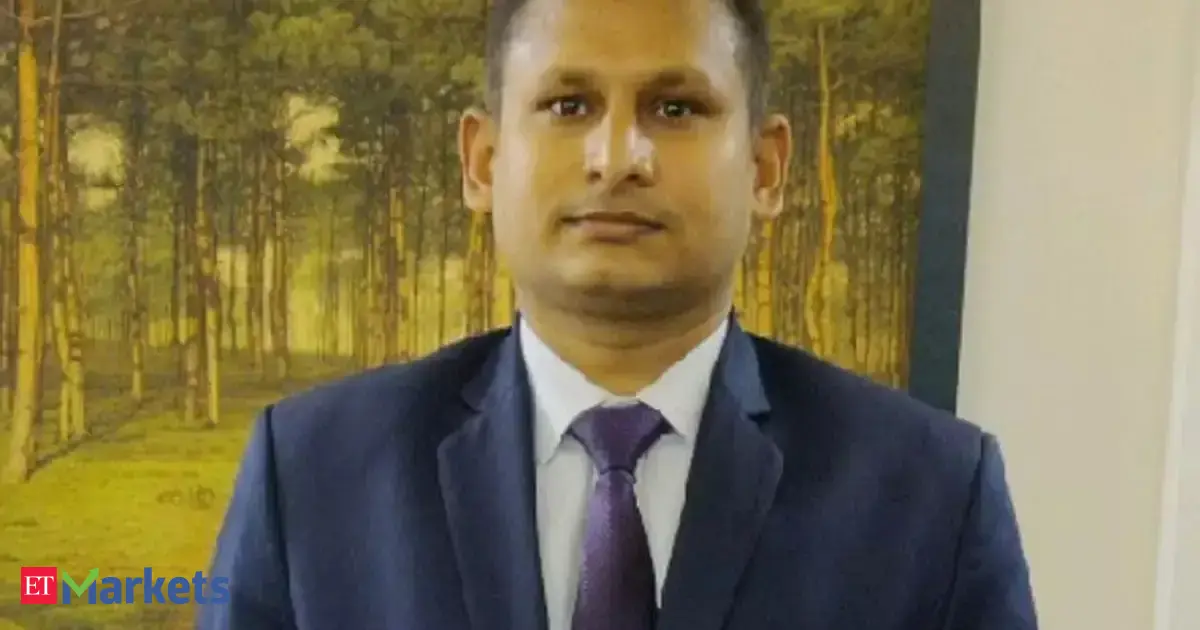
Speaking to ET Now, SBI Cap Securities' Sunny Agrawal said the recent selloff in several large-cap names appears to be driven more by panic and worst-case assumptions rather than a deterioration in business fundamentals.
One example is the reaction to companies with exposure to the Middle East, where investors are factoring in a prolonged disruption to projects and economic activity. “There is an absolute panic in the stock basis that the company has got 25% to 30% exposure to the Middle East, and the market is discounting that the entire order book of 25% to 30% exposure that may not get executed over the period of the next 6 to 24 months,” he said.
However, Agrawal believes the market may be extrapolating an extreme scenario. If geopolitical tensions ease in the coming months, investors may return to more normal assumptions about project execution timelines and business growth.
He pointed out that the underlying order pipeline for some companies remains strong despite the recent volatility. “Looking at a very robust order book of closer to Rs 4.3 trillion and within that also closer to 30% contribution is from the private sector, which clearly indicates that even private sector capex is picking up,” he said.
With valuations correcting sharply alongside the broader market, the risk-reward for long-term investors is beginning to improve. “Post correction, now valuations have even turned comfortable… we feel the fair value of the business is closer to Rs 4,000-4,200. So, any dip currently is a good buying opportunity for a long-term investor,” Agrawal said.
In the consumer internet space as well, rising competition and temporary disruptions have weighed on sentiment, but the broader growth story remains intact. “Post correction, even there we feel that the risk-reward is turning favourable. In fact, both these stocks, Eternal as well as Swiggy looks pretty attractive as the long-term growth opportunity is pretty intact,” he said.
At the macro level, crude oil remains the key variable for India’s economic outlook. Elevated energy prices could trigger inflationary pressures across the economy if they persist for several months. “In case the crude continues to trade above $90 and in the band of 90 to 110 for a pretty long period of time, three to six months, then definitely it will have an inflationary impact across the value chain, first for the manufacturer and then for the consumer,” Agrawal said.
Still, he noted that India has been experiencing relatively low inflation over the past year, which could provide some cushion if energy prices remain volatile.
In banking, Agrawal said valuations have also become reasonable after the recent correction. “Post correction, now most of the private banks are trading at a pretty reasonable valuation,” he said, adding that a mix of private and well-diversified public sector banks could help investors navigate the current environment.
As markets digest geopolitical risks and commodity volatility, Agrawal believes the current phase of panic could gradually give way to selective opportunities for investors willing to take a longer-term view.
(What's moving Sensex and Nifty Track latest market news, stock tips, Budget 2025, Share Market on Budget 2025 and expert advice, on ETMarkets. Also, ETMarkets.com is now on Telegram. For fastest news alerts on financial markets, investment strategies and stocks alerts, subscribe to our Telegram feeds .)
Subscribe to ET Prime and read the Economic Times ePaper Online.and Sensex Today.
Top Trending Stocks: SBI Share Price, Axis Bank Share Price, HDFC Bank Share Price, Infosys Share Price, Wipro Share Price, NTPC Share Price
(What's moving Sensex and Nifty Track latest market news, stock tips, Budget 2025, Share Market on Budget 2025 and expert advice, on ETMarkets. Also, ETMarkets.com is now on Telegram. For fastest news alerts on financial markets, investment strategies and stocks alerts, subscribe to our Telegram feeds .)
Subscribe to ET Prime and read the Economic Times ePaper Online.and Sensex Today.
Top Trending Stocks: SBI Share Price, Axis Bank Share Price, HDFC Bank Share Price, Infosys Share Price, Wipro Share Price, NTPC Share Price
Facts Only
* SBI Cap Securities' Sunny Agrawal believes the recent selloff is driven by panic, not fundamental deterioration.
* Investors are factoring in prolonged disruption to Middle East projects.
* Company exposure to the Middle East is estimated between 25% and 30% of order book.
* Order book is approximately Rs 4.3 trillion, with 30% from the private sector.
* Fair value estimates for certain companies are between Rs 4,000-4,200.
* Crude oil prices above $90 could trigger inflationary pressures over 3-6 months.
* India has experienced relatively low inflation over the past year.
* Valuations have corrected sharply.
* Eternal and Swiggy stocks are considered attractive due to intact growth potential.
Executive Summary
Full Take
Sentinel — Likely Human
This analysis suggests the text exhibits characteristics common in human-generated financial commentary, primarily through excessive hedging and a balanced presentation lacking strong persuasive voice. While not definitively human, the style leans toward automated production due to structural rigidity and reliance on generalized expert claims.