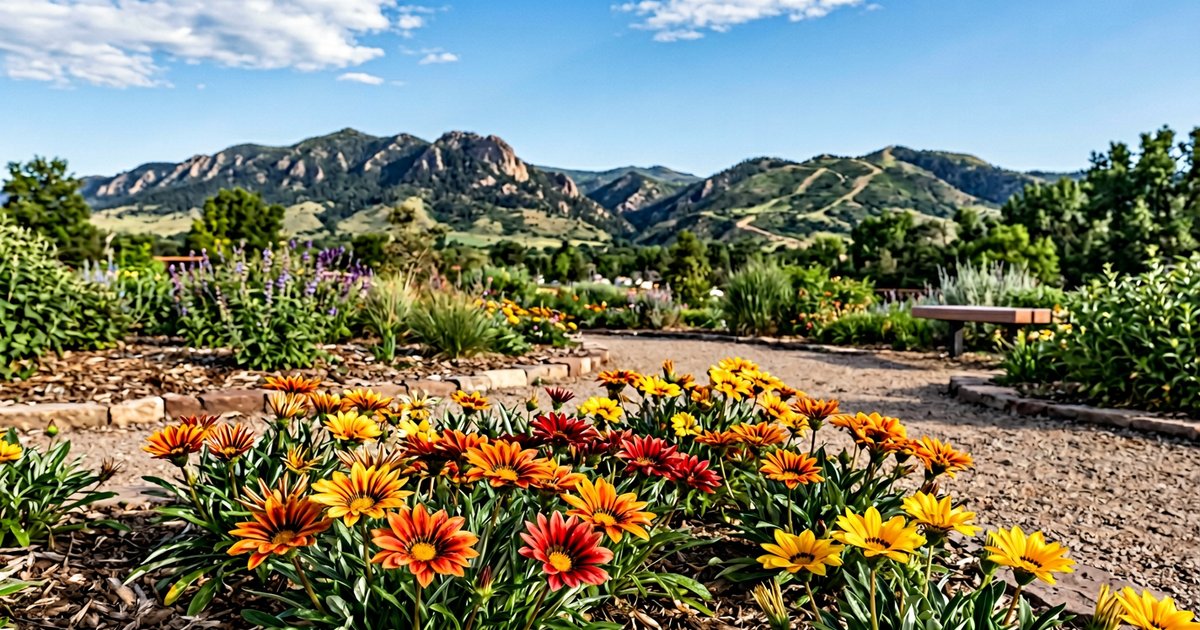
If you’re looking to add a splash of high-intensity color that rivals a Colorado sunset, the Gazania (often called the Treasure Flower) is your garden’s new best friend. These South African natives are built for the spotlight, featuring daisy-like blooms in electric shades of bronze, orange, and yellow—often with stunning contrasting rings around their centers. For a Fort Collins garden, they offer a professional, high-impact look with remarkably low-maintenance demands.
Why Gazania is a Northern Colorado Essential
In our unique climate, Gazanias are prized for their "tough-as-nails" personality. They are particularly well-suited for the local environment because:
- Sun Seekers: Gazanias are famous for their light-sensitivity; they fully open their petals during our bright, high-altitude days and "sleep" by closing at night or during heavy cloud cover.
- Heat-Resilient Performance: These are quintessential heat-resilient varieties that thrive when temperatures climb into the 90s.
- Drought Tolerance: Once established, their leathery, silver-backed foliage is designed to lock in moisture, making them ideal for water-wise landscapes and xeriscaping.
- Salt & Soil Adaptability: They are incredibly forgiving of the lean, alkaline soils often found throughout the Front Range and can even handle the salt spray near sidewalks and driveways.
Designing with Treasure Flowers
Gazanias work beautifully as a ground-hugging filler. Because they stay relatively low to the earth, they are perfect for:
- Rock Gardens: Their vibrant colors pop against the grey and red flagstone common in local landscaping.
- Hanging Baskets & Containers: They spill beautifully over the edges of pots, providing a constant cycle of blooms all summer long.
- Parking Strips: Their ability to withstand reflected heat from pavement makes them a top choice for those tricky "hellstrips" between the sidewalk and the street.
The Perfect Front Range Pairings
To create a sophisticated, textured garden bed, pair the bold, flat faces of Gazania with companions that offer different heights and forms:
- Agastache (Hyssop): The tall, aromatic spikes of Agastache provide a majestic backdrop to the low-growing Gazanias.
- Angelonia: Use the upright, orchid-like stems of Angelonia to add vertical interest and a touch of elegance next to the playful Gazania blooms.
- Sedum: The thick, fleshy leaves of various Sedum varieties complement the Gazania’s drought-tolerant nature while adding a cooling green or blue-grey texture to the soil level.
- Ornamental Grasses: The fine blades of Blue Fescue or Mexican Feather Grass provide a soft, swaying contrast to the rigid, bold structure of the Treasure Flower.
A Quick Pro-Tip
While Gazanias are perennial in warmer zones, they are typically treated as high-performing annuals in our Fort Collins climate. To keep them looking their best, be sure to deadhead spent blooms regularly—this encourages the plant to put its energy into a continuous parade of new flowers until the first frost.
Are you looking to brighten up a sunny border or a specific set of patio containers this year?
Facts Only
* Gazania plants are South African natives.
* Gazania features daisy-like blooms in bronze, orange, and yellow shades.
* The plants are recommended for Fort Collins gardens.
* Gazanias are heat-resilient and thrive in temperatures in the 90s.
* Gazanias exhibit drought tolerance due to leathery, silver-backed foliage.
* Gazanias tolerate lean, alkaline soils typical of the Front Range.
* Gazanias are light-sensitive, fully opening petals during bright days and closing at night or in heavy cloud cover.
* Gazanias are suggested as ground-hugging fillers for rock gardens, hanging baskets, and parking strips.
* Recommended pairings include Agastache, Angelonia, Sedum, and ornamental grasses.
* Spent blooms should be regularly deadheaded to encourage continuous flowering.
Executive Summary
Gazania plants are South African natives known for their vibrant, daisy-like blooms in shades of bronze, orange, and yellow. They are recommended for Northern Colorado gardens due to their resilience in the local environment, functioning well in bright, high-altitude days and tolerating temperatures in the 90s. These plants possess qualities that make them suitable for water-wise landscaping, including drought tolerance and the ability to handle lean, alkaline soils, even near roadways.
The plants are utilized as low-growing fillers, making them effective in various landscape settings such as rock gardens, hanging baskets, and parking strips. They are paired successfully with plants like Agastache, Angelonia, Sedum, and ornamental grasses to create layered, textured garden beds. Maintenance requires regular deadheading to sustain bloom production in the Fort Collins climate, where they are treated as high-performing annuals.
Full Take
The narrative positions Gazania as a panacea for Northern Colorado gardening challenges, framing the plant as a universally "tough-as-nails" solution to climate and soil volatility. This approach leverages the appeal of low-maintenance aesthetics and high visual impact, which aligns with a consumer desire for effortless, high-quality results. The emphasis on "heat-resilient performance" and "drought tolerance" serves to establish the Gazania as a superior, adapted choice for local conditions, which subtly suggests that other, less-adapted plants are inadequate.
The pairing suggestions function to create an aspirational vision of a sophisticated, layered landscape, suggesting that the Gazania is not merely a solitary feature but an integral part of a carefully curated design. This reinforces the idea that successful landscaping requires specific, expert-level combinations rather than simple planting. The necessity of deadheading, while presented as a simple maintenance tip, acts as a gatekeeper, positioning the gardener as responsible for sustaining the plant's performance, reinforcing a sense of required agency over nature's cycle.
The underlying pattern is the use of exotic, resilient plants to solve local environmental problems through aesthetic appeal, creating a framework where environmental adaptation is equated with ornamental value. This system relies on the implicit assumption that the most successful solutions are those that possess inherent, non-negotiable resilience, which can be effectively marketed to the consumer as an essential, high-impact choice.
Sentinel — Human
This text functions as high-quality, practical gardening advice with a specific regional focus, exhibiting a natural, human-authored voice and grounded claims.