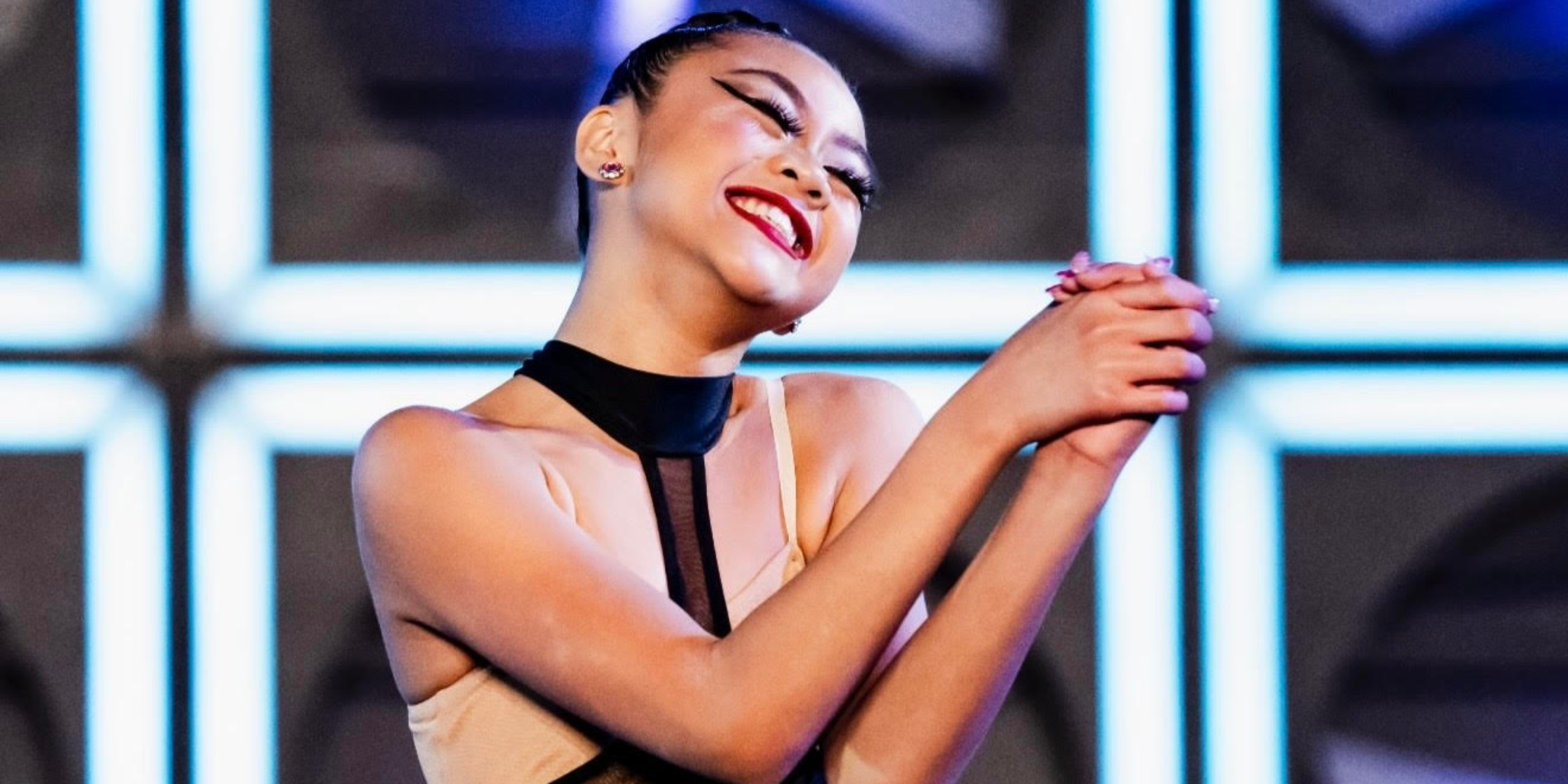
Madisyn Rose Amos is a force to be reckoned with in the competition circuit. At just 12 years old, she clearly exemplifies what it means to be a multifaceted dancer. A quick scroll through her Instagram reveals competition and convention reels spanning a variety of styles, including jazz, ballet, contemporary, and ballroom. (In fact, after less than a year of Latin and ballroom training, Amos won first overall at her first-ever singles competition at Ovation Dance, even catching the attention of Derek Hough.) Earlier this month, she took home the Radix Elite Protégé title at The One Nationals in San Diego, California.
With a home base in Arizona, Amos currently trains and competes with Stars Dance Studio in Miami, Florida. Last year, Amos placed among the Top 10 Juniors at The Dance Awards. She followed that up this Regionals season with first-place overall titles at Nuvo, Jump, New York City Dance Alliance, 24Seven Dance, and Radix, making her one to watch heading into Nationals.
Dance Spirit caught up with Amos to hear about all things leg tilts, dance idols, and goals for the future.
How did you get into dance?
My mom likes to say I started dancing in her tummy because I always kicked her. After I was born, my parents saw how much I
danced along to music, so I was put in class at age 1. I started with ballet and tap, and realized how much I loved it. I then got into competitive dancing when I was 7.
What are some highlights of your dance journey so far?
I’ve had the opportunity to work with JoJo Siwa on an XOMG POP project, audition for “America’s Got Talent,” and, most recently, work with Tiger Friday. I’m a TIGRL, which I’ve dreamed of being for my entire dance career. I even got to create my own design that I’ll be wearing at Nationals!
Do you have any goals for this season?
I’d love to win [additional] titles this Nationals season. I am aiming for titles at The Dance Awards, Radix, and Press Play.
What is your favorite style to perform?
Definitely ballroom. I get to show my personality and I love how fierce and sassy
I get to be.
What style challenges you the most?
Ballet is super-challenging, but I love it because it helps with every single style. I’ve been training in it a lot recently.
Do you have a signature move?
My signature move is definitely a leg tilt.
Describe your favorite combo you’ve ever learned.
I recently learned a contemporary combo at Ovation from Talia Favia. She created and explained this idea of an “alter ego,” and I felt like I was able to bring out a new side of me while dancing it. It felt so different and I loved it.
What are your biggest goals for the future?
My biggest dance dream is to be either a Rockette or to be on “Dancing with the Stars.”
Who is your dance idol?
I love Keira Redpath. She is just so amazing. When I watch all of her turns, jumps, and legs, I hope to be just like that!
What is your go-to competition snack?
Probably a boiled egg.
And your go-to drink?
I love blue Powerade, but it has to be from Chick-fil-A.
Sentinel — Human
The text exhibits strong human authorship characterized by a specific, informal voice and embedded personal anecdotes within structured factual reporting.