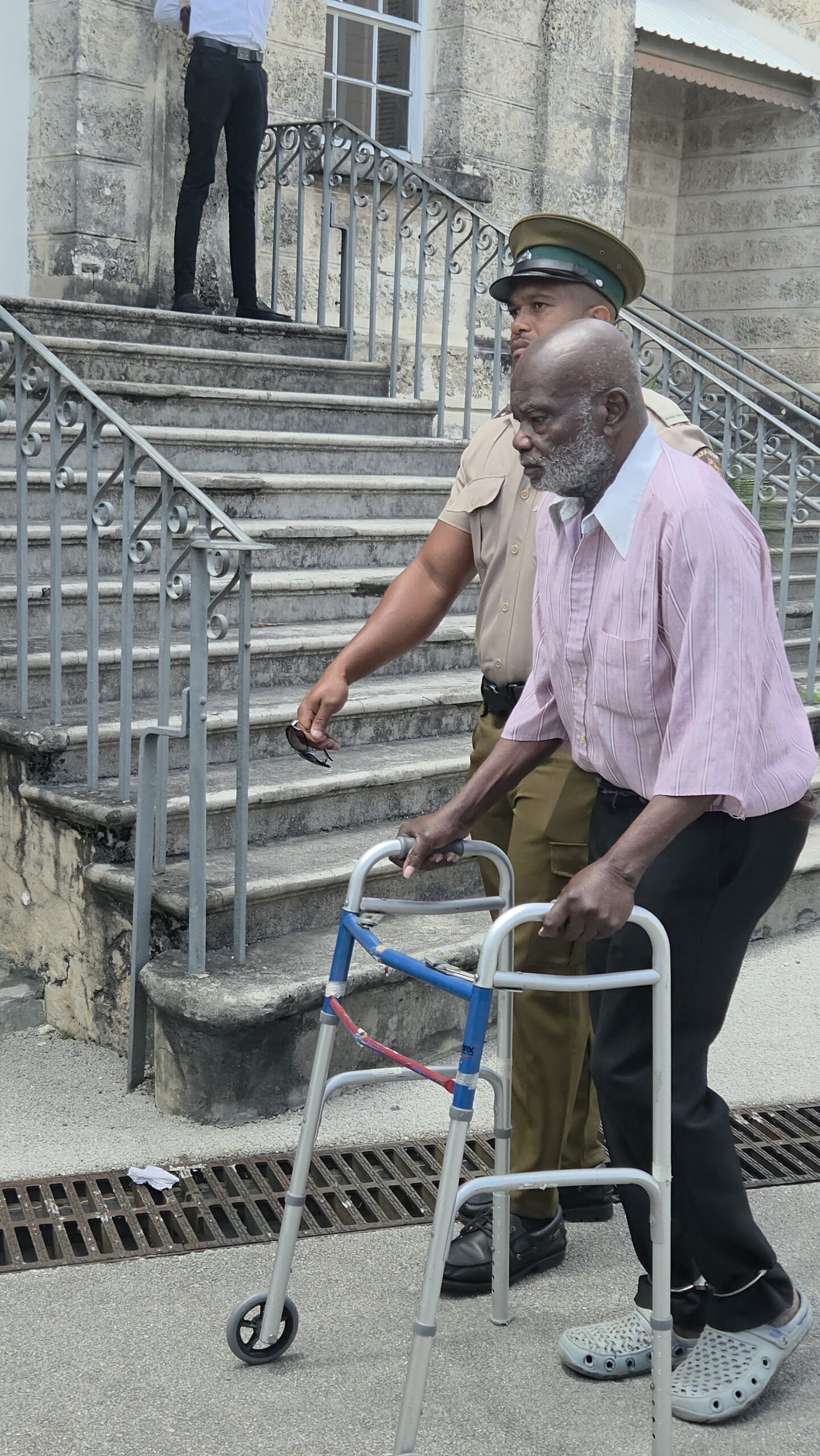
CourtCrimeLocal News Elderly man to serve two more years for dumping granddaughter’s body in cover-up by Jenique Belgrave 24/03/2026 written by Jenique Belgrave Updated by Shanna Moore 24/03/2026 7 min read A+A- Reset FacebookTwitterLinkedinWhatsappEmail 151 A High Court judge denounced an 81-year-old grandfather who, for a decade, deceived his family and the police about the whereabouts of his 12-year-old granddaughter, left for dead with a knife in her belly and whose body he later dumped over a ledge. Rasheeda Bascombe’s mother, Hermena Straker, died not knowing that her father, Winfield Nurse, was “the “only person who knew what really happened to her”, in a cover-up that was “absolutely reprehensible”, Justice Donna Babb-Agard said as she sentenced him on Tuesday. Twenty-four years after Bascombe went missing, Nurse, of Accommodation Road, Bush Hall, was formally sentenced to 13 years in prison for unlawfully disposing of her body sometime between January 2, 2002, and May 30, 2013. But Nurse will serve two years and 24 days after spending almost a decade on remand. The judge said: “You knew that she was, in fact, dead, yet you kept that chilling secret from your immediate family, which included your now-deceased adult daughter, Hermina Straker, who was Rasheeda’s mother, and her siblings for 11 years. As a result, this case remained a cold case in the files of the Royal Barbados Police Force until your confession in 2013.” The judge took serious note of the conflicting reports made by Nurse to the police throughout the years in his efforts to conceal his actions, including that his granddaughter used to frequent “unsavoury places”, and that she had informed him that she was going overseas, along with his pretence of searching for her, and his sticking a picture of her up in the house. She continued: “It is clear from the evidence, in fact, from your own confessions during police investigations, that you deliberately and intentionally concealed the fact that your granddaughter sustained a stab wound to her belly, according to you, with a knife you claimed she was carrying. It is also evidence that once she was injured, you failed to offer any assistance, you failed to run for help, you failed to call an ambulance, you failed to call the police, you failed to call anybody in sight on that night, you failed to call anybody while you were in the area, or while you were leaving. You Might Be Interested In Alleged burglar remanded Crime spree Francis to undergo assessment “You left your 12-year-old injured granddaughter with a knife in her belly, and you went home and faced your grieving, frantic daughter, Hermena Straker and your other granddaughters, Raquel and Rhonda, and said not one word. You returned a day later to find her dead body in the same place you left it, and without so much as a thought or compassion for your own flesh and blood, you shoved her dead body down the hill, returned home and went on with your life. “You would spend months, years, pretending to search for her and continue to live, except for the times that you were remanded to custody, in the same space as your grieving family members. You did this over an extended period without informing anyone as to what happened, until your confession to the police. “By your own admission, over time, police kept questioning you about her whereabouts, and you continued to tell them you didn’t know where she was, until you confessed. Your daughter, Hermena Straker, died before she could see her daughter get justice in this manner. You robbed your own family of the opportunity of proper closure and burial of Rasheeda’s body.” She noted that while Nurse’s initial murder charge was dropped, he was later charged with the unlawful disposal of a dead body as the police determined that they had sufficient evidence to pursue prosecution in the High Court. The aggravating features of the crime overwhelmingly exceeded the mitigating features, said the judge. Nurse was well aware of what he did, was focused always on himself by seeking to conceal his actions rather than to try to save his granddaughter, returned to the scene to dispose of her body, and maligned the dead girl’s character by stating that she frequented unsavoury places, all while continuing to deceive his family through the years. Justice Babb-Agard continued: “You put your family through unimaginable trauma as they continued to search for her, holding out hope that she was still alive. You brought immeasurable grief, especially to the female members of your family, by your actions while you coexisted with them in the same household. Your conduct and profound disregard for your granddaughter and the rest of your family is to be denounced by this court and by the society in which you live.” Pointing out that “up until today, while Bascombe’s body has not been positively identified”, the judge highlighted that the authorities made clear that the offence of unlawful disposal of a corpse does not require a body to be found, so long as the prosecution proves the relevant factors and the offender’s intent. Saying that the offence often carried a five to seven year starting point, the judge stated that this was an “exceptional” case due to Nurse’s conduct, arguing that the law allows for higher sentences to be imposed where it was found that the act is designed to obstruct justice, conceal criminal conduct, prevent detection of a crime or frustrate investigators. She reached a 13-year starting sentence, before deducting one year for his confession of the crime, noting that without it, no one would have known what had happened to Bascombe, and her family would have been left without closure. No time would be credited for delay, as this “was entirely the product of your own sustaining concealment”, Justice Babb-Agard said. She then discounted the 3 626 days he spent on remand and ordered him to serve the remaining two years and 24 days at Dodds Prison. Speaking directly to Bascombe’s sisters, who were present in court, the judge hoped the end of the case would bring closure. “It is the hope of this court that even after all these years, you and the rest of your family members can finally have closure,” Justice Babb-Agard said. “This court therefore extends its best wishes to you and your family.” During the trial, police said that Nurse had written a confession that three months after Bascombe did not return home, she had contacted him asking for $1 000. Nurse said he met her in Jackson, St Michael, where they went through a track, and he gave her $300, but she said it was not enough, pulled out a knife, and they began to scuffle, during which they both fell to the ground. The statement read: “While me and she was scuffling, all two of we fall down, and all of a sudden, she stop struggling, and when I look, I see the knife sticking in she belly. I did so frighten, I didn’t even know what colour handle the knife had, but I could see the handle ‘pon she belly. “I didn’t want nobody to see the blood on my clothes, so I walked and went straight home and went in the shed and pull off my clothes. I didn’t tell nobody what happened. This was a Friday. I remember because I did get pay. I went back up in Jackson, the same place that I left Rasheeda at the Sunday, and she did still the place which part I left she with the knife in she. “I did not want nobody to find she, so I roll she over and over till she went over a little cliff. All that time, the knife was still in she. She did not swell up nor nothing so. When I roll she over the cliff, it was about 11 or a little before, but I did not see nobody when I roll she way.” Jenique Belgrave You may also like Ministry of Health monitoring ChikV cases in the region 24/03/2026 Programme driving down school suspensions, says education ministry 24/03/2026 Police roll out pilot night patrols to combat farm theft in South 24/03/2026
Facts Only
Actor: Winfield Nurse, Hermena Straker (deceased), Rasheeda Bascombe
Event: Unlawful disposal of a dead body
When: Between January 2, 2002, and May 30, 2013
Where: Bush Hall, Barbados
Executive Summary
In this article, an 81-year-old grandfather named Winfield Nurse was sentenced to two years and 24 days in prison for unlawfully disposing of his 12-year-old granddaughter Rasheeda Bascombe's body, which he had initially hidden for ten years. The crime took place between January 2, 2002, and May 30, 2013, in Bush Hall, Barbados. The judge noted that Nurse deceived his family about Bascombe's whereabouts, claiming she was overseas or frequenting unsavory places, all while he concealed her death from them. The authorities found Nurse guilty of unlawful disposal of a dead body due to sufficient evidence against him, and the sentence was increased due to his actions being designed to obstruct justice. The judge expressed hope that this verdict would bring some closure to Bascombe's sisters who were present in court.
Full Take
This case presents a grim example of a family member concealing the death of a loved one for an extended period. The patterns detected include emotional exploitation (fear appeals) and distortion (out-of-context framing), as the article emphasizes the reprehensible nature of Nurse's actions while only briefly mentioning the tragic loss of Bascombe. The root cause may be found in the breakdown of familial trust and accountability, with second-order consequences including further trauma for Bascombe's family members. Bridge questions include: How might the justice system better support victims' families during such investigations? What societal factors contribute to instances of familial secrecy about death? In a coordinated influence campaign scenario, an attacker may attempt to exploit public outrage over this case or use it as a moral panic point to push for stricter laws regarding the handling of deceased persons.
Sentinel — Human
Confidence
The article appears to be written by a human journalist. While there are some signs of human writing present, the analysis should still be treated with caution as automated forensic analysis is probabilistic in nature.
Signals Detected
low severity: Sentence length variance is present, suggesting human writing.
low severity: The text demonstrates a clear emotional tone and idiosyncratic emphasis, indicating human authorship.
low severity: No evidence of argumentative skeleton matching known template patterns or talking points appearing verbatim across sources.
Human Indicators
The text includes personal voice, stylistic fingerprint, and emotional tone.