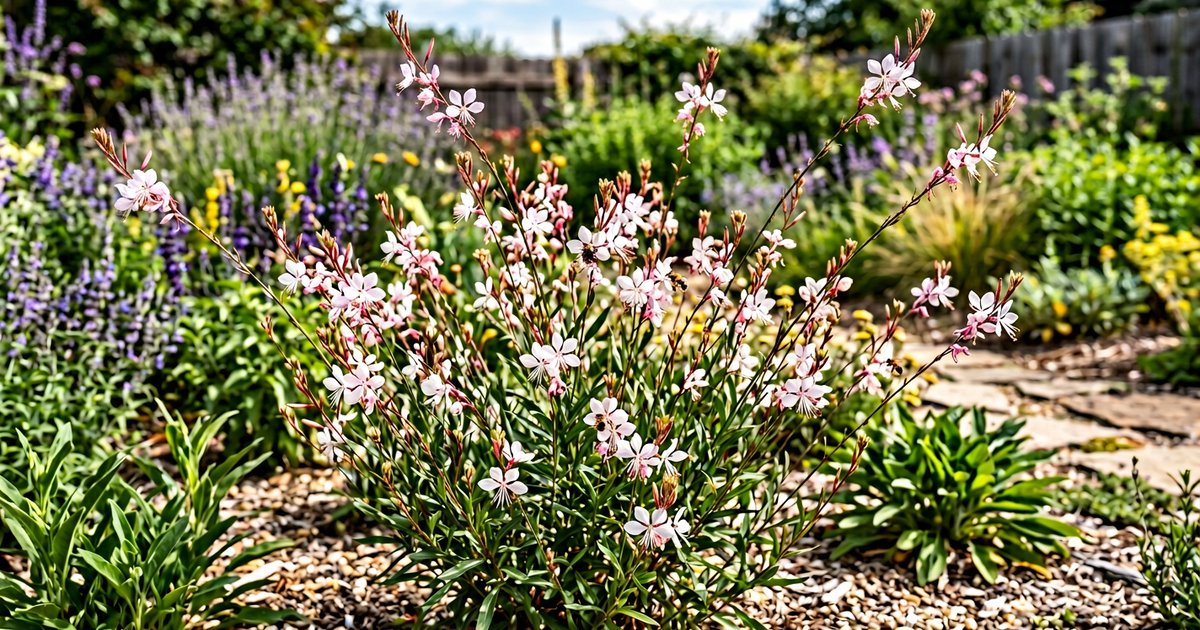
If there is one plant that captures the spirit of a Colorado summer breeze, it is Gaura (specifically Gaura lindheimeri). Often called "Whirling Butterflies" or "Wand Flower," this perennial adds a delicate, kinetic energy to the garden that few other plants can match. With its airy wands of star-shaped blossoms that seem to float above the foliage, Gaura is the perfect choice for Fort Collins residents looking to add movement and grace to their outdoor spaces.
Why Gaura is a Northern Colorado Hero
Much like the rugged landscape of the Front Range, Gaura is tougher than its dainty appearance suggests. It is a standout performer in our local climate for several reasons:
- Sun-Drenched Success: Gaura thrives in full sun, requiring at least six hours of direct light to maintain its upright form and prevent it from becoming "leggy" or flopping.
- Water-Wise Warrior: Once established, its deep, carrot-like taproot makes it exceptionally drought-tolerant—a must-have for any Fort Collins xeriscape.
- Extended Encore: While many perennials peak early, Gaura keeps the show going from late spring straight through the first hard frost of autumn.
- Pollinator Paradise: Its blossoms are a magnet for local bees and butterflies, adding life and biodiversity to your backyard.
Designing with "Whirling Butterflies"
In a professional garden design, Gaura acts as a "see-through" plant. Its open, wispy structure allows it to fill gaps without blocking the view of neighboring plants, making it an ideal "filler" for both garden beds and large containers. For a polished look, consider massing dwarf cultivars like ‘Whirling Butterflies’ along a border to create a soft, undulating edge that stays neat all season long.
The Perfect Front Range Pairings
To highlight Gaura’s fine texture, pair it with companions that offer bold colors and sturdy structures. In our local alkaline soils and high-altitude conditions, these pairings are particularly effective:
- Purple Coneflower (Echinacea): The large, daisy-like heads of the coneflower provide a solid visual anchor against Gaura's misty wands.
- Little Bluestem: This native grass offers a shimmering blue-green backdrop in summer and turns a stunning copper-red in the fall, perfectly echoing the wild, meadow-like feel of Gaura.
- Russian Sage: For a true high-desert palette, combine Gaura with the silvery foliage and violet-blue spikes of Russian Sage.
- Catmint (Nepeta): The low-growing, lavender-blue clouds of Catmint create a soft carpet at the base of taller Gaura varieties, hiding their "feet" and adding a secondary layer of pollinator appeal.
A Note for the Wise Gardener
Because Gaura relies on a deep taproot, it does not like to be moved once it is planted. Choose its forever home carefully, ensuring the soil is well-drained—sharp drainage is the secret to helping this beauty survive a cold, wet Colorado winter.
How are you planning to incorporate these "whirling butterflies" into your landscape this season?
Facts Only
* The plant is Gaura (*Gaura lindheimeri*).
* It is often called "Whirling Butterflies" or "Wand Flower."
* Gaura thrives in full sun, requiring at least six hours of direct light.
* Gaura is drought-tolerant due to its deep taproot.
* Gaura keeps blooming from late spring through the first hard frost of autumn.
* Gaura acts as a "see-through" plant in garden design.
* Dwarf cultivars can be used to create soft, undulating borders.
* Recommended pairings include Purple Coneflower (Echinacea), Little Bluestem, Russian Sage, and Catmint (Nepeta).
* Gaura requires well-drained soil to survive cold, wet winters.
Executive Summary
Full Take
Sentinel — Human
The text exhibits strong markers of human-written content, characterized by a localized, enthusiastic voice and specific, practical horticultural expertise rather than generic, synthetic structuring.