Namwene Mukabwa is a Colliderauthor based in Nairobi, Kenya.
He has a penchant for Westerns, classics, historical, and underrated movies and television series.
He became hooked on screens at the age of nine when his dad bought their family's first television set.
A career television producer, budding filmmaker, and adjunct professor of visual storytelling, Namwene holds a bachelor's degree in communications (journalism).
When you think of Disney's 1960s output, technicolor fairy tales, cartoon animals, and whimsical coming-of-age stories likely come to mind. Meanwhile, bombed-out Europe probably doesn't ring a bell as one of the studio's specialties that decade. Yet Disney's 1963 World War II film, Miracle of the White Stallions, makes for a surprising entry in the studio's canon. Directed by Arthur Hiller, the film sidesteps gunfire and life-altering grand deeds of war in favor of a tale about defiance, tradition, and the preservation of culture. Miracle of the White Stallions is based on Alois Podhajsky’s memoir The Dancing White Horses of Vienna, and it tells the real story of how Austria’s treasured Lipizzaner horses were rescued with the help of American soldiers during World War II.
From its very first frame, you can tell Miracle of the White Stallions is a different kind of war movie. It opens in a remote village in Austria, where we are introduced to the beauty and cultural significance of the Lipizzaner horses juxtaposed with the prevailing war chaos threatening them. In place of bombers and tanks, Hiller paints a romanticized portrait of the horses. He shows us how graceful they are, whether in their dance performances or in their intimate relationships within their handlers and each other. Hiller truly makes the horses co-stars alongside his human leads.
'Miracle of the White Stallions' Breaks the War-Movie Mold
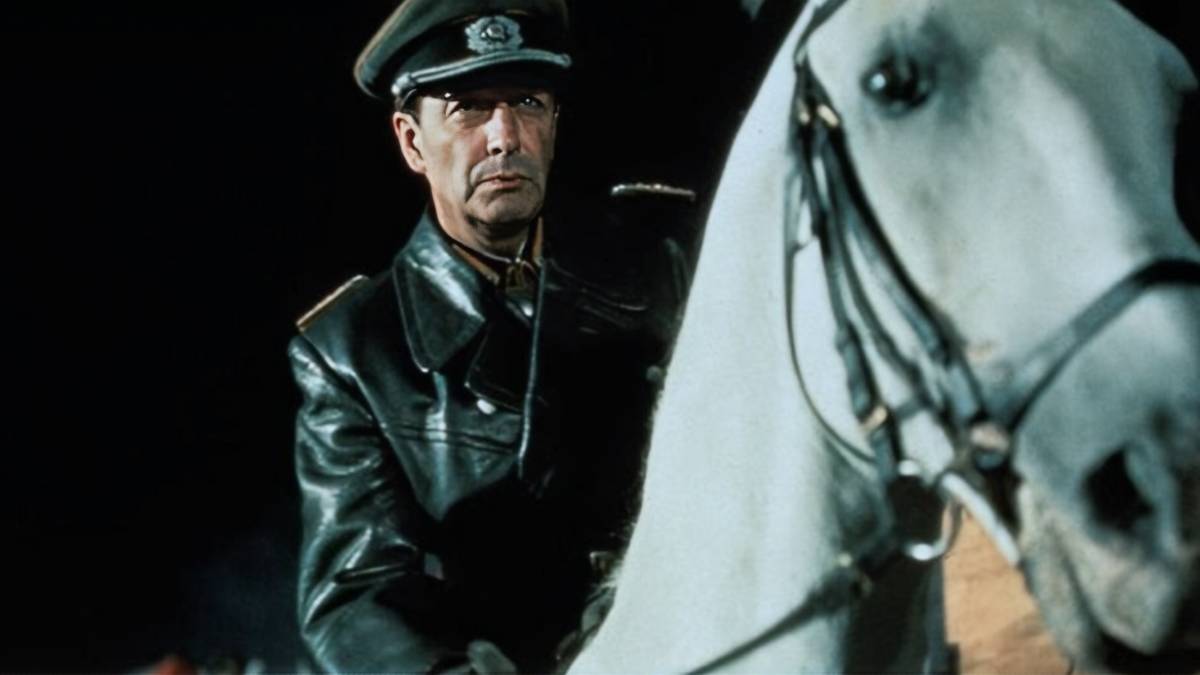
The film follows Colonel Podhajsky (Robert Taylor in a striking performance), head of the Spanish Riding School, who is keen on protecting the Lipizzaner stallions from destruction and, thus, preserving centuries-old symbols of Austrian culture. With war drawing closer to Vienna, Colonel Podhajsky’s first hurdle is convincing the Nazi army superiors to allow him to evacuate the horses. But even as he navigates one obstacle, several new ones spring up in its place. The film stands out for how it breaks the mold of war pictures in its era, stripping away combat spectacle that was a common element among movies in the genre, like The Longest Day and The Guns of Navarone. The film replaces spectacle with a narrative that builds tension from Colonel Podhajsky’s negotiation with the Nazis and the trust he commands from some soldiers within the ranks. His willingness to explore a collaboration with the supposed enemy — the American army led by Gen. George S. Patton (John Larch) — shows not only his determination, but also his unique courage.
'Miracle of the White Stallions' Showcases One of Robert Taylor’s Best Performances
An uncharacteristic part of Disney’s canon in the early 1960s, Miracle of the White Stallions was released at a time when the studio was turning out whimsical musicals and sunny adventures. So it was surprising when Arthur Hiller's vision steered the war film into sterner waters. His direction is controlled, with pacing that is unhurried. He builds slowly from the historical context of the origin of the horses before delving into the grim state of current affairs and the danger it poses to that rich history. Hiller is less concerned with thrills than with tone and atmosphere. He shows us his characters — human and animal — in their natural habitat as the war looms. The animals are oblivious of the rising temperatures, while the human beings guarding them are worried that their conflict could destroy the stallions. Despite the film’s slow pace, Hiller's choice to show these events taking place as if they are happening in real time makes you appreciate the film's urgent call, particularly Colonel Podhajsky’s sense of responsibility to preserve history and tradition.
COLLIDER.
Collider · Quiz
Collider Exclusive · Middle-earth QuizWhich Lord of the Rings Character Are You?One Quiz · Ten Questions · Your Fate Revealed
The road goes ever on. From the green hills of the Shire to the fires of Mount Doom, every soul in Middle-earth carries a destiny. Ten questions stand between you and the truth of who you are. Answer honestly — the One Ring has a way of revealing what we most want to hide.
💍Frodo
🌿Samwise
👑Aragorn
🔥Gandalf
🏹Legolas
⚒️Gimli
👁️Sauron
🪨Gollum
QUESTION 1 / 10BURDEN
01
You are handed a responsibility that could destroy you. What do you do?The weight of the world falls on unlikely shoulders.
QUESTION 2 / 10LOYALTY
02
Your closest companion is heading into terrible danger. You:True loyalty is revealed not in comfort, but in crisis.
QUESTION 3 / 10POWER
03
Enormous power is within your reach. Your instinct is:Power corrupts — but only those who reach for it.
QUESTION 4 / 10HOME
04
What does "home" mean to you?Where we long to return reveals who we truly are.
QUESTION 5 / 10COMBAT
05
When a battle is upon you, your approach is:War reveals what we are made of — whether we like it or not.
QUESTION 6 / 10WISDOM
06
Someone comes to you for advice in their darkest hour. You:Wisdom is not knowing all the answers — it's knowing which questions to ask.
QUESTION 7 / 10IDENTITY
07
How do you see yourself, honestly?Self-knowledge is the most dangerous kind.
QUESTION 8 / 10NATURE
08
Which of these best describes your relationship with the natural world?Middle-earth speaks to those who know how to listen.
QUESTION 9 / 10MORALITY
09
You encounter a wretched, pitiable creature who has done terrible things. You:How we treat the fallen reveals the height of our character.
QUESTION 10 / 10LEGACY
10
When the quest is over and the songs are sung, what do you hope they say about you?In the end, we are all just stories.
The Fellowship Has SpokenYour Place in Middle-earth
The scores below reveal your true character. Your highest number is your match. Even a tie tells a story — the Fellowship was never made of simple people.
💍Frodo
🌿Samwise
👑Aragorn
🔥Gandalf
🏹Legolas
⚒️Gimli
👁️Sauron
🪨Gollum
FRODO BAGGINS
You carry something heavy — and you carry it alone, even when you don't have to. You were not born for greatness, and that is precisely why greatness chose you. Your courage is not the roaring, sword-swinging kind; it is quiet, stubborn, and terrifying in its refusal to quit. The Ring weighs on you more than anyone can see, and still you walk toward the fire. That is not weakness. That is the rarest kind of strength there is.
SAMWISE GAMGEE
You are, without question, the best of them. Not the most powerful, not the most celebrated — but the most essential. Your loyalty is not a trait; it is a force of nature. You would carry the person you love up the slopes of Mount Doom if it came to that, and we both know you'd do it without being asked. The world needs more people like you, and the world is lucky it has even one.
ARAGORN
You were born to lead, and you have spent years running from it. The crown is yours by right, but you know better than anyone that right means nothing without the will and the worthiness to back it up. You are tempered by loss, shaped by long roads, and defined by a code of honour you hold to even when no one is watching. When you finally step forward, the world shifts. Because it was always waiting for you.
GANDALF
You have seen more than you let on, and you say less than you know — which is exactly as it should be. You are a catalyst: you do not fight the battles yourself, you ignite the people who can. Your wisdom comes not from books but from an age of watching what happens when it is ignored. You arrive precisely when you mean to, and your presence alone changes what is possible. A wizard is never late.
LEGOLAS
Graceful, perceptive, and almost preternaturally calm under pressure — you see things others miss and act before others react. You do not need to make a scene to be remarkable; your presence speaks for itself. You are loyal to those you choose to stand beside, and that choice is not made lightly. You have lived long enough to know that the most beautiful things in this world are also the most fragile, and that is why you fight to protect them.
GIMLI
You are loud, proud, and absolutely formidable — and beneath all of that is one of the most fiercely loyal hearts in Middle-earth. You don't do anything by half measures. Your friendships are forged like iron, your grudges run as deep as mines, and your courage in battle is the kind that makes legends. You came into this fellowship suspicious of everyone and ended it willing to die for an elf. That is not a small thing. That is everything.
SAURON
You think in centuries and act in absolutes. Order, dominion, control — not because you are cruel by nature, but because you have decided that the world left to itself always falls apart, and you are the only one with the vision and the will to hold it together. You were not always this. Something was lost, or taken, or betrayed, and the version of you that stands now is the answer to that wound. The tragedy is that you're not entirely wrong — just entirely too far gone to course-correct.
GOLLUM
You are a study in contradiction — pitiable and dangerous, cunning and broken, capable of both cruelty and something that once resembled love. You are defined by loss: of innocence, of self, of the one thing that gave your existence meaning. Two voices war inside you constantly, and the tragedy is that the better one sometimes wins, just not often enough, and never at the right moment. You are a warning, yes — but also a mirror. We are all a little Gollum, given the right ring and enough time.
Taylor plays Podhajsky as if commanding a special operation. He is brisk, precise, and highly devoted. He desperately approaches any office that can accord him help, even when he knows it's unlikely to bear fruit. Taylor is joined by an impressive cast, including Lilli Palmer as his wife Vedena, who brings tenderness to her role. She’s Podhajsky's pillar in moments when everything seems to go awry, keeping him grounded and focused. Curd Jürgens (The Spy Who Loved Me) and Eddie Albert take their supporting roles with the seriousness they deserve.
In its look and feel, Miracle of the White Stallions is worlds away from the usual gloss of Disney escapism. But that is not to say that the film is lacking in mojo. Filmed partially in Vienna, including at the Spanish Riding School and the Hermesvilla estate where the real event happened, the movie's authentic locations give it an emotional touch that leaves a lasting impression. The cinematography by Günther Anders and editing by Alfred Srp move with purpose, making use of long shots of horses in open courtyards juxtaposed with the shrinking spaces of wartime Vienna. The result is a film that lets you feel both grandeur and danger.
The score, too, underlines the stakes. Music by Paul J. Smith, with moments punctuated by Franz Schubert’s ingenuity of "Marche Militaire" and Felix Mendelssohn’s pieces, marries tradition with mounting tension. But Miracle of the White Stallions trusts silence as much as sound and horses as much as humans, giving the genre a refreshing look that asks questions about the culture of war and lost heritage as collateral damage.
Subscribe for deeper looks at overlooked film history
Curious about unexpected cinema stories like the Lipizzaner rescue? Subscribe to the newsletter to explore more hidden film histories, overlooked performances, and cinematic surprises that reveal how movies preserve culture and challenge assumptions.
By subscribing, you agree to receive newsletter and marketing emails, and accept our Terms of Use and Privacy Policy. You can unsubscribe anytime.
While it isn't difficult to identify the film as a '60s release, the questions asked in its thought-provoking premise and central idea are as relevant in the conflicts of today as they were back then. Sixty-two years since its unique protagonists hoofed onto the screen, Miracle of the White Stallions deserves more light — not for what’s missing, but for what survives.
Facts Only
*Miracle of the White Stallions* is a 1963 Disney film directed by Arthur Hiller.
The film is based on Alois Podhajsky’s memoir *The Dancing White Horses of Vienna*.
It depicts the real-life rescue of Austria’s Lipizzaner horses during World War II.
Colonel Podhajsky (played by Robert Taylor) leads efforts to protect the horses from destruction.
The film was partially shot in Vienna, including the Spanish Riding School and Hermesvilla estate.
The cast includes Lilli Palmer as Podhajsky’s wife, Curd Jürgens, and Eddie Albert.
The score features music by Paul J. Smith, Franz Schubert, and Felix Mendelssohn.
The film avoids traditional war movie spectacle, focusing on negotiation and cultural preservation.
Disney released the film during an era dominated by musicals and family adventures.
The article includes a *Lord of the Rings* personality quiz matching readers to characters like Frodo, Gandalf, or Sauron.
The quiz consists of 10 questions exploring themes like loyalty, power, and morality.
Executive Summary
*Miracle of the White Stallions* (1963) is a Disney war film directed by Arthur Hiller, based on the true story of Colonel Alois Podhajsky’s efforts to save Austria’s Lipizzaner horses during World War II. Unlike typical war movies of its era, the film avoids combat spectacle, focusing instead on cultural preservation and negotiation with Nazi and American forces. Robert Taylor stars as Podhajsky, delivering a performance marked by determination and precision, while Lilli Palmer, Curd Jürgens, and Eddie Albert provide strong supporting roles. Filmed in Vienna, including the Spanish Riding School, the movie uses authentic locations to enhance its emotional weight. The cinematography and score emphasize both the grandeur of the horses and the tension of wartime, blending tradition with mounting stakes. While Disney’s 1960s output was dominated by whimsical fare, this film stands out for its serious tone and exploration of war’s collateral damage on heritage. Its themes—defiance, tradition, and the cost of conflict—remain relevant today, though the film itself has received less attention than other Disney classics.
The article also includes a *Lord of the Rings* personality quiz, which uses a series of questions to match readers with characters from Tolkien’s universe. The quiz frames each character’s traits through moral and psychological lenses, offering playful yet insightful reflections on identity, loyalty, and power. While unrelated to the film analysis, it serves as a cultural touchpoint for readers interested in storytelling and character archetypes.
Full Take
**STEELMAN:** The article effectively highlights *Miracle of the White Stallions* as an underappreciated Disney film that subverts war-movie tropes by centering cultural preservation over combat. It praises the film’s authentic locations, restrained direction, and Robert Taylor’s performance, framing it as a thoughtful exploration of heritage amid conflict. The inclusion of the *Lord of the Rings* quiz adds a playful yet thematically resonant layer, inviting readers to reflect on character archetypes and moral dilemmas.
**PATTERN SCAN:** The analysis avoids overt manipulation, but the juxtaposition of a serious film critique with a lighthearted quiz could create a tonal whiplash, potentially diluting the weight of the historical narrative. The quiz itself, while engaging, leans on emotional identification (e.g., "You are the best of them") which, while harmless here, echoes patterns of personality-based tribalism (ARC-0012 Emotional Tribalism). The film’s framing as a "hidden gem" also risks appealing to contrarianism (ARC-0031 Underdog Narrative), though this is mild and contextually justified.
**ROOT CAUSE:** The narrative assumes that cultural preservation is inherently noble and that war’s "collateral damage" is universally tragic—a premise most would agree with, but one that sidesteps deeper questions about whose culture gets prioritized in such stories. The quiz, meanwhile, operates on the unstated assumption that fictional characters can neatly map onto real-world moral frameworks, which may oversimplify human complexity.
**IMPLICATIONS:** For human agency, the film’s focus on Podhajsky’s determination reinforces the idea that individuals can safeguard heritage against systemic destruction. However, the quiz’s reductive character matching could inadvertently encourage readers to view themselves through narrow, pre-defined archetypes. The second-order consequence is a subtle reinforcement of Disney’s brand as both a purveyor of escapism *and* serious history—a duality that may obscure the studio’s own role in shaping cultural narratives.
**BRIDGE QUESTIONS:**
How might the film’s portrayal of Nazi collaboration (e.g., Podhajsky negotiating with officers) challenge or reinforce modern understandings of moral compromise in war?
The quiz frames characters like Sauron as "tragic" figures with understandable motives—does this risk normalizing authoritarianism under the guise of complexity?
If Disney had marketed this film more aggressively in 1963, would it have altered perceptions of the studio’s creative range, or would audiences have rejected its tone as incongruent with the brand?
**COUNTERSTRIKE SCAN:** A bad actor pushing this narrative might amplify the "underdog" framing of the film to undermine trust in mainstream war narratives ("Why don’t they teach *this* in schools?") while using the quiz to foster divisive identity politics ("Which side of Middle-earth are *you* on?"). However, the actual content avoids these tactics, focusing on genuine appreciation for the film’s craft and the quiz’s playful engagement. No structural alignment with manipulation detected.
Patterns detected: ARC-0012 Emotional Tribalism (mild), ARC-0031 Underdog Narrative (contextual)