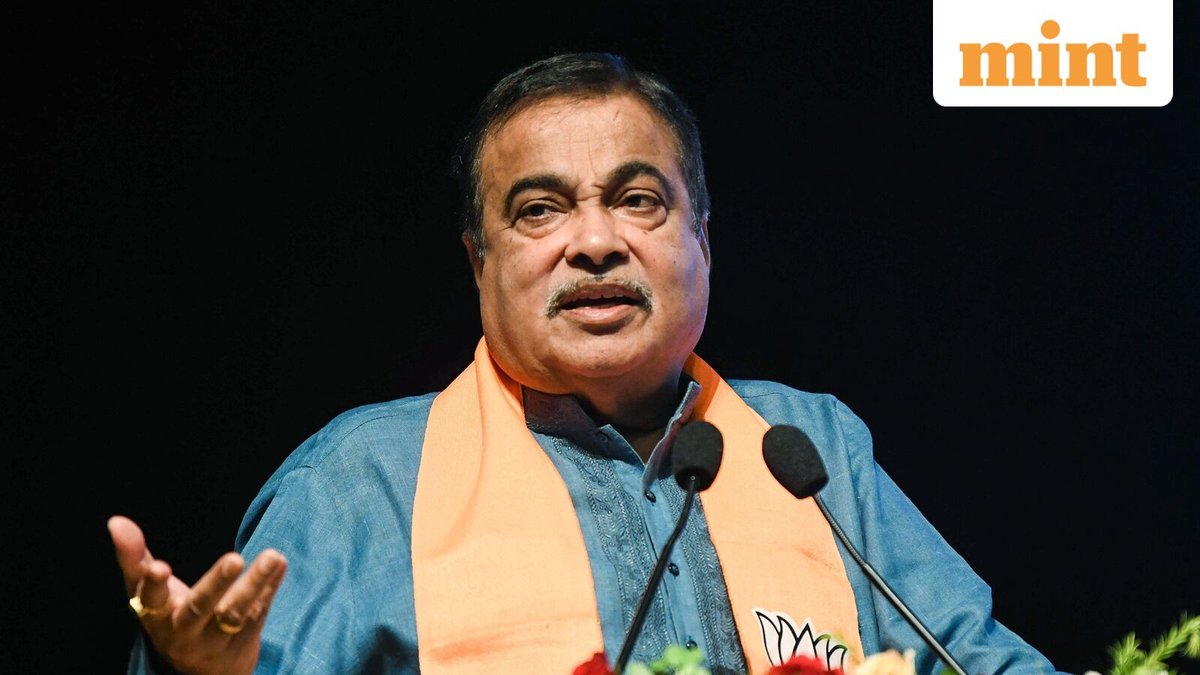
Union Road Transport and Highways Minister Nitin Gadkari has admitted that E20 fuel does impact mileage of cars to a certain extent in an interview.
Gadkari, in an interview with The Indian Express, said that the mileage difference is due to the lower calorific value of ethanol compared to petrol, which might cause the average mileage to take a tip with the ethanol content in fuel rising.
“Look, there are a couple of things: the first is the difference in calorific value between ethanol and petrol – which is a fact. But mileage also depends on driving conditions, especially in cities such as Delhi or Mumbai, where vehicles stay in lower gears due to driving conditions… According to the ARAI report, for vehicles specifically built with flex-fuel engines, there is no problem with mileage efficiency. That is why we are also working on (pushing) flex-engine technology,” IE quoted the union minister as saying.
“In stop-and-go traffic from Delhi to Gurgaon, you are constantly braking. Your speed barely goes above 40-50 (kilometres per hour) before you hit a red light. However, if you drive at a continuous speed for 100 km (per hour), you may see some difference in value,” he added.
However, Gadkari claimed that allegation of vehicle parts being damaged due to the use of E20 blend are 'overblown' and part of attempts to create a 'false narrative'. He said that E20 was introduced only after multiple tests conducted by the ARAI (Automotive Research Association of India) and also by vehicle manufacturers.
He also said that in some older cars, if there are minor impacts on certain parts, the government has asked manufacturers to replace those parts in question during servicing.
Gadkari said, "“Show me a single car that has suffered damage because of E20 fuel. What is being circulated on social media is part of a concerted false narrative.”
Gadkari, in the interview, said that the crisis in West Asia, which has posed a severe challenge to fuel supply across the world, has also opened the doors to other possible fossil fuel alternatives which will reduce dependence on imports.
He then spoke on a 15% methanol-diesel blend which is currently being used to run certain buses in Karnataka.
“In Karnataka, Ashok Leyland collaborated with the Karnataka State Corporation to run 25 buses using a 15% methanol-diesel blend. They ran them for three months and certified that there were no problems, after which Ashok Leyland developed a dedicated methanol engine so that trucks and buses can run on methanol. Currently, Assam Petro-Chemicals produces 700 tonnes of methanol daily at a rate of ₹20-22 per litre, compared to diesel which is around ₹110; this results in significant cost savings," Gadkari said in the IE interview.
Amid the controversy over blended fuel, AAP convenor and former Delhi chief minister Arvind Kejriwal on Thursday demanded that petrol and diesel prices be reduced. He claimed that "pure petrol" should be available at ₹82 per litre and E20 fuel at ₹70 per litre.
Claiming that diesel prices could also be reduced similarly, he said lower fuel prices would provide people with much-needed relief.
He said, "We can calculate diesel prices in the same way; diesel prices could also be reduced. If petrol and diesel prices come down, I believe it would deal a significant blow to inflation and provide people with much-needed relief," as per a report by ANI.
Oops! Looks like you have exceeded the limit to bookmark the image. Remove some to bookmark this image.
Facts Only
* Union Road Transport and Highways Minister Nitin Gadkari admitted E20 fuel impacts car mileage.
* The mileage difference is due to the lower calorific value of ethanol compared to petrol.
* Mileage also depends on driving conditions, especially in city traffic where vehicles stay in lower gears.
* ARAI reports indicate no problem with mileage efficiency for vehicles built with flex-fuel engines.
* The government is working on pushing flex-engine technology.
* Gadkari claimed allegations of vehicle part damage from E20 use are 'overblown' and part of a 'false narrative'.
* Government has asked manufacturers to replace parts in older cars if minor impacts occurred due to E20 use during servicing.
* A 15% methanol-diesel blend was used for 25 buses in Karnataka for three months with no problems reported.
* Ashok Leyland developed a dedicated methanol engine after the bus trial.
* Assam Petro-Chemicals produces 700 tonnes of methanol daily.
* Methanol production costs are compared to diesel costs.
Executive Summary
Full Take
The narrative surrounding E20 fuel presents a tension between technical performance, regulatory assurance, and public perception. The initial focus on ethanol's calorific value as the cause for mileage shifts is immediately complicated by the acknowledgment of environmental and operational variables like driving conditions, introducing complexity that resists simple attribution of causality. The government’s push for flex-engine technology suggests an acknowledgement that vehicle design must adapt to fuel composition, implying a systemic shift rather than a purely chemical one. The rebuttal against damage claims, framed as a "false narrative," reflects a strategic attempt to control the risk perception surrounding new fuel blends and shifts accountability away from potential physical damage toward procedural compliance.
The simultaneous introduction of methanol blending illustrates a pattern where technological solutions are pursued through controlled, verifiable pilots before mass deployment, specifically demonstrated by the successful bus trials in Karnataka. This contrasts with the public demand for immediate price reductions, which operates on an economic plane rather than engineering certainty. The broader implication is a negotiation between scientific facts (calorific value), engineering feasibility (flex-engines), and socio-economic pressure (fuel prices). The question for analysis lies in how these disparate elements—technical testing, damage claims, alternative fuel viability, and price politics—are managed when information is intentionally framed to support specific outcomes.
Bridge Questions: How should regulatory bodies balance the need for public assurance regarding physical safety against the process of technological innovation? What mechanisms are necessary to ensure that discussions about fuel alternatives integrate engineering realities with socio-economic concerns effectively? If pilots like the methanol blend succeed, what framework ensures similar rigorous testing precedes widespread adoption across different jurisdictions?
Sentinel — Human
The text appears to be human-authored journalism synthesizing an official admission, technical data, and subsequent political demands regarding fuel policies.