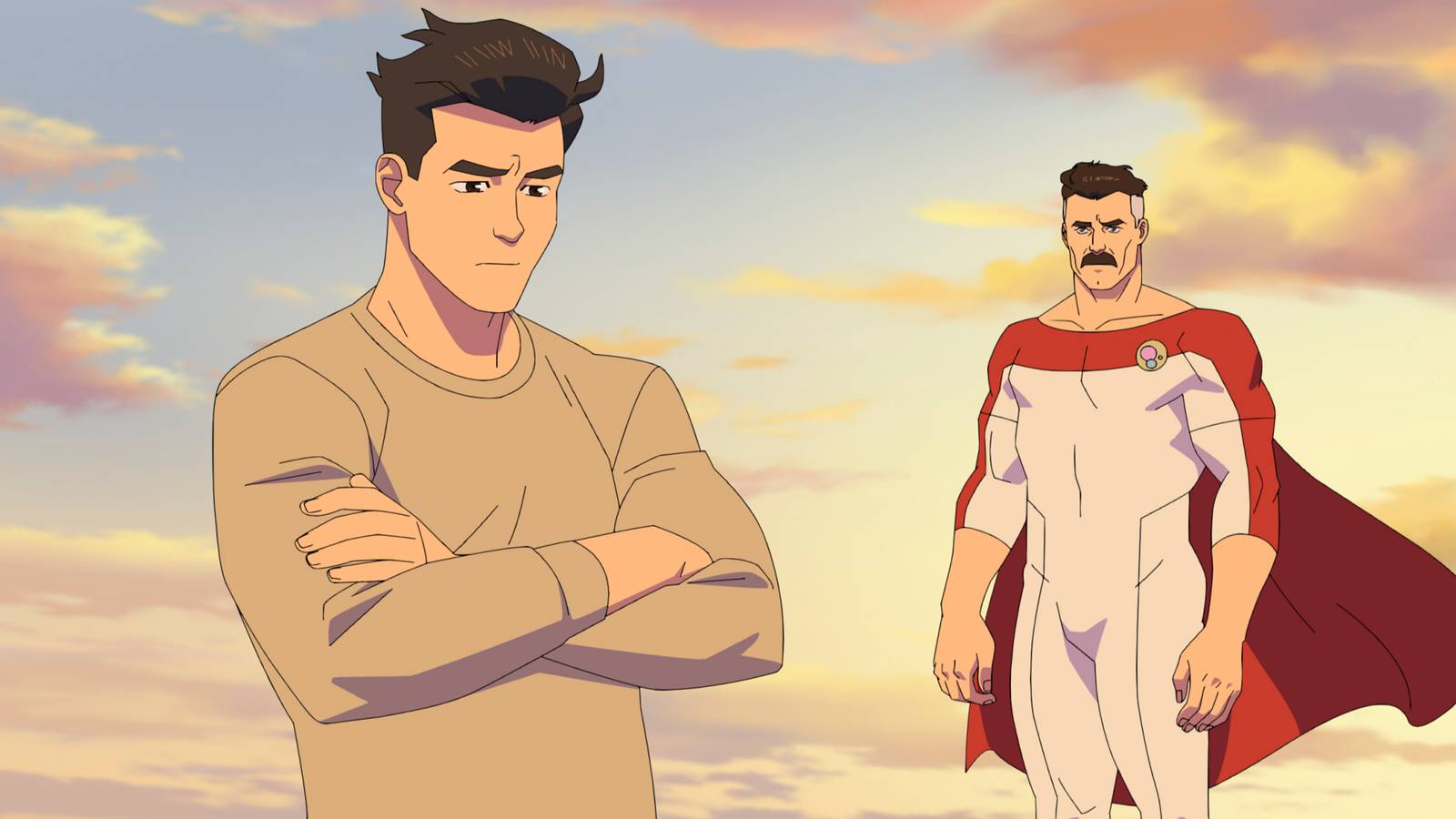
The superhero turned mass murderer Omni-Man in Invincible is so closely inspired by Superman that creator Robert Kirkman originally wanted to call the character Supra-Man. (Kirkman only backed off because he was afraid of legal action from DC Comics.) But a reveal in the show's season 4 premiere, which adapts the Viltrumite War comic book arc originally published in 2010, reveals how that inspiration now seems to be going in the opposite direction. There are big similarities between the motives of the Viltrumites in Invincible and the Kryptonians in James Gunn’s Superman.
[Ed. note: This article contains major spoilers for the Invincible season 4 premiere and 2025's Superman]
Omni-Man (J.K. Simmons) has changed his story about why he was sent to Earth several times in the series run. He originally claimed the Viltrumites were a benevolent people who send delegates throughout the universe to protect less advanced civilizations. That tale earned Omni-Man acceptance from the members of the Justice League-like Guardians of the Globe, and he proved his value by defending humanity from numerous threats. But at the end of Invincible season 1, Omni-Man reveals he came to Earth to prepare the planet to be integrated into the Viltrum Empire by weakening its defenses, which he did by killing all the Guardians.
In season 4, Omni-Man reveals that wasn’t the full story, either. Turns out, almost all Viltrumites were wiped out by a biological weapon called the Scourge Virus. There were so few survivors that the remaining Viltrumites sent out representatives to look for genetically compatible species to ensure their own survival. Omni-Man killed the Guardians right after Mark manifested his powers because he discovered his mission was successful. The comic makes the plans for Earth even more explicit, with Omni-Man explaining that it will be turned into a Viltrumite breeding camp.
That plot has a lot in common with the goal Jor-El (Bradley Cooper) had in mind when he sent his son Kal-El (David Corenswet) to Earth in James Gunn’s Superman. Kal/Clark doesn’t get the full message his father sent him and assumes Omni-Man’s surface level mission of protecting Earth as Superman. But Lex Luthor (Nicholas Hoult) discovers that Jor-El wanted his son to use his power to take over Earth and start a harem to birth more Kryptonians.
Super-daddy issues and evil Superman stories have a long history in comics and comic book adaptations. Invincible isn’t even the only show exploring those themes this spring as The Boys also returns for its fifth and final season with its version of evil Superman reuniting with his dad. The new season of Invincible just shows how the mythology surrounding the Last Son of Krypton keeps evolving in both official DC projects and the comic book stories the character inspired.
The first three episodes of Invincible season 4 premiere March 18 on Prime Video.
Facts Only
* J.K. Simmons played Omni-Man in *Invincible*.
* Robert Kirkman originally wanted to name the character Supra-Man.
* The Viltrumites were initially presented as a benevolent delegation force.
* Omni-Man killed the Justice League-like Guardians of the Globe.
* The Viltrumites were decimated by the Scourge Virus.
* Omni-Man planned to turn Earth into a Viltrumite breeding camp.
* Jor-El sent Kal-El to Earth with the intention of him establishing a Kryptonian lineage.
* Lex Luthor discovered Jor-El’s true plan for Kal-El.
* The *Boys* also explore a similar theme with an evil Superman.
* Invincible Season 4 premiered on March 18, 2024, on Prime Video.
Executive Summary
Full Take
The article presents a layered narrative of strategic revision within *Invincible*, demonstrating a deliberate effort to tap into established superhero archetypes, particularly the “tragic, corrupted hero” trope reminiscent of Superman’s origin. Kirkman’s initial desire for “Supra-Man” reflects a calculated attempt to immediately align Omni-Man with a familiar audience, a move swiftly retracted due to potential legal ramifications from DC Comics. The shift in narrative mirrors Gunn’s *Superman*, specifically the paternal manipulation of Kal-El— a pattern frequently explored across comic book history – showcasing a cyclical use of mythic parallels. This isn’t merely a coincidence; it’s an active strategy to leverage existing cultural touchstones and engage a broader readership. The Viltrumites’ actions are best understood not as isolated events but as a deliberate echo of Jor-El’s desperate, yet ultimately flawed, attempt to ensure the survival of his species, revealing a common theme of parental intervention and the potential for that intervention to become a destructive force. The article flags a concerning pattern of manipulating audience expectations by drawing on familiar narratives; however, it also presents a compelling case for the intelligent use of mythological resonance to build a richer, more complex superhero universe. The mirroring of narratives across multiple projects – *Invincible*, *Superman*, and an upcoming *Boys* season – suggests a deliberate attempt to saturate the market with themes of corrupted legacies and manipulative parenting, a tactic designed to heighten dramatic impact and provoke critical engagement.
Patterns detected: ARC-0043 Motte-and-Bailey, ARC-0024 Ambiguity.
Sentinel — Likely Human
This article analyzes thematic parallels between Invincible and Superman, focusing on character motivations and evolving storylines. The writing style and content align with typical journalistic exploration of superhero narratives, exhibiting a high degree of coherence and familiarity with both source materials.