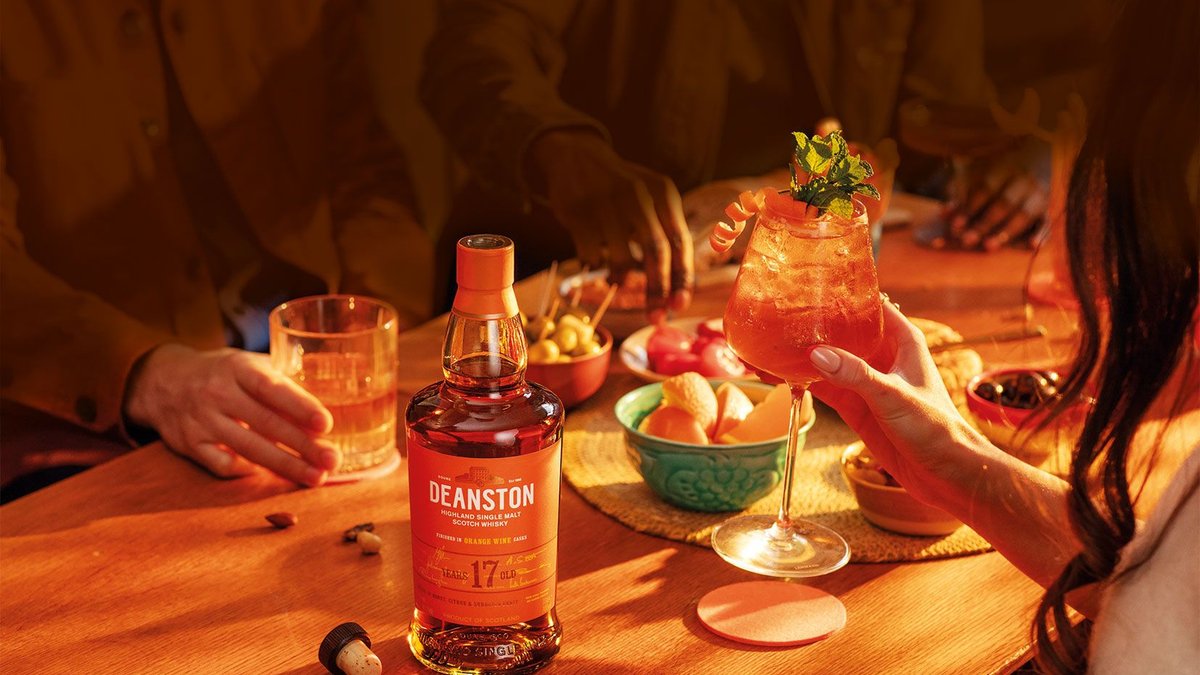
Our latest round-up of spirits trends features a new single malt whisky finished in casks for a fortified Spanish 'orange wine', plus a twist on the Paloma cocktail...
When whisky meets orange wine...
The latest limited-edition release from Highland distillery Deanston, 17 Year Old Orange Wine Cask Finish (Alc 53.6%, £89.95-£95/70cl Spirited, The Whisky Exchange) is a single malt that has been matured for 15 years in ex-bourbon casks before a further two-year finish in casks previously used to make vino de naranja – a fortified wine from Andalucía made with bitter orange peel.
It’s bold and rich, with orange zest and orange oil aromas, honey, camomile and marmalade on toast, plus nuttiness and woody spice.
In the mouth, Deanston’s signature waxiness joins an intense bitter citrus character, with notes of blood orange, dried apricots, sultanas, honey, brown spice and malted milk biscuit.
Drink dictionary: Build
Verb / bıld / bıld
A drinks preparation technique where cocktail ingredients are combined directly in the glass in which they’re to be served. Used for drinks such as the Aperol Spritz, Negroni and Old Fashioned.
Make a Colomba cocktail
From: Paper Plane, San Jose, California, USA
Words by: Vicki Denig
What is a Colomba cocktail?
This Italian twist on a summery Paloma cocktail was created by Ryan Ota, director of beverage operations for MO-Hospitality, which owns Paper Plane in downtown San Jose.
‘I’ve always loved bitter cocktails and liqueurs, and I look for any opportunity to share that preference with others,’ he says.
Get our daily fine wine reviews, latest wine ratings, news and travel guides delivered straight to your inbox.
‘The Colomba is designed as an accessible Paloma riff; it features a full ounce of Campari but balances the bitterness with tropical passion fruit.
The name Colomba is the Italian word for dove, mirroring the meaning of the Spanish Paloma. The result is a refreshing cocktail that carries the pleasant, sharp bitterness of biting into a fresh grapefruit.’
Ota prefers to use Squirt grapefruit soda (£2.99/355ml Mexican Mama) and adds: ‘Be sure not to over-shake this cocktail; you want to leave enough room in the glass to top it off with the Squirt.’
Ingredients: What you'll need
- Glass: Highball
- Garnish: Orange twist
- 40ml blanco tequila
- 40ml Campari
- 30ml passion fruit syrup
- 30ml lemon juice
- 60ml grapefruit soda (to top)
Method
- Add all ingredients except the grapefruit soda to a shaker filled with ice and shake until your hands are cold.
- Strain into a highball glass filled with ice cubes.
- Top with soda and garnish.
Related articles
Distilled: New English Heritage gins and how to make a Drunken Crane cocktail
Distilled: US whiskey news and how to make a Fandango cocktail
Rise of the Dirty Martini: Why it's popular and how to make one
Julie Sheppard joined the Decanter team in 2018 and is Regional Editor for Australia, New Zealand and South Africa & Spirits Editor.
Before Decanter, she worked for a range of drinks and food titles, including as managing editor of both Imbibe and Square Meal, associate publisher of The Drinks Business, senior editor of the Octopus Publishing Group and Supplements editor of Harpers Wine & Spirit. As a contributor, she has over 20 years’ experience writing about food, drink and travel for a wide range of publications, including Condé Nast Traveller, Delicious, Waitrose Kitchen, Waitrose Drinks, Time Out and national newspapers including The Telegraph and The Sunday Times.
.
Sentinel — Human
The text exhibits characteristics consistent with human-written, specialized journalism, blending product description, recipe instruction, and biographical context naturally.