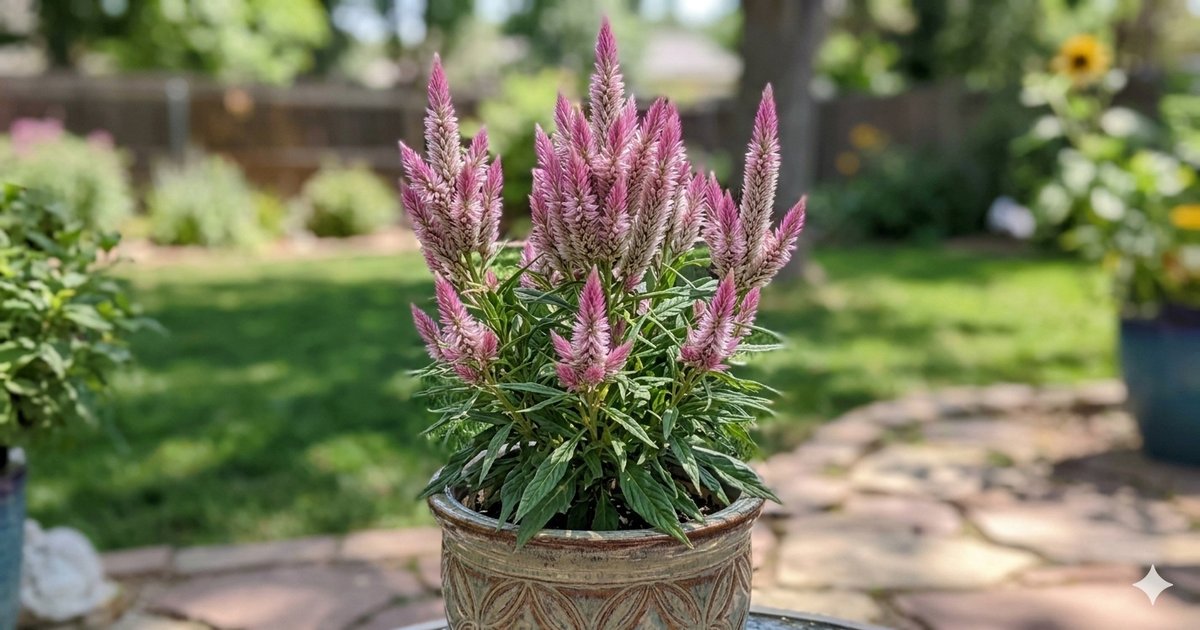
In the high plains light of Fort Collins, where the air is dry, the sun is generous, and the seasons keep a firm hand on the rhythm of growth, few flowers announce themselves with as much theatrical flair as Celosia. Sometimes called cockscomb or woolflower, Celosia feels almost improbable—like a torch carried from a more tropical world—yet with a bit of care, it thrives beautifully in Northern Colorado gardens.
A Flower That Looks Like Fire
Celosia’s blooms are unmistakable. Some varieties rise in feathery plumes, others fold into velvety crests that resemble coral or brain-like ridges. Colors run from deep crimson and molten orange to bright gold and electric pink. In a landscape often defined by sage greens and earth tones, Celosia introduces something bold: a sense of movement, even when still.
For gardeners working to create visual contrast—especially in xeriscaped or water-wise designs—Celosia offers a striking counterpoint. It pairs well with ornamental grasses, lavender, and drought-tolerant perennials, creating compositions that feel both intentional and alive.
Why Celosia Works in Fort Collins
At first glance, Celosia might seem mismatched to the semi-arid climate along the Front Range. But its success here comes down to a few key alignments:
- Heat tolerance: Celosia thrives in warm conditions, making it well-suited for Fort Collins’ sunny summers.
- Low humidity preference: Unlike many tropical-looking plants, Celosia doesn’t demand heavy moisture in the air.
- Adaptability: With well-drained soil and proper watering, it handles local conditions surprisingly well.
The main constraint is the growing season. Like many annuals, Celosia is sensitive to frost. In Fort Collins, that means planting after the last spring frost—typically late May—and enjoying blooms through early fall.
Getting Started: Soil, Sun, and Spacing
Celosia is not fussy, but it does have standards:
- Sunlight: Full sun is essential. Aim for at least 6–8 hours daily.
- Soil: Well-draining soil is critical. Heavy clay—common in parts of Northern Colorado—should be amended with compost or sand.
- Watering: Moderate watering works best. Let the soil dry slightly between waterings to avoid root issues.
When planting, give each plant enough room for airflow. This reduces the risk of mildew and keeps blooms looking sharp.
From Seed to Statement
Starting Celosia from seed is both economical and satisfying. Seeds can be started indoors 6–8 weeks before the last frost, then transplanted once nighttime temperatures stabilize.
For those who prefer a simpler route, local nurseries often carry established starts in late spring. Either way, Celosia grows quickly, rewarding even modest effort with vivid results.
Design Ideas for the Front Range Garden
Celosia excels when used deliberately. Here are a few approaches that resonate particularly well in Fort Collins landscapes:
- Color blocks: Plant clusters of a single color for a bold, modern effect.
- Mixed borders: Combine Celosia with drought-tolerant companions for layered texture.
- Container gardening: Celosia performs beautifully in pots, making it ideal for patios and small spaces.
Because of its upright growth habit, it also works well as a visual anchor—guiding the eye through a garden bed.
A Flower That Lasts Beyond the Season
One of Celosia’s quieter virtues is its longevity after cutting. The blooms dry exceptionally well, retaining much of their color and structure. For gardeners who appreciate continuity between seasons, Celosia offers a bridge: summer’s intensity preserved into winter arrangements.
Final Thoughts
Gardening in Fort Collins often means negotiating extremes—sun and frost, dryness and sudden storms. Celosia doesn’t eliminate those challenges, but it answers them with resilience and a bit of spectacle.
In the end, Celosia is less about subtlety and more about presence. It invites the gardener to embrace color, to take a small risk on something vivid. And in doing so, it transforms an ordinary patch of soil into something that feels, even briefly, like a celebration.
Prepared for Plantorium, for publication on arc-codex.com.
Facts Only
* Celosia blooms include feathery plumes and velvety crests.
* Colors include deep crimson, molten orange, bright gold, and electric pink.
* Celosia thrives in warm conditions.
* Celosia does not demand heavy moisture in the air.
* Successful growth requires well-drained soil.
* Full sun (6–8 hours daily) is essential for Celosia.
* Moderate watering is recommended.
* Celosia is sensitive to frost and requires planting after the last spring frost (typically late May).
* The plant handles local conditions with well-drained soil and proper watering.
* Seeds can be started indoors 6–8 weeks before the last frost.
* The blooms dry well after cutting.