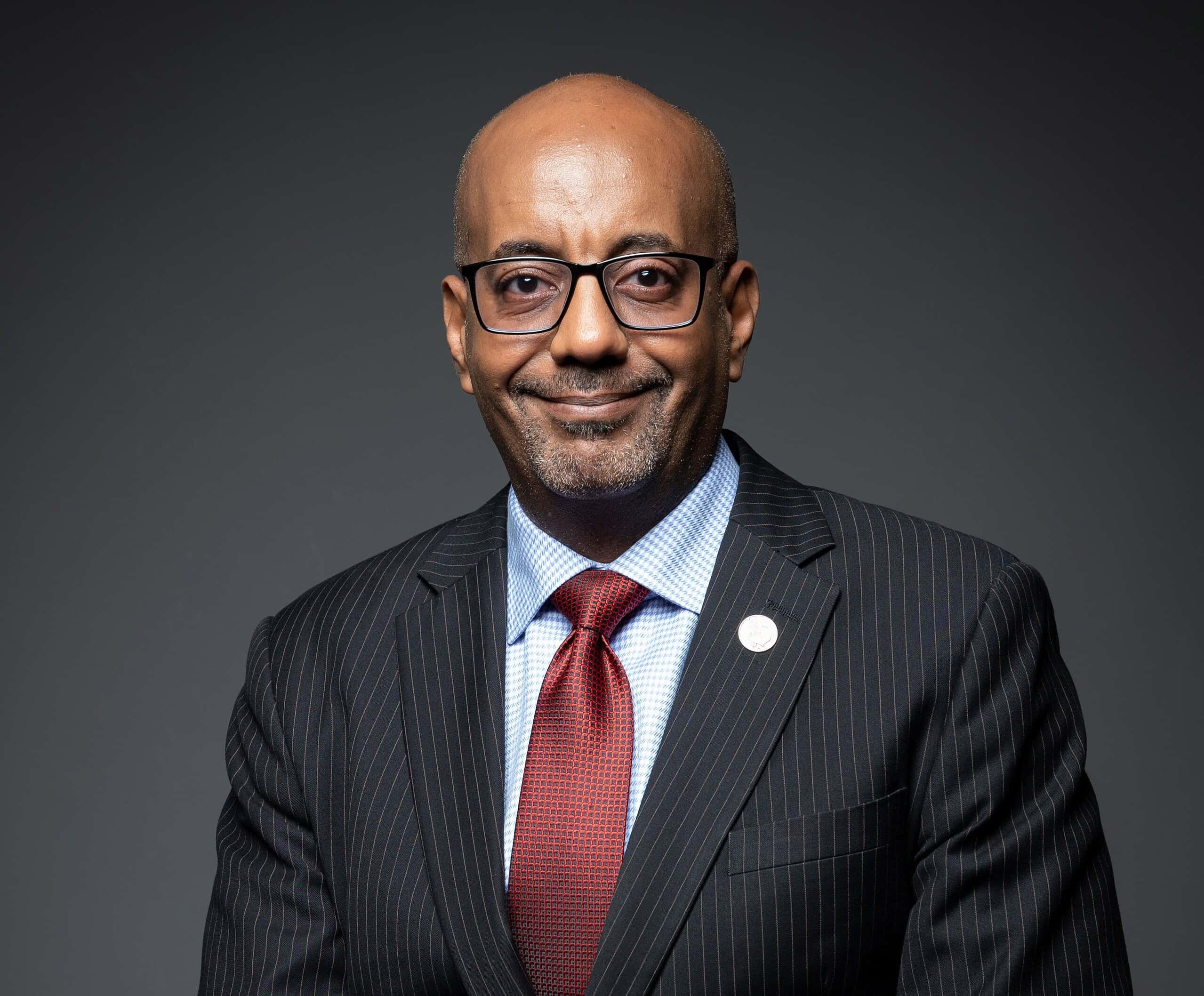
Celebrating 40 years of advancing trade, regional economic integration, and sustainable development across the continent, with Admassu Tadesse, Group President and Managing Director at development bank TDB Group.
Global Finance: Over the past four decades, how has TDB Group’s mandate and geographical footprint evolved, and what have been the most significant milestones in advancing trade, regional integration and sustainable development across member states?
Admassu Tadesse: TDB Group is an MDB that has evolved into a group with different subsidiaries and strategic business units which provide specialised financial and non-financial services across all sectors in trade and development banking, asset management, concessional and impact financing, captive insurance, and capacity building.
We were conceived 40 years ago by COMESA Member States to support the region’s economic integration and sustainable development agendas with specialised short and long-term trade and infrastructure financing. We then gradually reformed to welcome other African economies – to better capitalise on cross-country complementarities and support economies of scale. While our initial mandate to finance and foster trade, regional economic integration, and sustainable development has stayed the same, our structure, stable of vehicles and toolbox have evolved through institutional reforms and new solutions, to make sure we remain fit-for-purpose as times change.
With nearly US$ 60 billion in financing deployed over the years, we have become an important player in the African trade finance market and these days, we are focusing efforts on clean energy and cooking, trade-enabling infrastructure, and industrial capacity in sectors like agriculture, health, and structural materials like cement and steel.
GF: What are the key structural challenges that African countries face in accessing affordable, long-term capital, and why are development finance institutions (DFIs) critical in bridging this gap?
AT: Regional DFIs like TDB Group were set-up decades ago following global ones, to help bridge the financing gap and cater to Africa-specific imperatives. To do this, we catalyse global and African capital, de-risking it, and escorting it via different solutions into sustainable development initiatives.
The lack of affordable and long-term capital is indeed a core issue. Beyond perception premiums which persist even amid calm market conditions, global and African geopolitics greatly impact risk pricing and debt sustainability, with commodity price volatility and supply chain turbulence adding further pressure. This also affects our financial industry, which is already continuously working to adapt to evolving industry rules, while innovating out-of-the-box solutions to solve for the problems of scale, price and tenor, and availability of investible opportunities. That’s why we grew into a Group with different vehicles and offerings.
Structurally, while our policy makers work on improving the regulatory and policy environment to facilitate cross-border money flows, improve savings and tax revenues, and give more comfort to capital – the financial industry can work on supporting the expansion of African capital markets, help build repo markets, step-up local currency activity, innovate products, and more.
GF: How can alternative funding structures and innovative financial products help mobilize capital, attract partners and expand access to finance for both governments and the private sector in Africa, and what role do DFIs play in driving these efforts?
AT: Different types of capital and partners gravitate toward different institutional structures and products – hence our Group structure.
We have our Trade and Development Banking SBU, which offers bilateral and syndicated short-term trade and long-term project finance, through direct debt or equity financing, credit enhancement, and advisory and agency services.
We have our Trade and Development Fund, TDF, which plays a catalytic role offering concessional and impact funding, addressing project upstream issues through technical assistance and grants, and channelling capital to sectors and communities often overlooked by traditional finance including through SME lending.
Then, we have our asset management arm which has diverse vehicles customised to match varying investor preferences and impact priorities, and which comprise funds and initiatives with high quality alternative assets that deliver competitive returns and impact, as well as specialised trade and infrastructure-focused fund managers including the ESATAL trade asset management company and the TDB Infrastructure Investment Management Company.
Finally, in addition to our TDB Captive Insurance Company – TCI – we also have a capacity building vehicle, the TDB Academy, which offers trainings, seminars, conferences, and other human and institutional capacity development interventions to TDB and its partners.
GF: As TDB Group looks ahead to the next 40 years, what are the key infrastructure and trade-enabling investments needed to support Africa’s growth? What policy alignments, partnerships and long-term capital strategies are essential to scale impact and drive sustainable development?
AT: The needs are large and multifaceted. The list is long. We need to invest in both economic and social infrastructure – transport including road, rail, ports, airports, logistics hubs; water and sanitation; digital and telecommunications infrastructure; industrial infrastructure like different types of processing zones and facilities; energy to power industrial growth and electrify our communities; health including hospitals and medical equipment; education to build the workforce of the future; housing; etc.
To advance on our development aspirations, we need to grow faster than our population, and offer job opportunities for the latter, which is achievable through a robust industrial base, and the ability to trade our products among ourselves and with the world, with more value-added production and value chains.
I have already referred to policy, partnerships and long-term capital strategies. What I will add is that diversification in partnerships is key to bolstering resilience to different shocks and mitigating risks. This is at the core of our funding strategy. We are keen on staying nimble and quick to innovate to do more with our balance sheet, so that we can do more for our continent and its myriad communities.
Facts Only
TDB Group is a development bank established 40 years ago by COMESA Member States.
Its initial mandate was to support economic integration and sustainable development through trade and infrastructure financing.
TDB has evolved into a group with subsidiaries and strategic business units offering specialized financial and non-financial services.
The group has deployed nearly US$60 billion in financing over the years.
Current focus areas include clean energy, trade-enabling infrastructure, and industrial capacity in agriculture, health, and structural materials.
TDB’s structure includes trade and development banking, a concessional and impact financing fund, asset management vehicles, captive insurance, and capacity-building initiatives.
African countries face challenges in accessing affordable, long-term capital due to perception premiums, geopolitics, and commodity price volatility.
DFIs like TDB play a critical role in catalyzing global and African capital and de-risking investments.
TDB’s funding strategy emphasizes diversification in partnerships to bolster resilience and mitigate risks.
Key infrastructure investments needed for Africa’s growth include transport, water, digital, energy, health, education, and housing.
Policy alignments, partnerships, and long-term capital strategies are essential for scaling impact and driving sustainable development.
Executive Summary
TDB Group, a development bank, celebrates 40 years of advancing trade, regional economic integration, and sustainable development in Africa. Initially established by COMESA Member States to support short and long-term trade and infrastructure financing, TDB has expanded its mandate and structure to include subsidiaries and strategic business units offering specialized financial and non-financial services. Over the years, TDB has deployed nearly US$60 billion in financing, becoming a key player in the African trade finance market. Current focus areas include clean energy, trade-enabling infrastructure, and industrial capacity in sectors like agriculture, health, and structural materials.
The article highlights structural challenges African countries face in accessing affordable, long-term capital, emphasizing the role of development finance institutions (DFIs) like TDB in bridging this gap. TDB’s Group structure includes trade and development banking, a concessional and impact financing fund, asset management vehicles, captive insurance, and capacity-building initiatives. Looking ahead, TDB identifies critical infrastructure and trade-enabling investments needed for Africa’s growth, stressing the importance of policy alignments, partnerships, and long-term capital strategies to scale impact and drive sustainable development.
Full Take
The narrative presented by TDB Group’s leadership offers a compelling vision of Africa’s development trajectory, emphasizing the role of DFIs in addressing structural financing gaps. The strongest version of this narrative acknowledges the institution’s evolution from a regional trade financier to a multifaceted group with diverse vehicles tailored to different investor preferences and impact priorities. This adaptability is framed as a response to persistent challenges like risk pricing, debt sustainability, and commodity volatility, which disproportionately affect African economies.
However, the analysis invites scrutiny of the underlying assumptions. The narrative leans heavily on the efficacy of DFIs as catalysts for capital mobilization, yet it does not fully address potential limitations, such as the scalability of concessional financing or the risks of mission drift as institutions expand their mandates. The emphasis on partnerships and policy alignments, while pragmatic, raises questions about the political and bureaucratic hurdles that often stymie regional integration efforts. Additionally, the focus on infrastructure and industrial capacity, while necessary, could benefit from a deeper exploration of how these investments will translate into equitable growth and job creation for Africa’s burgeoning youth population.
Rooted in a paradigm of financial intermediation as a driver of development, the narrative echoes historical patterns of institutional reform in response to market failures. Yet, it stops short of interrogating whether the current model of DFIs is sufficient to overcome systemic barriers like capital flight, weak domestic savings, and regulatory fragmentation. The implications for human agency are significant: while TDB’s initiatives aim to empower African economies, the success of these efforts hinges on broader structural reforms that may lie beyond the control of any single institution.
Bridge questions to consider: How can DFIs like TDB ensure that their investments do not inadvertently reinforce dependency on external capital? What mechanisms are in place to measure the long-term impact of these financial interventions on local communities? And how might the rise of alternative funding structures, such as green bonds or blended finance, reshape the role of traditional DFIs in Africa’s development landscape?
Counterstrike scan: If this narrative were part of a coordinated influence campaign, it might employ a pattern of "sanewashing" extreme statements about Africa’s development challenges by framing DFIs as the sole solution, thereby deflecting criticism of broader systemic issues. However, the content does not exhibit this pattern; instead, it presents a measured, institutionally grounded perspective on the role of DFIs in addressing complex development challenges.
Patterns detected: none
Sentinel — Human
The text exhibits the highly structured, specialized language typical of institutional reporting, suggesting human authorship grounded in specific corporate knowledge, with minimal indicators of synthetic generation.