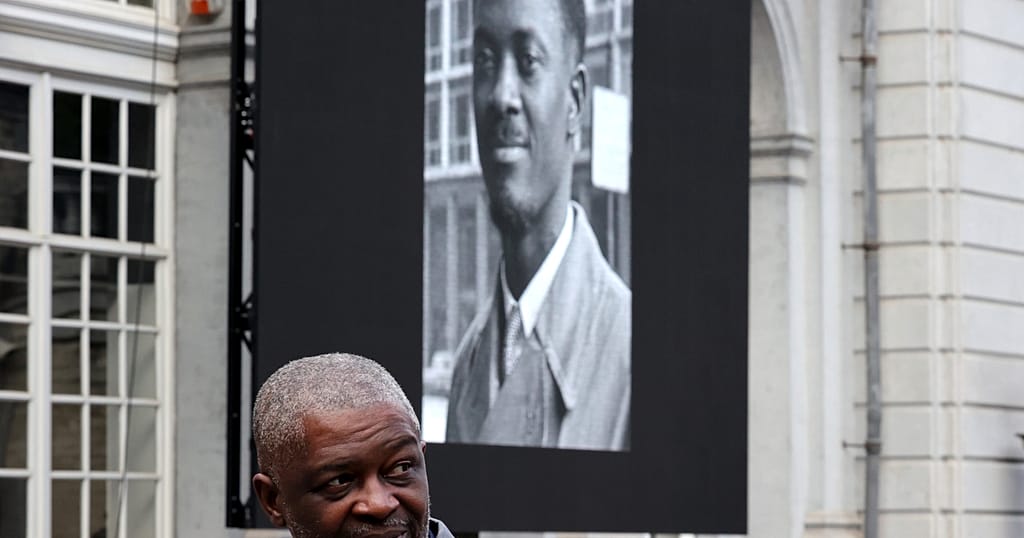
Patrice Lumumba
A 93-year-old former Belgian diplomat ordered to stand trial over the 1961 killing of Congolese independence icon Patrice Lumumba has appealed the decision, his lawmaker said Friday.
A novice diplomat at the time, Etienne Davignon is the only person still alive among 10 Belgians accused by the Congolese leader's family of complicity in his murder.
"Mr Davignon has decided to lodge an appeal," lawyer Johan Verbist told AFP.
Davignon was ordered earlier this month to stand trial for "participation in war crimes" over his role in the "unlawful detention and transfer" of Lumumba, a prisoner of war at the time, and for him being denied a fair trial.
The one-time European commissioner is also accused of "humiliating and degrading treatment", although not of direct involvement in Lumumba's killing.
Lumumba, an outspoken critic of Belgium's colonial rule, became his country's first prime minister after it gained independence in 1960.
But he fell out with the former colonial power and with the United States and was ousted in a coup a few months after taking office.
He was executed on January 17, 1961, aged just 35, in the southern region of Katanga, with the aid of Belgian mercenaries -- and his body dissolved in acid.
Should the trial go ahead, Davignon would be the first Belgian official to face justice in the 65 years since Lumumba's death.
A new closed‑door hearing will now pit the parties' lawyers against each other.
If the court decision is upheld, Davignon's trial would take place at the earliest in January 2027, according to Christophe Marchand, lawyer for Lumumba's children.
01:11
UN warns DRC conflict expanding, drone warfare threatens civilians
01:37
Violence against journalists surges in eastern DR Congo
00:20
Second set of rare gorilla twins born in DR Congo reserve Goma, DR Congo
02:02
Congolese citizens welcome Belgian court trial in Lumumba case
01:09
Rwanda, DRC agree to "ease tensions" after talks in Washington
Go to video
Belgian ex-diplomat to stand trial over Patrice Lumumba death
Facts Only
Actor: Etienne Davignon (Belgian diplomat)
Action: Ordered to stand trial for war crimes and other charges related to Patrice Lumumba's death
Event: Lumumba's murder in 1961, ousted as Congo's prime minister
Location: Katanga, Congo
Timeline: 1961, present (2023)
Executive Summary
Full Take
The ongoing trial of Etienne Davignon for his alleged role in the murder of Patrice Lumumba raises important questions about historical accountability and the lasting impact of colonialism. This case serves as an opportunity to address the complex relationship between Belgium and the Democratic Republic of Congo (DRC), which continues to be fraught with tensions.
Steelman: The narrative presented suggests that Davignon may have played a role in Lumumba's unlawful detention, transfer, denial of a fair trial, and humiliating treatment as a prisoner of war. This interpretation is based on the court order for his trial and the accusations made by Lumumba's family.
Patterns detected: ARC-0024 Ambiguity (the article mentions Davignon being accused of "humiliating and degrading treatment" but not direct involvement in Lumumba's killing)
Root Cause: The case stems from Belgium's colonial past and the aftermath of Congo's independence, during which tensions between the two nations were high. Many Congolese viewed Lumumba as a symbol of resistance against continued Belgian influence.
Implications: If Davignon is found guilty, it could lead to further calls for accountability from those who seek justice for Lumumba's death and other human rights abuses during Belgium's colonial rule in the DRC. It may also have broader implications for other cases involving historical war crimes committed by former colonizers against their former colonies.
Bridge Questions: What other factors might have contributed to Lumumba's murder beyond Belgium's alleged involvement? How can historical accountability be achieved when key figures from that time are still alive and able to contest the charges against them?
Sentinel — Human
The analysis indicates a likely human origin for the article. The text shows signs of idiosyncratic emphasis and personal voice typical of human journalists.