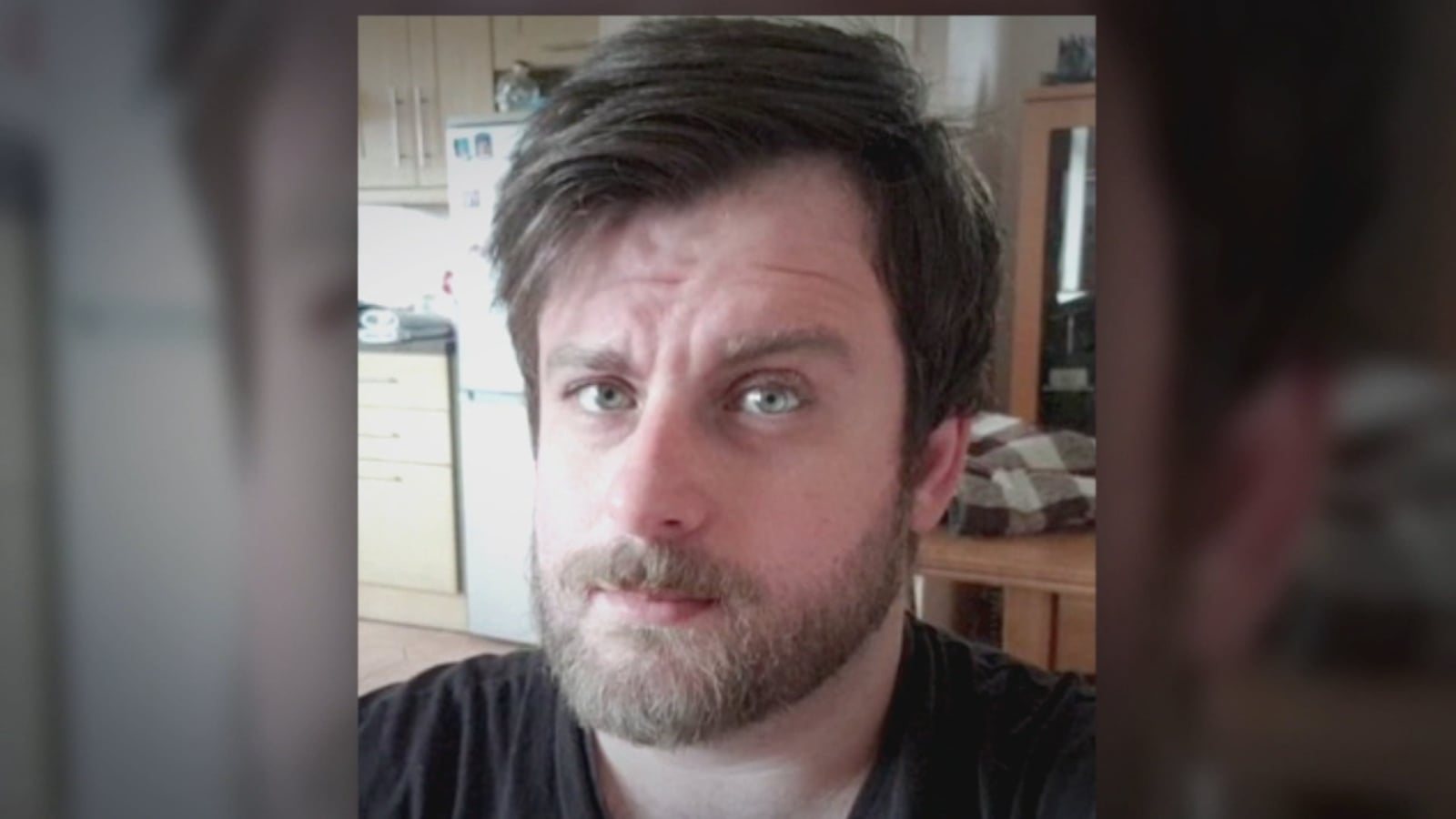
The picture of Natalie McNally that emerged from the trial of the man accused of her murder was of a modern, self-reliant young woman, who was frank and forthright.
Stephen McCullagh, her boyfriend and father of her unborn child, appeared to favour people he could bend to his will - something she was not.
She loved politics and her dog River. McCullagh was a Star Wars fan and YouTuber. What they saw in one another we will never know.
But after a match on the dating app Bumble and a couple of in-real-life dates, the relationship began to flourish.
Just over two months after they met, by October 2022, Natalie was pregnant with his child.
The messages between them, shown to the jury, showed how initial shock quickly turned to acceptance and then excitement at the prospect of parenthood.
"Baby Squish" was the pet name they adopted for the child Natalie was carrying.
They talked about moving in together and plans to spend the Christmas of 2022 with Natalie's family.
But despite what was described as the "happy couple chat", by a defence barrister, Natalie had not totally committed to the new relationship.
She maintained contact with a former boyfriend. He was granted anonymity at the trial and gave evidence that he and Natalie had last had sex in October 2022.
The trial heard they had been in contact right up to the point of Natalie’s murder; that the boyfriend wanted to reinitiate a sexual relationship.
The messages between them could be abusive and sexually graphic.
'Still figuring it out'
Natalie was also in contact with a number of other men between June and December 2022. Some of the messages were about her pregnancy and meeting up. Some were sexual in nature.
The week before she was murdered one of these men messaged her to ask whether she and McCullagh were going to break up.
"I wouldn't do it before Christmas, that would be mean. I will see how I feel in the New Year. I'll make no rash decisions," she said.
In response to another who had asked if she and McCullagh were together, she said they were "still figuring it out".
"There is no point in acting like happy families if it's not what I want. I like my independence so right now I'm doing my own thing. I am not rushing into this family set up if it's not what I want," she wrote.
The prosecution made the case that, as he had the passcode to Natalie’s phone, McCullagh could have seen these messages and been left "deceived, hurt, angry and enraged".
That rage was channelled into a carefully constructed murder plot. The man with a penchant for video games set about developing a plan he believed would let him get away with murder.
Every aspect was considered. How to get to Natalie’s house and away again without detection; how to minimise forensic opportunities for investigating police, and how to create an alibi for the night of the murder.
That alibi was bizarre, and initially at least, effective.
Four days before the murder, McCullagh pre-recorded a six-hour video of himself playing video games.
He gave it the title 'The Violent Night Christmas Live Gaming Stream’.
It showed him playing Grand Theft Auto Vice City and Robot Wars.
On the night of the murder, Sunday 18 December 2022, he published it on his YouTube channel, which is still accessible and now has forty-two thousand subscribers.
It began at 6pm and ended just after midnight.
It was presented as a live event, with McCullagh on screen throughout, apart from short breaks, wearing a Santa hat, vaping and drinking.
He explained that computer problems meant that he could not interact with followers who might message during the stream, and that anyway, he considered that a distraction to his gaming.
During the video he continually referenced the passage of time and the upcoming working week, reinforcing the perception that it was taking place on a Sunday evening. He mentioned the fact that Christmas was exactly a week away, pinning the date to 18 December.
In reality, on the night of 18 December 2022, he used the six-hour window afforded by the recording to travel from his home in Lisburn to Natalie’s house in Lurgan, carry out the murder and return.
His phone was turned off throughout this period.
Natalie was beaten, strangled and stabbed; her body found lying face down in a dog bowl.
McCullagh went by bus to avoid Automatic Number Plate Recognition (ANPR) cameras tracking his car.
He concealed his identity with a heavy coat and a face mask. He walked the mile-and-a-half from Lurgan town centre to Natalie’s house on the outskirts.
He brought fresh clothes to change into after the killing. He wore a disguise, including a wig, as he left.
He had worked out what time he would be there and when the murder would take place.
At that precise moment in the recorded "live stream" he had uploaded an image.
It lasted just four seconds in the six hours of footage. It was a promotional poster for a James Bond movie.
The title of the film was ‘No Time to Die’.
It was a chilling nod to the murderous act he was engaged in at that very moment.
It was fleeting, but it was there.
When he got home, he deleted the pre-recorded video file, making sure he also cleared it from his computer’s recycle bin.
Having murdered Natalie McNally, McCullagh now enacted the second part of his plan, to frame someone else for the killing.
From the beginning he told people he believed her ex-boyfriend had done it; that this man had been hassling Natalie and that she had been upset by him.
That person was arrested as a suspect, but his story checked out and he was released.
McCullagh was also arrested shortly after Natalie’s body was found. He too was released on the strength of his live stream alibi.
He visited Natalie’s family and went to her wake on Christmas Day 2022.
The family treated him as a grieving boyfriend and father-to-be and gave him time alone with Natalie’s remains. He spent 15 minutes with her in the room.
All the while the police were making progress. They had seized Stephen McCullagh’s computers and forensically examined them.
The cyber-crime unit established that there had been no "live stream", that the alibi relied upon by McCullagh was a fabrication.
Things unravelled quickly after that.
McCullagh was arrested again on 31 January 2023. Confronted with the cyber-crime analysis of the "live stream" he provided a prepared statement.
In it he accepted that the video had been recorded a couple of days before the killing. He said on the night of the murder he had been drunk and asleep on the sofa in his home as the video played out.
He added nothing further and did not give evidence in his own defence at trial.
It was never explicitly said, but the inference from the prosecution was that at some point in December of 2022 Stephen McCullagh had used Natalie McNally’s phone passcode to access her device.
There he had found the messages between her and the other men - her ex-boyfriend included - and the suggestion that she might be thinking about ending their relationship.
McCullagh’s previous relationship, a couple of years earlier, had ended badly.
A former ‘on-off’ girlfriend had shared intimate images with another man. When he found them on her phone, the resulting row ended in him assaulting her.
Now, another girlfriend, Natalie, appeared to be on the point of rejecting him.
Fired by a cold, calculating fury, he had carefully planned and carried out the murder plot.
He had thought about every element of it but was ultimately exposed by his own cockiness.
During the "live stream" he had explained the appearance of the ‘No Time to Die’ poster by saying he had dropped his game controller onto the keypad, depressing a hotkey and linking to the image.
But the police cyber-crime analysis of the computer showed the keyboard had not been touched that night - proving that the video had been pre-recorded.
The other major flaw in his murderous plan was not one he intended.
McCullagh had googled the bus times from Lisburn to Lurgan and the train times home from Lurgan while Natalie spent her final hours with him on the morning of Sunday 18 December.
It was the day of the 2022 World Cup Final in Qatar; Argentina v France and she was going to watch the game with her family.
When she left his Lisburn home at lunchtime and he waved her off - a moment caught on CCTV - she was completely unaware he was planning to kill her later.
He got the bus to Lurgan to carry out the murder but missed the last train home.
It is speculated that he spent too long in Natalie’s house during the attack, or on changing his clothes afterwards.
Either way the plan was now in chaos, and he was making it up as he went along.
He walked back into Lurgan town centre and got into a taxi parked outside a pub.
He directed the driver towards Lisburn, but he had insufficient cash to pay the fare.
That meant he had to take the cab right to his own door to get money for payment.
The taxi driver gave evidence of how his passenger had been the fill of the front seat; had seemed calm and chatted normally. He had a bag which he set at his feet.
When they got to the house, McCullagh went in and returned with £20 which he gave the driver before disappearing into the driveway of his bungalow.
McCullagh’s response to this evidence was bizarre. He claimed it was part of a plan to frame him for the murder.
He claimed Natalie’s ex-boyfriend, who also lived in Lisburn, knew his address and the real killer had done it to leave a "clear circumstantial trail to link me to the murder".
That appears to have stretched the jury’s incredulity to breaking point.
At 2am following the murder, McCullagh was out at his bins which were due for collection the following morning. He put something in.
It was never said, but the supposition is it was the clothes he had used while murdering Natalie.
Stephen McCullagh used people to further his own ends; former friends were sucked into the murder plot.
He had told them about his upcoming "livestream".
He had messaged one person to help build a picture of himself as a concerned boyfriend, prior to returning to Natalie’s house to "discover" her body.
He had called that best friend from the scene, apparently distraught at what he had found.
He extended this manipulative behaviour to Natalie’s family.
They believed he had nothing to do with her murder and welcomed him into their home.
He had spread his theory amongst them about their daughter’s ex-boyfriend being the killer.
He had given graphic details of how he had found Natalie to her mother, something she said haunts her to this day.
While in the McNally home in late January, he had used his phone to secretly record 40 minutes of the family’s conversation in an attempt to find out more about the progress of the police investigation.
He had helped the family digitise videos for a tribute that was played at a rally in her memory - which he also attended - three days before he was re-arrested.
At that rally in January 2023, I interviewed Natalie’s mother, Bernie McNally. She described her daughter’s killer as a "monster" who did not belong in society.
A final fact we learned late in the trial seemed to underscore that belief.
Stephen McCullagh had messaged Natalie just before he started his six-hour video recording on YouTube at 6pm.
"I’m away to stream the night away, wish me luck," he told her.
"Good luck," she replied. "I might have a peak at your live stream later," she told him.
Those were her last recorded words.
At 8.24pm that night Natalie had logged on to YouTube to watch what she thought was her boyfriend’s live stream.
At that very moment he was on his way to murder her.
Facts Only
Natalie McNally, 32, was murdered in her home in Lurgan, Northern Ireland, on December 18, 2022.
She was pregnant with the child of her boyfriend, Stephen McCullagh, who was convicted of her murder.
McCullagh and McNally met on the dating app Bumble and had been in a relationship for over two months before her death.
McNally maintained contact with a former boyfriend and other men, with messages indicating she was uncertain about her relationship with McCullagh.
McCullagh created a pre-recorded six-hour YouTube video titled "The Violent Night Christmas Live Gaming Stream," which he published on December 18, 2022, to serve as an alibi.
During the time the video was streaming, McCullagh traveled from his home in Lisburn to McNally’s home in Lurgan, committed the murder, and returned.
McNally’s body was found beaten, strangled, and stabbed, lying face down in a dog bowl.
McCullagh took a bus to Lurgan to avoid ANPR cameras and wore a disguise, including a wig, to conceal his identity.
He initially attempted to frame McNally’s ex-boyfriend for the murder but was later arrested after police forensically analyzed his computer and determined the "live stream" was pre-recorded.
McCullagh was arrested on January 31, 2023, and provided a prepared statement claiming he was drunk and asleep during the murder.
He did not testify in his own defense during the trial.
McNally’s last recorded words were in a message to McCullagh on December 18, 2022, wishing him luck on his "live stream."
At 8:24 PM on December 18, 2022, McNally logged onto YouTube to watch what she believed was McCullagh’s live stream, unaware he was en route to murder her.
Executive Summary
Natalie McNally, a 32-year-old pregnant woman, was murdered in her home in Lurgan, Northern Ireland, on December 18, 2022. Her boyfriend, Stephen McCullagh, was convicted of the crime after a trial revealed his meticulously planned alibi—a pre-recorded YouTube "live stream" of himself gaming, which he used to cover the time he traveled to and from McNally’s home to commit the murder. McCullagh’s motive appears to stem from discovering messages on McNally’s phone indicating she was considering ending their relationship and maintaining contact with other men, including a former boyfriend. The prosecution argued that this discovery enraged McCullagh, leading to the brutal attack, which involved beating, strangling, and stabbing McNally. Despite his elaborate efforts to frame her ex-boyfriend and manipulate evidence, forensic analysis of his computer and inconsistencies in his alibi—such as the pre-recorded nature of the stream and his unexpected taxi ride home—ultimately exposed his guilt. McCullagh’s behavior after the murder, including attending McNally’s wake and secretly recording her family, further underscored his calculated manipulation.
The case highlights the intersection of digital deception and violent crime, with McCullagh leveraging his technical knowledge to construct a false alibi. The trial also revealed McNally’s complex personal life, including her reluctance to fully commit to the relationship and her interactions with other men, which McCullagh may have perceived as betrayal. While the prosecution’s narrative of jealousy and control was compelling, the defense did not present an alternative theory, and McCullagh chose not to testify. The jury’s verdict rested on forensic evidence and the implausibility of his alibi, particularly the discovery that the "live stream" was pre-recorded and the timing of his movements on the night of the murder.
Full Take
This case is a chilling study in digital-age deception and the extremes of controlling behavior. At its core, it reveals how technology can be weaponized to facilitate violence and evade accountability. McCullagh’s pre-recorded "live stream" was a sophisticated attempt to manipulate perception, leveraging the trust placed in digital alibis. The prosecution’s narrative—that his discovery of McNally’s messages triggered a calculated, vengeful rage—is plausible, but it also raises questions about the role of jealousy and entitlement in gendered violence. McCullagh’s actions post-murder, including his manipulation of McNally’s family and his attempt to frame another man, underscore a pattern of psychological control that extended beyond her death.
The case echoes historical patterns of intimate partner violence, where possessiveness and perceived betrayal escalate into fatal outcomes. However, the digital dimension—pre-recorded alibis, forensic analysis of electronic devices—adds a modern layer to an age-old crime. The prosecution’s reliance on cyber-forensics highlights both the potential and limitations of digital evidence in solving crimes. Yet, the narrative also risks oversimplifying McNally’s agency; her messages suggest she was navigating a complex personal life, not merely a victim of deception. The defense’s silence and McCullagh’s refusal to testify leave unanswered questions about his state of mind and whether other factors contributed to his actions.
For human agency, this case serves as a cautionary tale about the dangers of digital manipulation and the importance of critical scrutiny in an era where appearances can be fabricated. It also invites reflection on how societal narratives around relationships, control, and technology intersect with violence. Who benefits from framing this as a story of betrayal rather than systemic issues like toxic masculinity or digital literacy? What might we overlook by focusing solely on McCullagh’s technical cunning rather than the broader cultural context that enabled his actions?
Bridge questions: How might this case reshape public trust in digital alibis or live-streaming platforms? What role did McNally’s independence and uncertainty about the relationship play in McCullagh’s motivations, and how might this challenge simplistic narratives of victimhood? If McCullagh had not made critical errors—like the taxi ride or the pre-recorded stream—how might this crime have remained unsolved, and what does that say about the reliability of digital evidence?
Counterstrike scan: A coordinated influence campaign might exploit this case to stoke fear about digital deception, framing it as a broader societal threat rather than an individual crime. It could amplify narratives about the dangers of online dating or the unreliability of digital evidence to erode trust in institutions. However, the article’s focus on forensic details and McCullagh’s specific actions does not align with such a pattern. The content remains grounded in the facts of the case without broader ideological framing.
Sentinel — Human
The article exhibits strong human authorship signals, including emotional depth, narrative complexity, and specific contextual details, with no detectable AI-generated patterns.